
 ع
ع



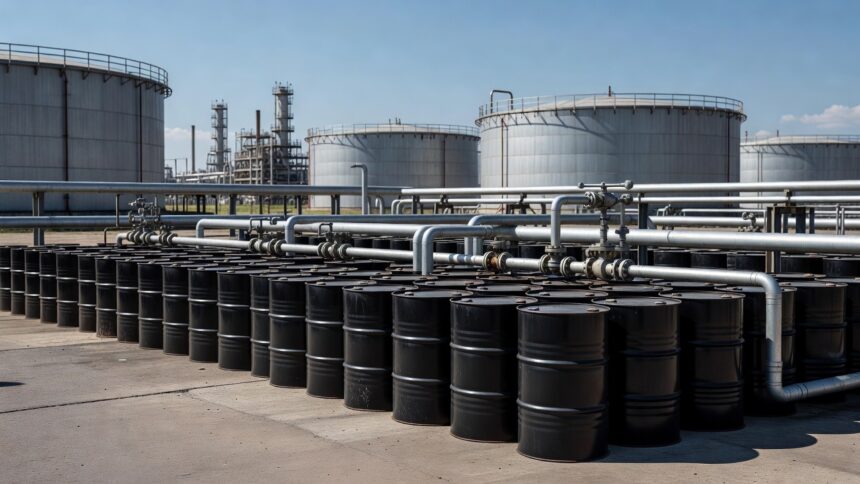
The Emirates News Agency reported that oil prices jumped nearly 4 percent on Wednesday as Brent crude futures rose by $3.86, or 4.2 percent, to settle at $94.98 per barrel. U.S. crude futures gained $4.80, or 5.5 percent, to close at $92.07 per barrel. Market data indicated the gains represented the largest one-day percentage increase in several weeks for the benchmarks.
According to the International Energy Agency, world oil demand is forecast to contract by 420,000 barrels per day year-on-year in 2026 to 104 million barrels per day. An IEA assessment found the largest drop in the second quarter at 2.45 million barrels per day, with the OECD and non-OECD regions both contributing to the decline. The May 2026 Oil Market Report highlighted impacts on petrochemical and aviation sectors as key drivers of the reduced consumption.
The IEA data places global oil supply as declining by an average of 3.9 million barrels per day in 2026 to 102.2 million barrels per day. Gulf production levels stood 14.4 million barrels per day below pre-war figures in April, per the agency figures. Refinery throughputs are projected to fall by 1.6 million barrels per day for the year as operators manage ongoing constraints.
A July 2026 update from the International Energy Agency projected global oil demand recovering from a low of 97.9 million barrels per day in May. The agency expects demand to increase by more than 8 million barrels per day from that low by October, exceeding 2025 levels. Global runs are forecast to decline by 2.4 million barrels per day this year before rebounding in 2027.
J.P. Morgan Global Research forecast Brent crude to average $86 per barrel in the third quarter of 2026. The research places the average at $80 in the fourth quarter of 2026 and $78 by the end of the year. J.P. Morgan analysts noted the challenging environment from geopolitics and supply disruptions affecting markets throughout the period.