 ع
ع


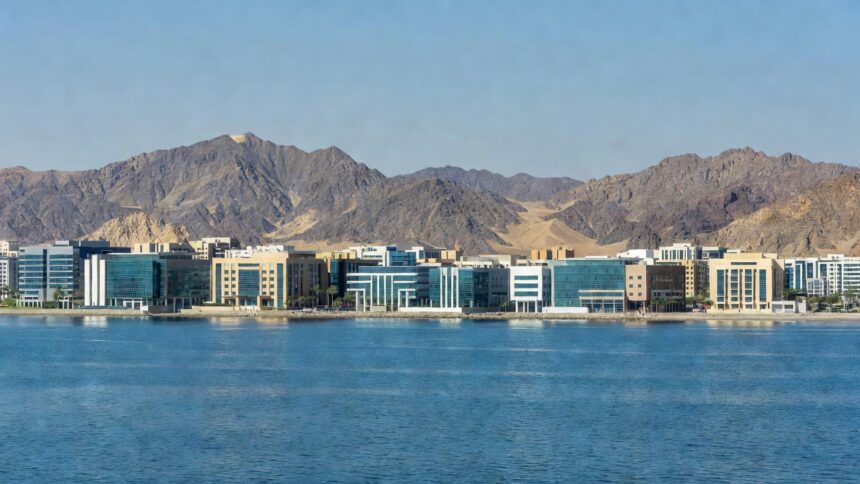
S&P Global Ratings affirmed the Emirate of Ras Al Khaimah’s long-term foreign and local currency issuer credit rating at ‘A’ and its short-term rating at ‘A-1’ on March 13 while maintaining the stable outlook. The agency also kept its ‘AA+’ transfer and convertibility assessment unchanged. S&P Global Ratings pointed to the government’s conservative approach and strong fiscal position as key supports that provide room for policy adjustments amid regional uncertainties.
The ratings agency lowered its economic growth projection for 2026 to 2.0 percent from a prior 3.6 percent estimate due to expected effects from Middle East tensions on tourism revenue and real estate demand. S&P Global Ratings anticipates that broader stability will nevertheless prevail over the next two to three years. The stable outlook specifically accounts for the buffers that should allow continued maneuvering if geopolitical developments worsen or growth slows further.
S&P Global Ratings expects the Ras Al Khaimah government to sustain fiscal surpluses averaging 3.0 percent of GDP between 2026 and 2029 under its base case. Stable revenues combined with limited debt will support an average net general government asset position of 23 percent of GDP across the period. Interest payments are forecast to stay below 5 percent of revenue given the small debt stock.
The emirate has held an ‘A’ category rating since 2008, according to S&P Global Ratings records that highlight consistent policy continuity enabled by its legislative and executive frameworks. Progress on institutional development includes advancements at the RAK Statistics Center that improve economic data quality. Membership in the UAE further bolsters the credit profile through potential extraordinary financial support if ever required.
Ras Al Khaimah’s economy stands at approximately $13 billion with no single sector contributing more than 27 percent to GDP, a Khaleej Times compilation of agency and official data shows. Manufacturing accounts for the largest share near that ceiling while tourism, the fastest-expanding area, represents about 5 percent yet delivered 1.35 million visitors in 2025 with revenues up 12 percent. This balance across real estate, logistics, industry and hospitality reduces vulnerability to sector-specific shocks.
S&P Global Ratings noted the government’s spending flexibility demonstrated during the COVID-19 pandemic as a positive precedent for future adjustments. Forecasts from the agency see growth accelerating above 4 percent by 2027-2028 in the absence of major disruptions while GDP per capita strengthens. The rating affirmation coincides with continued infrastructure investment and business licensing growth that officials project will sustain the diversification trend.