ع




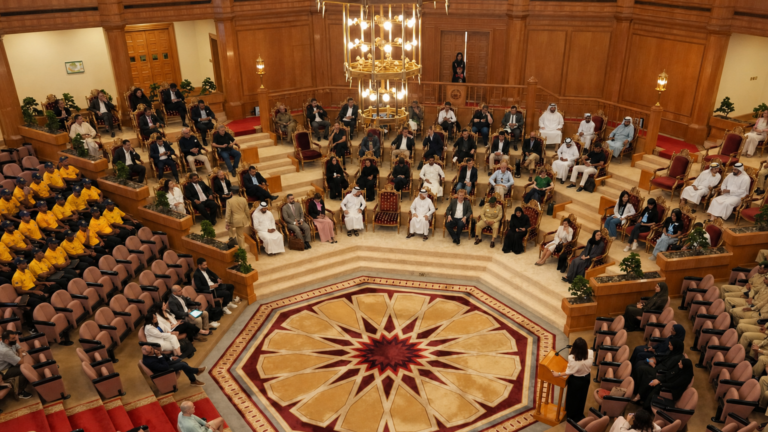
The Emirates News Agency reported that the delegation, headed by Hamad Al Kaabi of the Federal Authority for Nuclear Regulation, included representatives from the Ministry of Energy and Infrastructure and the Emirates Nuclear Energy Company. The event, co-hosted by the OECD Nuclear Energy Agency and the United States Department of Energy, convened ministers, senior officials and industry leaders to examine requirements for new nuclear projects. Al Kaabi addressed participants on the UAE’s experience, according to the agency, and emphasised translating global interest into scaled delivery supported by national commitment and strong institutions.
Al Kaabi outlined regulatory readiness for advanced technologies including small modular reactors as a priority, the Emirates News Agency stated. He pointed to additional enabling conditions such as credible project delivery, finance availability, resilient supply chains, secure fuel access and workforce development. The presentation drew directly from the UAE’s implementation of its peaceful nuclear energy programme since its launch more than 15 years ago.
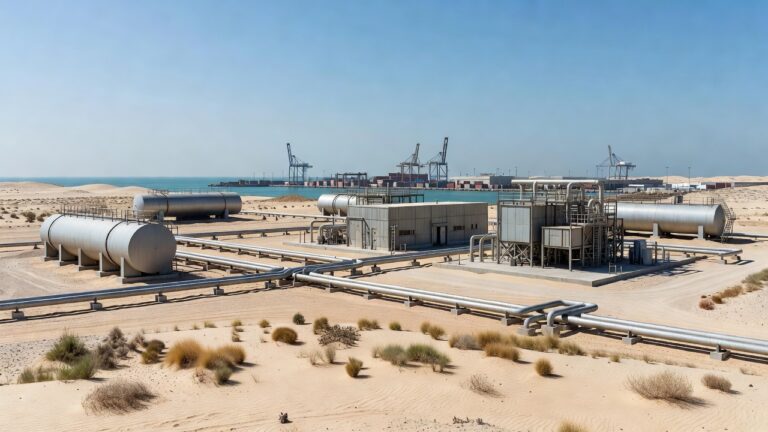
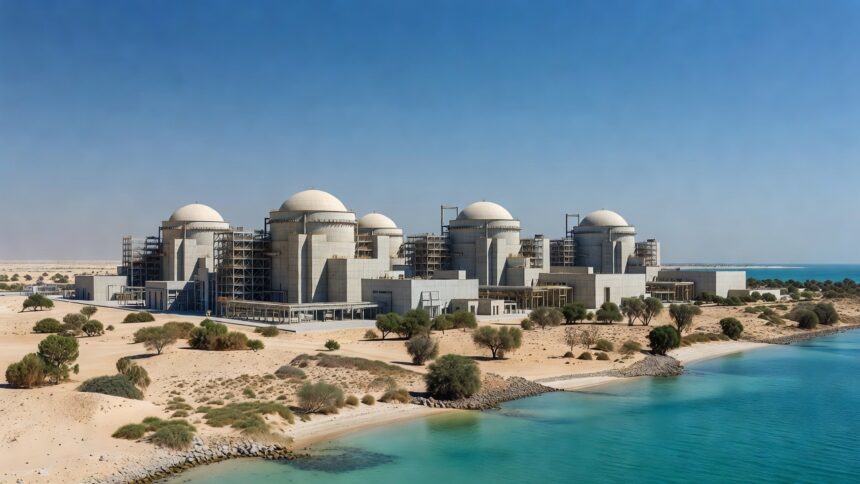
Emirates Nuclear Energy Corporation data show that all four units of the Barakah Nuclear Energy Plant have achieved commercial operation, delivering approximately 40 terawatt-hours of clean electricity annually from a combined capacity of 5,600 megawatts. The plant meets roughly 25 percent of the country’s electricity needs and avoids 22.4 million tonnes of carbon dioxide emissions each year. The four APR-1400 reactors reached full operation between 2021 and 2024, according to IAEA country profiles.
The conference agenda addressed financing models, supply-chain strengthening, workforce training, regulatory preparedness and advanced reactor designs, the Emirates News Agency reported. Discussions aimed to identify pathways for accelerating nuclear deployment amid rising global demand for low-carbon baseload power. UAE representatives used the platform to illustrate how sustained planning and institutional development complement technological choices.
International cooperation has supported the UAE programme from the outset, with partnerships including those with French entities on localisation, technology transfer and supply-chain development, according to multiple ENEC announcements from 2026. These ties have contributed to more than AED 24.5 billion in contracts awarded to domestic companies during Barakah construction. The Paris gathering reinforced ongoing engagement with global nuclear organisations and leading nuclear nations.
The Federal Authority for Nuclear Regulation maintains oversight of Barakah operations through continuous inspections and licensing processes, a FANR board review from late 2025 indicated. Its framework has facilitated the safe and timely commissioning of the plant while preparing for potential future technologies. The regulator’s 50 years of membership in the International Atomic Energy Agency, marked in 2026, has underpinned capacity building and international alignment.