ع




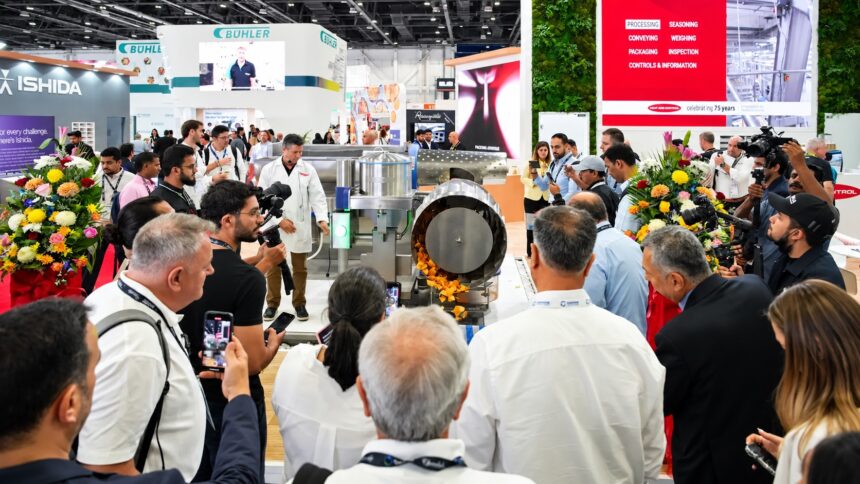
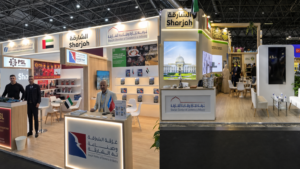
Gulfood Manufacturing will return to Dubai World Trade Centre from 3–5 November, bringing food-processing equipment, ingredients, packaging and factory automation into focus as manufacturers commit capital to new regional production capacity.
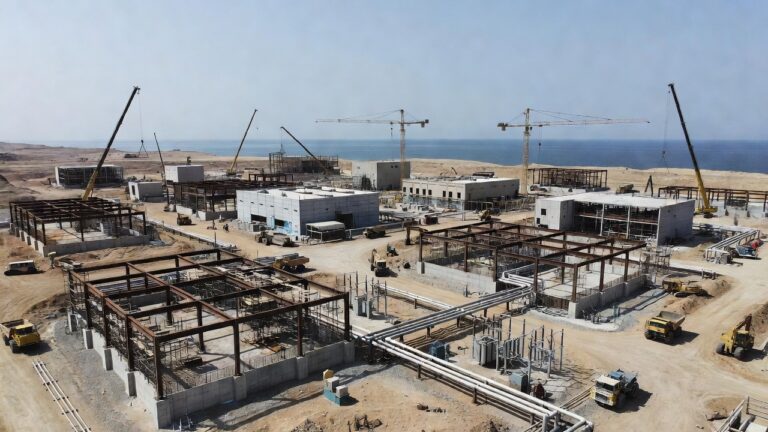
The 2026 exhibition arrives in a year that has already brought a AED130 million food-production facility in Dubai and equipment contracts for new and upgraded mills in Saudi Arabia. These projects give the event a concrete industrial backdrop: investment decisions are being translated into production lines, installation work and additional processing capacity.
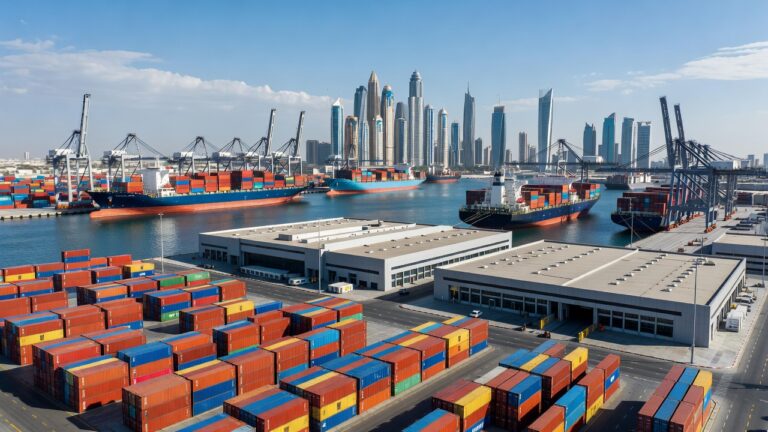
The question running through those developments is how investment in factories translates into a more dependable food supply. That involves the volume a plant can produce, the resources it consumes and how much food survives the journey to market.
Food security becomes a production question
The UAE’s National Food Security Strategy 2051 links sustainable food production with modern technology, international trade partnerships and efforts to reduce food loss and waste. Its scope places domestic production and access to international supplies within the same framework.
That combination matters when examining industrial investment. A processing facility adds a particular capability to the food system, such as milling grain or preparing protein products. Its contribution depends on its place within a wider network of raw-material supply, storage, distribution and customers.
The projects announced this year illustrate different parts of that network. In Dubai, a new facility is intended to manufacture products for regional and export markets. In Saudi Arabia, a listed milling company has contracted equipment and supervision for specific capacity additions. Both involve the physical infrastructure needed to turn agricultural inputs into usable food and feed.
These are also distinct stages of investment. A facility launch, an equipment order and the start of commercial operations each describe a different point between committing money and producing goods.
Two investments, different manufacturing needs
In January, Jebel Ali Free Zone announced the launch of Solico Group’s SoFood facility, a AED130 million investment occupying a 5,000-square-metre site. The announcement put its initial capacity at up to 40 tonnes a day.
The first phase focuses on meat and protein products under the group’s Pemina brand. Further phases are intended to introduce categories including dairy, cheese, premixes and sauces, alongside co-packing for hospitality and foodservice customers. Those later categories remain part of the announced expansion plan.
The project combines manufacturing with a location inside an established trading and logistics zone. Jafza described it as a regional innovation and international manufacturing hub, with a modular design intended to accommodate additional categories. The distinction is between the capacity specified at launch and the broader manufacturing footprint envisaged over time.
Saudi Arabia provides another example. In a 3 March stock-exchange disclosure, Arabian Mills announced contracts with Bühler covering equipment supply and supervision for expansion projects in Riyadh and Hail.
The scope included a new Riyadh flour mill with capacity of 800 tonnes a day, a new feed mill with capacity of 400 tonnes a day, and a Hail flour-mill upgrade involving 150 tonnes a day. Equipment supply was valued at CHF13.735 million, with a separate supervision contract worth approximately SAR5.43 million.
The disclosure separates machinery supply from the work required to install and inspect it. Arabian Mills said the anticipated financial effects would follow commercial operation and completion of the relevant projects, with operational announcements to come separately. The March contracts therefore establish investment commitments and project scope, rather than evidence that all the additional output was already being produced.
The food that never reaches the shelf
New production capacity is one part of the supply equation. Losses between harvest and retail are another.
On 29 September, the Food and Agriculture Organization of the United Nations reported that 13.4% of food produced globally is lost after harvest and before reaching retail. It separately reported that 19% of food available to consumers is wasted across retail, foodservice and households.
Those figures describe different stages and should not be added together. They are global estimates, rather than measurements of losses inside Gulf factories.
For the manufacturing discussion, the first figure is particularly relevant because it covers the part of the food system before products reach shops. FAO’s accompanying work emphasises better measurement and practical interventions to retain more food within supply chains.
That gives processing and storage investment a second dimension alongside expanding output. Assessing a project’s contribution requires attention to what happens to the food moving through it, as well as the plant’s stated daily capacity. FAO’s new interactive map presents regional and subregional loss estimates for 2024, offering a broader reference point for that discussion.
What November brings into view
Gulfood Manufacturing’s programme spans ingredients, processing, packaging, automation and supply-chain systems. Its FoodTech Summit is advertised as bringing together more than 100 experts from manufacturing, engineering, policy and investment.
That scope places several stages of industrial decision-making in the same exhibition: selecting ingredients, specifying machinery, protecting finished products and managing their movement through storage and distribution.
The regional projects already announced provide useful reference points for the November discussions. SoFood’s phased manufacturing plan and Arabian Mills’ equipment and supervision contracts show why investment totals alone tell only part of the story. The next substantive milestones are the capacity brought into commercial use, the product categories actually introduced and the operating results disclosed once production is under way.