
 ع
ع



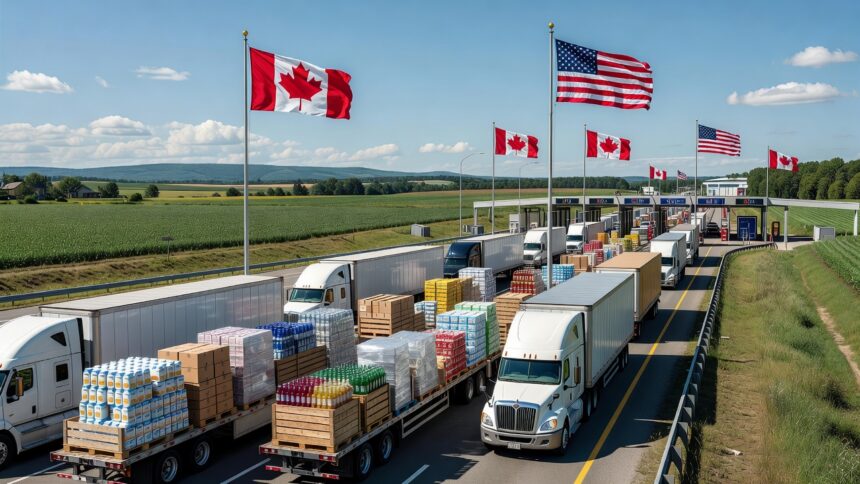
The Trump administration activated 50% tariffs on approximately $20 billion of annual Canadian imports early Saturday following the breakdown of intensive negotiations that had stretched on for weeks. Prime Minister Mark Carney suspended the talks and ordered Canada’s negotiating team to return to Ottawa while pledging reciprocal measures on American goods to protect workers and businesses. According to a statement from the Prime Minister’s Office, the move came after last-minute alterations to the US proposals that undermined the prospects for any reliable agreement.
Carney said in the statement, “However, last-minute changes in the U.S. proposed terms were unfair, uneconomic, and called into question the reliability of any deal.” He noted that although important progress had been achieved in recent weeks the results fell short of meeting Canada’s objectives for its citizens. The prime minister added that “Canada will match those tariffs dollar for dollar to protect our workers and businesses” and indicated that further support measures for affected sectors would be unveiled shortly.
United States Trade Representative Jamieson Greer stated that Canada had declined to finalize an agreement under terms negotiated earlier in the week despite what he described as the best available treatment for any major exporter to the US market. The tariffs which took effect at midnight cover products ranging from dairy and alcoholic beverages to hockey sticks cement and wigs among more than 500 tariff classifications. US News reported that the affected volume represents about 5% of annual Canadian exports to the United States.[[1]](https://www.usnews.com/news/us/articles/2026-08-21/us-is-set-to-impose-50-tariffs-on-20-billion-worth-of-canadian-products)
President Donald Trump initially proclaimed the tariffs in July under Section 338 of the Tariff Act of 1930 marking the first known invocation of that nearly century-old authority according to Reuters.[[2]](https://www.reuters.com/business/us-imposes-new-50-tariffs-canadian-products-2026-07-20/) The three separate proclamations addressed alleged Canadian discrimination in the dairy motor vehicle and alcoholic beverage sectors while applying even to goods that qualify for duty-free treatment under the USMCA with limited carve-outs for energy potash and critical minerals. The measures had been paused temporarily to facilitate the final round of talks that ultimately proved unsuccessful.
Bilateral trade in goods and services between the United States and Canada totaled $880 billion last year providing critical supply chains across multiple industries a figure that underscores the stakes of the current dispute. The new tariffs and their Canadian counterparts risk disrupting sectors from agriculture to manufacturing at a time when both economies continue to manage post-pandemic adjustments. Canadian officials have already provided nearly $25 billion in prior support to businesses and signaled that additional assistance will follow in response to the escalated trade barriers.
Negotiators had focused on adjustments to existing duties on steel aluminum and automobiles in exchange for Canadian steps to ease provincial restrictions on US alcohol sales among other issues. No immediate plans for resumed discussions have been announced following the mutual recriminations over which side altered its position at the eleventh hour. The Canadian statement stressed that Ottawa had negotiated in good faith throughout with the consistent aim of securing the best possible outcome for Canadians rather than accepting a deal at any cost.