
 ع
ع



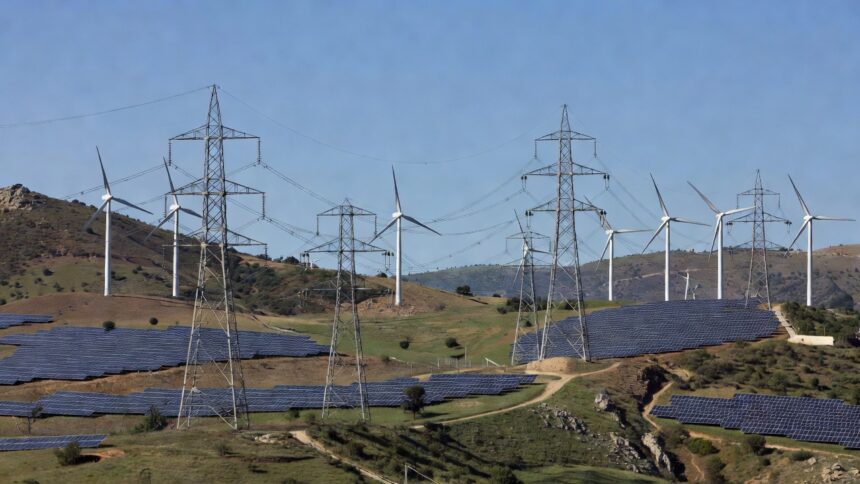
Energy and Natural Resources Minister Alparslan Bayraktar told the Istanbul Climate Finance Summit that Türkiye needs at least $80 billion in electricity infrastructure investment through 2035 to cope with climate impacts on energy systems. The minister stressed that infrastructure built today must account for future climate conditions including floods, droughts and storms that disrupt electricity transmission and distribution. Bayraktar called for mobilization of private capital, international financial institutions and development banks to meet the financing requirement since public funds alone will prove insufficient.
The International Energy Agency reported on September 4 that electricity demand in Türkiye grew by almost 5 percent annually on average between 2005 and 2024, the fastest rate among IEA member countries, and is set to keep rising through 2035. Renewables provided 43 percent of electricity generation in 2025 while the National Energy Plan targets an increase to 55 percent by 2035, the agency assessment found. The IEA review noted that solar capacity is expected to almost quadruple and wind capacity to triple during the period with nuclear power joining the mix to diversify supply.
Bayraktar outlined plans to quadruple renewable installed capacity to 120 gigawatts of combined solar and wind by 2035, which will require adding between 7,500 and 8,000 megawatts of new capacity each year. The minister highlighted that Türkiye has already achieved a renewable share of 59 percent in total installed electricity capacity as of last September according to ministry data. Nuclear power will complement the renewable push as the country works toward carbon neutrality by mid-century, Bayraktar added.
A separate estimate from the Electricity Distribution Services Association placed investment needs for distribution networks at a minimum of $50 billion over the next decade to support growing consumption that reached 361 terawatt-hours last year. The association projected electricity use will climb to 510 terawatt-hours by 2035 with total installed capacity expanding to 227 gigawatts and requiring an extra 104 gigawatts, its chairman Barış Erdeniz said in June. Distribution companies intend to allocate $22 billion between 2026 and 2030 for modernization, digitalization, cybersecurity enhancements and climate resilience measures.
The Presidential Investment and Finance Office’s Energy Sector Report 2026 estimated the overall energy transition cost, including nuclear and renewables, at around $200 billion with the $80 billion infrastructure share focused on grid flexibility and network expansion. The report indicated that electric vehicle numbers could reach 7 million in a high scenario by 2035, adding to demand pressures on the electricity system. Türkiye has lowered its energy intensity by more than 30 percent over the past 20 years and posted an energy savings rate of 4.5 percent in 2023 that exceeded the global average of 1 percent, government statistics show.
The IEA review highlighted Türkiye’s plans for major transmission system expansion through 2035 including 7.5 gigawatts of additional battery storage to integrate rising renewable volumes. The country occupies a strategic position linking energy markets in Europe, the Middle East and the Caspian region, the agency noted. Sustained investment across grids, flexibility options and energy efficiency will be required to maintain affordability and strengthen system resilience, the IEA assessment concluded.