ع





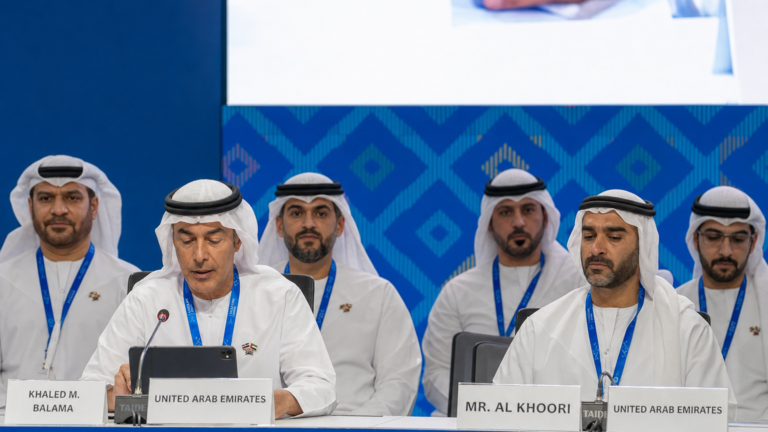
The Economic Integration Committee convened in Abu Dhabi to evaluate national efforts that reinforce the legislative structure for combating money laundering and terrorist financing while building greater trust in the economy. Committee members examined advances on earlier directives that focused on tighter oversight of retail outlets, improved inspection systems and steps to safeguard consumer rights as well as supply chain stability across the country. Directors general from the UAE’s economic development departments attended the session, which also covered national programmes designed to expand intellectual property activities and develop the broader IP ecosystem.
Abdulla Bin Touq Al Marri, who chaired the meeting, stated that under the guidance of the UAE’s leadership the country continues to place significant emphasis on developing an advanced digital infrastructure for economic legislation, policies and indicators in line with global best practices. He noted that these efforts reinforce sustainable economic development and that the UAE has launched a new AI-powered regulatory ecosystem alongside the National Programme for Developing Statistics System. Al Marri added that the initiatives support the country’s ambition to become the global leader in developing proactive legislation for emerging economic sectors in line with the objectives of the We the UAE 2031 vision.
Discussions at the gathering centred on corporate governance frameworks for companies operating in the UAE and their importance in allowing businesses to conduct a diverse range of economic activities more efficiently. The committee considered ways to enhance services offered to the business community, investors and other stakeholders while aligning with global standards and improving procedural efficiency. Recent legislative changes, including amendments to the Commercial Companies Law that entered into force in January 2026 and the creation of the Capital Market Authority under Federal Decree-Laws 32 and 33 of 2025, have already widened director accountability and made ESG reporting mandatory, according to a Chambers and Partners practice guide published in June 2026.
Committee participants reaffirmed the need for continuous monitoring of market developments and essential commodity prices, adopting proactive steps to tackle potential supply chain disruptions. A dedicated team drawn from the Ministry of Economy and Tourism, economic development departments and other national entities has developed an integrated framework for tracking prices and assessing market conditions using transparent criteria. This work seeks to bolster decision-making through accurate data, maintain stability and support consumer confidence in the national business environment.
A presentation delivered during the meeting addressed the regulation of finance lease activities carried out by legal persons outside Central Bank oversight, highlighting the mechanism’s value for small and medium-sized enterprises. The format enables businesses to obtain equipment without large initial capital outlays, diversifies financing options and helps draw international leasing companies to the UAE market. Eligible assets include trucks, aircraft, IT systems, industrial and medical equipment, production lines as well as construction and energy infrastructure, the ministry statement showed.
The UAE maintained its position as the top-ranked country in the Global Entrepreneurship Monitor report for the fifth consecutive year in the 2025-2026 edition, the Ministry of Economy and Tourism reported earlier this month. The country also placed among the top 10 most effective governments worldwide in the Chandler Global Governance Index 2026, achieving first place globally for government innovation. These standings reflect sustained reforms that have modernised corporate transparency, clarified shareholder rights and integrated governance with tax compliance and beneficial ownership requirements, a Directors Institute analysis issued in May 2026 concluded.