
 ع
ع



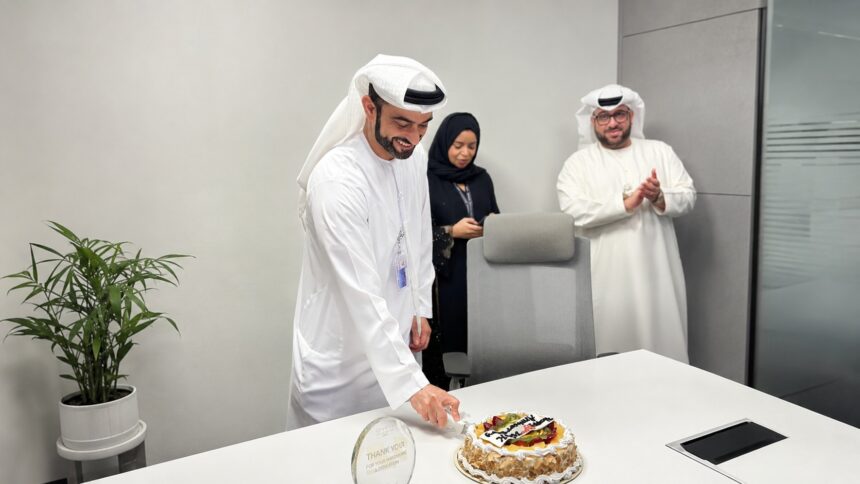
Zayed International handled 32.5 million passengers last year and is already running above 2025 daily volumes. The next constraint is no longer the terminal alone, but the operating system beneath it.
Zayed International Airport was built with room to run. Terminal A can accommodate up to 45 million passengers a year and process 11,000 travellers an hour, according to the Abu Dhabi Media Office. Yet the distance between installed capacity and operational pressure is closing quickly. The airport handled a record 32.5 million passengers in 2025, up 12.8 percent, as Abu Dhabi’s five airports passed 33 million passengers for the first time.
By late June 2026, Zayed International was averaging more than 93,000 passengers and close to 500 flights a day, both above comparable 2025 levels, while serving more than 100 destinations.
That changes the aviation-growth question. Abu Dhabi has spent heavily on visible capacity: terminal space, aircraft stands, biometrics and routes. The next gains increasingly depend on what happens out of sight, between an aircraft reaching the stand and leaving it again.
The capacity below the terminal
Ground handling has traditionally been treated as a service purchased by airlines. At a fast-growing hub, it becomes something closer to infrastructure. Baggage teams, ramp crews, load control, passenger assistance, aircraft cleaning, ground equipment and security all compete against the same clock. A faster terminal is of limited value if aircraft turnarounds cannot absorb the traffic it generates.
That is the strategic context for Velora, the ADQ portfolio company created from the rebranding and integration of Etihad Airport Services in November 2025. The business combines ground services, cargo and logistics, and security under one identity, employs more than 5,000 people and describes itself as the exclusive provider of these services at Zayed International Airport.
The distinction matters because Abu Dhabi is scaling the airline side at unusual speed. Etihad carried 22.4 million passengers in 2025, up 21 percent, while its fleet reached 127 aircraft. Every additional frequency pushes work through the same sequence on the ground. At that point, shortening a turnaround or reducing a baggage-processing error is not an operational footnote. Multiplied across hundreds of daily movements, it becomes capacity.
One brand across the hand-offs
Velora’s November consolidation is therefore more interesting as an operating decision than as a branding exercise. An airport journey crosses organisational seams constantly. Integrating ground handling, cargo and security does not eliminate those seams, but it can reduce the number that sit inside separate management structures.
The company has begun attaching external measures to that argument. In 2026, Velora said it became the first ground-handling company to achieve the International Customer Experience Institute’s ICXS2024 standard through BSI, with a score of 99.63 percent. CEO Jubran AlBreiki called the result evidence of “the professionalism, discipline, and unwavering commitment of our people” in an April LinkedIn post.
There is one qualification. Velora’s exclusive position at Zayed International means the strongest test of its integrated model cannot come from head-to-head competition between handlers on the same airport. A certification score demonstrates conformity to a standard, not whether the model is more efficient than dnata, Menzies, Swissport or Saudi Ground Services under identical operating conditions.
Cargo makes the test harder
Passenger growth is only half the pressure. Abu Dhabi’s airports handled nearly 770,000 tonnes of cargo in 2025, up 12 percent. The East Midfield Cargo Terminal now under development is designed to handle as much as 1.5 million tonnes annually when fully operational in 2027, roughly twice the emirate-wide cargo volume handled last year.
That project moves Velora into a larger contest. Gulf aviation groups are automating the ground as aggressively as airlines are expanding in the air. In Dubai, dnata is deploying autonomous electric baggage tractors and said its 2025 equipment programme would add more than 800 pieces of ground-support equipment across ten markets.
Abu Dhabi’s answer is integration: one operator spanning the traveller, aircraft, cargo and security interfaces while the airport grows toward its 45 million-passenger ceiling. If that system works, passengers will barely notice it. That is precisely the point. The next phase of the Gulf airport race may be won by the infrastructure travellers never see.