 ع
ع


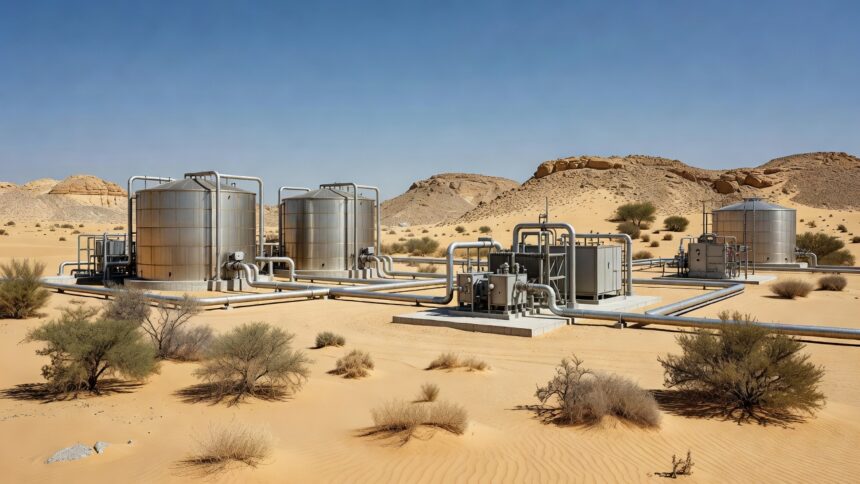
Carbon capture projects in the UAE and Saudi Arabia have enabled Gulf Cryo to almost double its CO2 production, the company said in a statement released Wednesday. The Dubai-based firm now recovers more than 250,000 tonnes of CO2 annually from industrial emissions, converting the gas into high-purity food-grade products for sectors ranging from beverages to healthcare. This expansion aligns with broader GCC initiatives to build circular carbon economies while cutting reliance on fossil-fuel-derived CO2.
Gulf Cryo developed its first high-purity carbon capture and utilisation facility in the UAE in partnership with RAK Ceramics in Ras Al Khaimah, according to the company’s project disclosures. The plant extracts CO2 from the ceramics manufacturer’s natural-gas engines and purifies it to 99.99 percent for local distribution, capturing around 17,000 metric tons per year. Prior to the facility’s launch, the company imported recovered CO2 from its operations in Kuwait and Saudi Arabia to serve UAE demand.
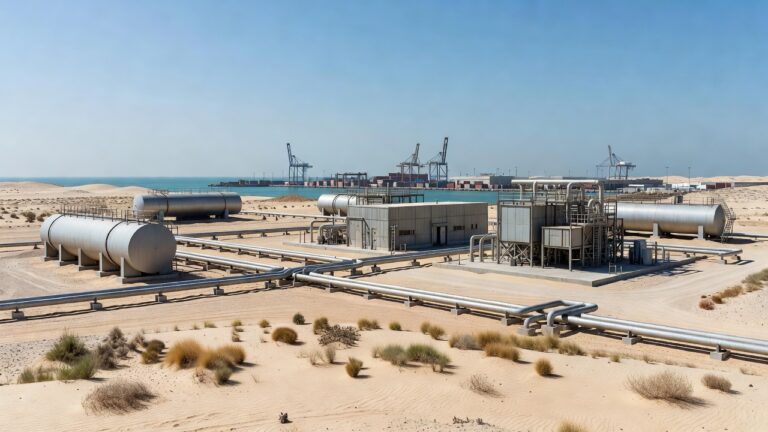
In Saudi Arabia, Gulf Cryo operates a major recovery unit at Petro Rabigh’s mono ethylene glycol plant that captures approximately 100,000 tonnes of CO2 annually, a company statement on its regional investments confirmed. The facility, which came online after agreements signed in 2022, produces up to 300 metric tons per day of liquid CO2 while reducing the plant’s emissions footprint by 85 percent. These projects build on Gulf Cryo’s pioneering carbon capture work that began in 2014, when it shifted away from fuel-burning CO2 generation.
The company has committed $100 million to green initiatives across the region and aims to scale CO2 recovery more than fivefold to 600,000 metric tons per annum by 2030, Gulf Cryo outlined in its sustainability updates. This trajectory includes additional partnerships such as the memorandum of understanding with Emsteel to advance carbon capture and utilisation in the steel sector. Such collaborations support the UAE’s target of 10 million tonnes per annum in carbon capture capacity by 2030, a goal ADNOC has repeatedly emphasised in its decarbonisation strategy.
Regional carbon capture activity has accelerated following the opening of facilities like ADNOC’s Habshan project, which is designed to handle 1.5 million tonnes per year once commissioned, according to ADNOC announcements. The Habshan development, together with the existing Al Reyadah plant that captures 800,000 tonnes annually from steel operations, forms part of a wider push that has tripled ADNOC’s overall capture capacity to 2.3 million tonnes. Industry assessments from the Global CCS Institute indicate the Gulf accounts for about 10 percent of global captured CO2 at industrial sites.
Gulf Cryo’s increased output addresses growing demand for sustainable CO2 in food and beverage carbonation, medical applications and agricultural enrichment while advancing national net-zero pathways. The firm described its recovered CO2 as a reliable, low-carbon alternative that helps industries meet stricter environmental standards. Executives have noted that continued investment in modular capture technology will allow rapid scaling as new markets emerge for carbon-based feedstocks.