
 ع
ع



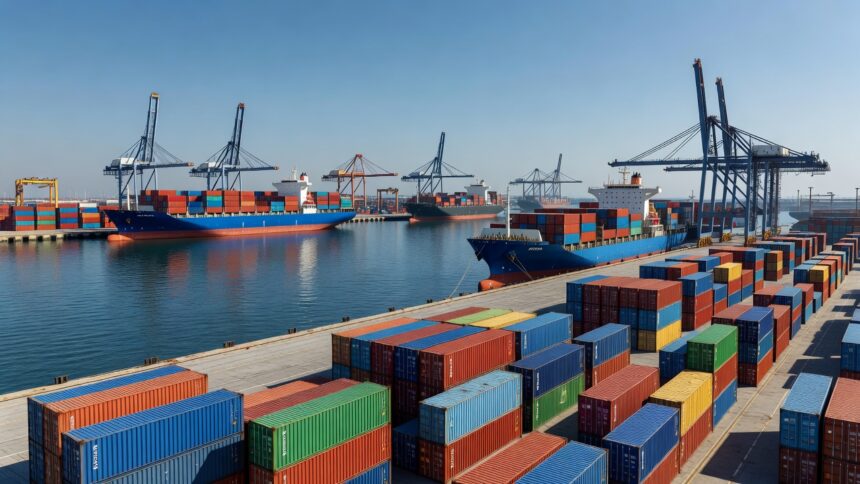
The World Trade Organization Secretariat launched a publication examining stablecoins’ role in world trade on the sidelines of its first World Trade and Tech Day. Prepared jointly by the Economic Research and Statistics Division and the Trade in Services and Investment Division, the report assesses how these digital assets could support faster and cheaper cross-border payments without replicating the full functions of traditional trade finance. It underscores stablecoins’ relevance as a settlement tool rather than a substitute for credit, guarantees or risk mitigation in merchandise trade.
Stablecoins can address five persistent frictions in international payments, according to the WTO study. These include elevated costs, delayed settlement, restricted access for certain users, limited transparency and foreign exchange constraints that complicate transactions. The publication notes that stablecoins enable near-instant transfers on blockchain networks, operating continuously outside conventional banking hours and potentially lowering expenses by avoiding multiple intermediary charges.
Cross-border stablecoin usage grew roughly 35-fold from 2020 to mid-2024, the report found. Despite this expansion, stablecoins still account for approximately 3 percent of total international payments, a WTO assessment indicated. Market data from Stablecoin Beat placed the total stablecoin supply at about 310 billion dollars in mid-September 2026, led by Tether and USD Coin which together represent more than 85 percent of outstanding value.
Juan Marchetti, director of the WTO trade in services and investment division, said during the launch that the primary constraint on adoption is regulation rather than technology. “The constraint is not technology. It is actually regulation and the lack of development of regulatory frameworks,” Marchetti stated. An October 2025 Financial Stability Board report showed only 11 of 28 surveyed jurisdictions had finalised stablecoin rules, limiting interoperability across borders.
Developing economies could benefit most from expanded stablecoin use in trade, the WTO document argued. Improved access to digital payments might help smaller businesses overcome barriers to international markets and reduce remittance costs that remain high on certain corridors. However, the study cautions that weak digital infrastructure, limited supervisory capacity and insufficient consumer protections in these regions could heighten operational and financial risks.
The analysis stresses that stablecoins’ contribution to trade depends on regulatory convergence, technical enhancements and integration with existing payment systems. It explores implications for the efficiency, accessibility and resilience of the multilateral trading system if adoption increases under supportive conditions. The report distinguishes stablecoins’ payment applications in services trade from their more limited role in goods transactions that rely heavily on financing instruments.