
 ع
ع



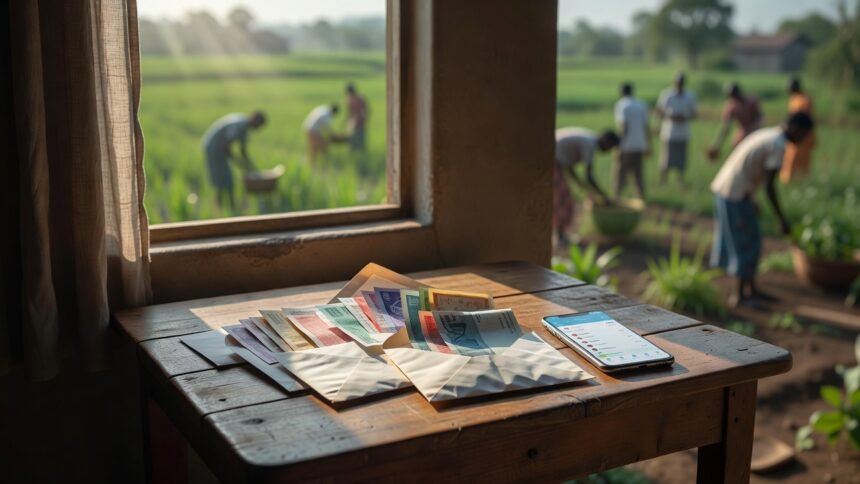
The International Fund for Agricultural Development released its Sending Money Home report on Monday, documenting how remittances have become a critical lifeline for households across developing regions amid economic uncertainties. The $728.6 billion total for 2025 surpasses four times the global official development assistance recorded that year while also exceeding foreign direct investment inflows, according to the UN specialised agency. These funds, sent by approximately 220 million migrants, reach about 1.1 billion family members worldwide and frequently represent up to 60 per cent of recipient household income.
Remittances to low- and middle-income countries have grown by 94 per cent since 2016, even as the migrant population from those nations expanded by only 28 per cent, IFAD data shows. The disparity suggests that each sender is transferring larger amounts on average, often through small but frequent payments of $300 to $400 dispatched nine or 10 times per year. The report underscores the resilience of these flows despite overlapping global shocks including inflation, climate events and geopolitical tensions.
Asia and the Pacific absorbed the largest portion with $384.9 billion, accounting for 53 per cent of the worldwide sum, the assessment found. Latin America and the Caribbean experienced the most rapid expansion of any region, with inflows climbing 132 per cent over the decade to $168.6 billion. Africa saw receipts rise 86 per cent to $124.2 billion, where Egypt has overtaken Nigeria as the top recipient on the continent.
India led individual country inflows at $150 billion, followed by Mexico with $64 billion, while the Philippines, Egypt and Pakistan each received around $40 billion, IFAD figures place. Together these five nations captured nearly half of all remittance volumes sent to low- and middle-income countries. One-third of the global aggregate, equivalent to $233 billion, was directed to rural communities that commonly lack formal banking access and adequate infrastructure.
Digital channels now handle about half of all transactions, a sharp shift from a decade ago when cash dominated 90 per cent of transfers, according to the report. The spread of mobile technology and online banking platforms has lowered costs and improved speed for senders and recipients alike. In several markets, nearly three-quarters of inbound remittances arrived via digital means in 2025.
The agency highlighted that in 23 countries remittances exceed 10 per cent of gross domestic product, reaching 58 per cent in Tajikistan, 33 per cent in Lebanon and 30 per cent in Honduras. A separate study referenced in the document showed that a 10 per cent increase in per capita remittances correlates with a 3.5 per cent reduction in the poverty headcount. Women now make up half of remittance senders, totalling 100 million, and tend to dispatch a higher share of their earnings on a regular basis despite often lower wages.