ع




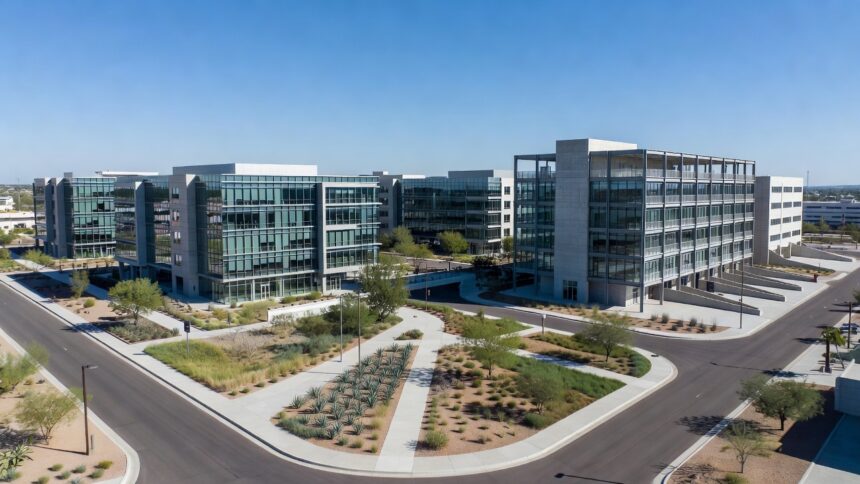
The Dubai Integrated Economic Zones Authority disclosed details of the project on October 4 as Dubai CommerCity prepares to strengthen its position as the region’s dedicated free zone for digital commerce. Phase two will unfold across the Business, Logistics and Social clusters with delivery staggered between the first quarter of 2027 and the fourth quarter of 2028, according to the authority’s statement. The development builds on the free zone’s initial AED 3.2 billion establishment as a joint venture between the authority and Wasl Group, which combined regulatory expertise with property development capabilities to create an integrated ecosystem for e-commerce operators.
Occupancy across Dubai CommerCity’s office, logistics and retail facilities has reached nearly 96 per cent, a level that mirrors the 96 per cent average recorded by the broader DIEZA portfolio in the first half of 2026. The authority’s figures show the number of companies registered in its zones rose 13 per cent year on year during that period while the workforce expanded 24 per cent, underscoring sustained demand for specialised digital trade infrastructure. Sheikh Ahmed bin Saeed Al Maktoum, chairman of the Dubai Integrated Economic Zones Authority, stated that the expansion arrives as Dubai demonstrates its ability to grow despite global economic shifts.
Six new office buildings in the Business Cluster will supply shell-and-core, fully fitted and plug-and-play solutions tailored to companies at different growth stages, the authority’s project outline indicated. Combined with additional space in the Social Cluster, these additions will contribute 86,000 square metres to the overall increase. The Logistics Cluster will feature The Hive, a 5,600-square-metre vertical facility offering 181 flexible units equipped with climate-controlled fulfilment areas and digitally managed loading zones to optimise operations for online retailers.
Dubai CommerCity’s focus on future commerce aligns with the Dubai Economic Agenda D33, which aims to double the size of the emirate’s economy over the next decade with digital transformation allocated AED 1 trillion, according to the Executive Council platform. Nationally the UAE Digital Economy Strategy seeks to double the digital economy’s contribution to GDP from 9.7 per cent in 2022 to 19.4 per cent within a decade, the official government platform stated. The free zone provides licensed businesses with office, warehouse and coworking options alongside logistics support and community amenities designed to accelerate cross-border digital trade.
A statement from the authority noted that the new capacity will enable further expansion for technology and e-commerce firms already drawn to the location’s strategic connectivity and regulatory framework. The development arrives against a backdrop of robust performance for the authority’s three zones, which together contributed 5.1 per cent to Dubai’s GDP and 13.5 per cent to non-oil foreign trade in 2023 according to DIEZA statistics. Wasl Group, the joint-venture partner responsible for property elements, brings experience managing extensive real estate portfolios that support such large-scale commercial projects.
Sheikh Ahmed bin Saeed Al Maktoum added that the investment reflects growing investor confidence in Dubai’s economic model and its capacity to anticipate needs of the new economy. The authority’s announcement emphasised that the projects will diversify available facilities and expand the integrated ecosystem serving digital commerce and technology operators. Delivery of the first elements in early 2027 will mark the initial step in a programme designed to sustain the free zone’s momentum through the remainder of the decade.