
 ع




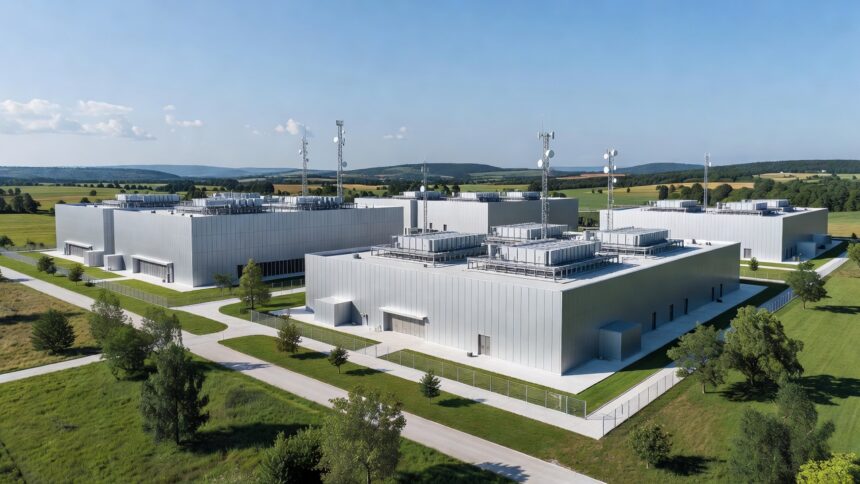
Alibaba Cloud will establish its first cloud regions in Turkey, Finland and the Netherlands over the next 12 months while expanding its data centre footprint in Malaysia, Germany, the United Arab Emirates, France and Hong Kong, the company announced at its Apsara conference in Hangzhou. The moves form part of a broader acceleration in Europe and the Middle East that supports Alibaba’s push into localised cloud and artificial intelligence services amid intensifying competition with the United States. Alibaba executive Li Feifei, who serves as chief technology officer and president of international business for Alibaba Cloud Intelligence, outlined the expansion during the flagship event on Wednesday. The Chinese e-commerce leader aims to bolster its ability to deliver AI capabilities to enterprises in these markets, according to details shared at the conference.
The expansion announcement aligns with Alibaba’s target of operating more than 20 gigawatts of global data centre capacity by 2032, a goal reiterated by company leadership at the event. Citigroup estimates that this infrastructure buildout could generate more than $160 billion in external cloud revenue over time. Alibaba has opened new facilities in Brazil and France in recent months to bring generative AI services to local businesses, Bloomberg News reported. The company maintains a global cloud network stretching from Japan through Southeast Asia into the Middle East.
Li Feifei said at the conference, “We are committed to working closely with our global ecosystem to make AI more scalable, practical and accessible for businesses.” The statement underscored Alibaba’s focus on full-stack cloud and AI solutions for sectors including software, electronics, logistics, gaming, IT and entertainment. Alibaba Cloud described the initiative as empowering enterprises to enhance efficiency and accelerate innovation through advanced technologies. The executive’s remarks came as the firm unveiled collaborations with international partners such as Panasonic Digital and Unity China.
Alibaba Group chief executive Eddie Wu told the conference that the company plans to train new foundation models with between five trillion and 10 trillion parameters, significantly larger than existing open-weight models. Wu also highlighted the development of a new AI chip called Zhenwu V900, which the firm claims delivers three times the performance of its predecessor. These software and hardware advances underpin the data centre expansion, according to the company’s presentation. The developments coincide with heightened global interest in AI infrastructure.
Alibaba’s latest moves build on its existing presence in the Middle East, where it launched a second data centre in Dubai in 2025 to support cloud and AI capabilities in the region. The firm has committed substantial investments to cloud and AI infrastructure worldwide, including plans for additional facilities beyond the countries named on Wednesday. Industry analysts note that such expansions help address surging demand for computing power driven by generative AI applications. The Apsara conference served as the platform for detailing both the geographic growth and the technical advancements.
The announcement arrives against a backdrop of rising AI adoption across the targeted markets, where enterprises seek scalable solutions for digital transformation. Alibaba Cloud’s international business unit has prioritised partnerships that localise its services while maintaining compliance with regional regulations. Company statements emphasised that the added capacity will strengthen offerings in key verticals without providing specific investment figures for the new regions. Further details on implementation timelines are expected in coming quarters as the 12-month rollout begins.