

 ع
ع



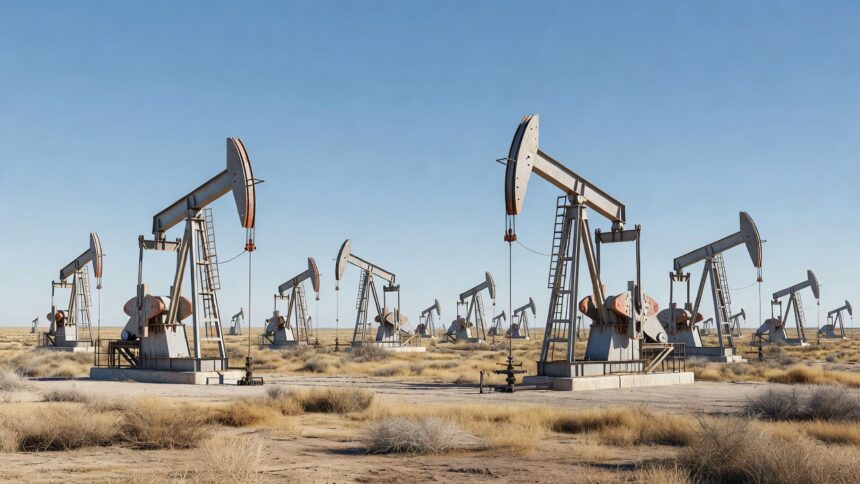
The Emirates News Agency reported that oil prices fell on Tuesday with both major benchmarks recording losses of more than 2 percent at settlement in New York. Brent crude futures declined by $1.72, or 2.2 percent, to close at $76.30 a barrel while West Texas Intermediate crude futures dropped $1.57, or 2.1 percent, to $74.40 a barrel. The Tuesday session reflected continued volatility that has characterized the oil market through much of 2026. Market participants weighed various factors including inventory levels and production policies from leading producers.
According to earlier reports from the Emirates News Agency, Brent crude had fallen to $96.30 per barrel in May before recovering and then facing new pressure in July. The latest dip brought the price below some analyst expectations for the third quarter. WAM data places the recent high for the year above $106 per barrel in prior months. This latest adjustment on Tuesday occurred as traders looked ahead to upcoming economic releases from major economies.
A separate WAM report from early July showed Brent settling at $73.34 per barrel on one day, illustrating the narrow range in which the commodity has traded recently. The Tuesday decline fits within that pattern of incremental moves rather than sharp swings. Industry observers tracked the performance against the US dollar index which strengthened during the session. Such currency movements often exert additional influence on dollar-denominated commodity prices.
The International Energy Agency has issued assessments showing global oil supply and demand balances, although specific figures for July were not detailed in the Tuesday report. WAM has covered multiple such dips throughout the summer months of 2026. Participants in the futures market adjusted their positions accordingly in response to the settlement levels. The volume and open interest figures were not specified in the initial dispatch.
Following the Tuesday settlement, attention shifted to potential responses from producing nations. OPEC has maintained a policy of monitored output adjustments to stabilize the market, according to repeated statements covered by the news agency. The cumulative effect of recent dips has kept prices in a range that supports neither excessive optimism nor deep pessimism among traders. Additional data releases later in the week were anticipated to provide further clarity.
WAM noted that the declines occurred amid a broader set of commodity market movements. The energy sector as a whole reflected caution ahead of key inflation data from the United States. This environment has defined trading patterns for oil in recent sessions.