
 ع
ع



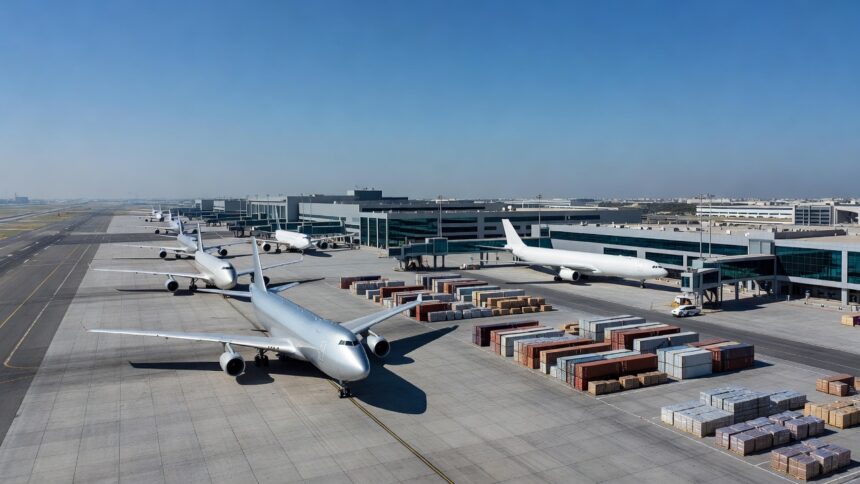
Dubai Customs figures show its Air Cargo Centres Management handled approximately 18.2 million customs transactions during the first six months of 2026, up 53 percent from 11.9 million in the same period a year earlier. Total shipment weight reached 1.3 million tons, a 47 percent rise from 886,000 tons previously recorded. The authority has emphasised how reduced processing times and enhanced capacity are helping position Dubai as a preferred hub for global logistics operators facing tighter supply chain schedules. These outcomes arrive as regional trade patterns continue to evolve, with officials noting the need to balance security controls against demands for speed in commercial flows.
Within the air cargo sector, the Free Zone Department logged 17.7 million transactions compared with 10.9 million a year earlier, producing 62 percent growth according to the same data set. It cleared more than 6.2 million postal parcels in the period, underlining the shift toward high-volume, low-weight e-commerce shipments that require rapid turnaround. Dubai Customs has developed dedicated systems to manage such flows while upholding compliance standards across thousands of daily declarations. The parcel surge aligns with wider digital commerce trends that have compressed delivery expectations for businesses and consumers alike.
Mohammed Al Ghaffari, executive director of the Customs Inspection Division, said these results reflect Dubai Customs’ shift from facilitating trade to empowering it. He noted that customs work now extends to supporting trade and economic growth, improving the business environment, reducing time and cost, and strengthening Dubai’s ability to attract trade flows and investments linked to the shipping, distribution, logistics, and digital economy sectors. Al Ghaffari added that the division strikes a balance between border protection and the smooth movement of goods, ensuring reliable supply to local markets while advancing the goals of the Dubai Economic Agenda.
New facilitations introduced by Dubai Customs this month include raising the customs duty exemption threshold for eligible cross-border e-commerce goods to Dhs1,000, effective 3 August 2026. The authority is also exempting returned goods imported for personal use from duties if previously paid and sent back within 60 days, though the measure excludes tobacco, e-cigarettes, alcohol and related products. These steps form part of the Cross-Border E-Commerce Platform that integrates digital trade operators with streamlined clearance processes. Officials expect the adjustments to lower costs for logistics providers handling rising parcel volumes.
Operational strain tests in May demonstrated the centres’ expanded capacity, with imported goods cleared through Cargo Village at Dubai International Airport and the Air Cargo Centre at Al Maktoum International Airport reaching 48.26 million kilogrammes, an 82 percent increase from 26.56 million kilogrammes recorded in January. Peak daily throughput climbed to 2.11 million kilogrammes from 1.24 million kilogrammes over the same comparison, Dubai Customs reported. The authority attributed the flexibility to stepped-up inspections, innovative procedures and staff training programmes that maintain service levels without compromising regulatory oversight. Such performance occurred against a backdrop of regional disruptions that tested supply chain resilience throughout the first half.
WAM data released in July placed UAE non-oil foreign trade at AED1.937 trillion for the first half of 2026, a 13.1 percent increase from the prior comparable period, with non-oil exports rising 23.9 percent to AED452.8 billion. Dubai Customs officials have linked their internal gains to this national expansion by shortening clearance intervals and deploying artificial intelligence tools for risk assessment and physical examinations. Abdulla Ahmad Alblooshi, director of Air Cargo Centers Management, said success is measured not only by transaction counts or tonnage but by the speed provided to traders and the operational efficiency enabled for their businesses. He stated that the authority continues to equip centres with smart technologies to accelerate processing while meeting all compliance requirements.