
 ع
ع



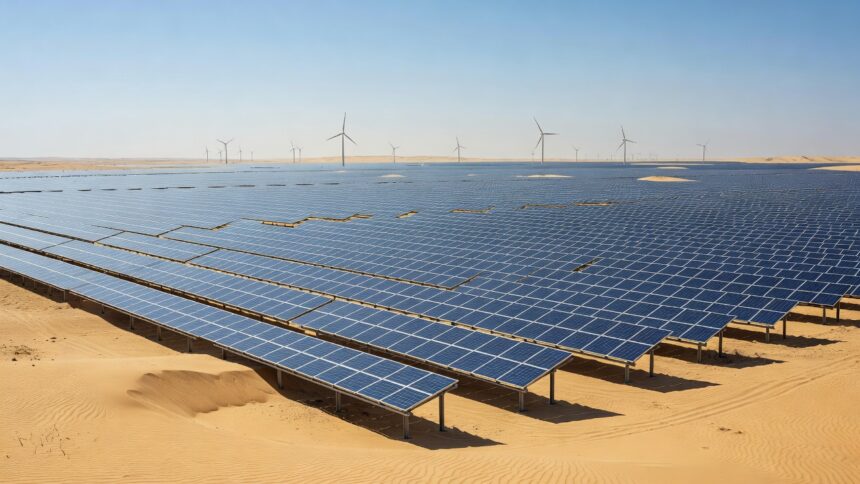
The Ministry of Energy and Infrastructure highlighted the UAE’s substantial progress in expanding its clean energy infrastructure as part of a national strategy to diversify the energy mix and enhance grid reliability. Sharif Al Olama, undersecretary for energy and petroleum affairs at the ministry, detailed how federal and local cooperation along with contributions from national companies and the private sector have driven this expansion. He noted that this growth aligns with the country’s vision for a sustainable and secure energy system capable of meeting rising future demand while strengthening interconnections across the grid.
Clean energy accounted for 32.4 percent of electricity generation in 2025 with a target of 35 percent by 2031 according to ministry figures. Electricity generated from clean sources exceeded 62.4 terawatt hours last year while total generation reached 192.7 terawatt hours against consumption of 174.5 terawatt hours. The installed clean energy capacity which spans nuclear power photovoltaic concentrated solar power wind energy and waste-to-energy technologies now stands at 13.8 gigawatts.
The ministry pointed to the Al Dhafra round-the-clock solar project combined with battery storage as a model for providing continuous renewable power supply. Real-time network monitoring through the Emirates Grid Monitoring Centre has supported operational improvements alongside a Siemens-coordinated study on renewable energy management. These initiatives have helped the UAE secure multiple international awards for its advancements in the energy transition.
A separate assessment from the International Renewable Energy Agency placed the UAE’s non-nuclear renewable capacity at roughly 7.9 gigawatts by the end of 2025 with solar photovoltaic additions accounting for the majority of new installations that year. Francesco La Camera the director general of IRENA described the UAE as a central actor in the global energy shift through its investments and cross-border cooperation. He singled out the Al Dhafra development as a replicable blueprint for delivering reliable renewable electricity around the clock.
Industry projections from Mordor Intelligence forecast the UAE renewable energy market expanding to 13.65 gigawatts by 2031 at a compound annual growth rate above 11 percent. This outlook incorporates an elevated national target of 22 gigawatts of renewable capacity by the same year with major sites such as the Mohammed bin Rashid Al Maktoum Solar Park continuing to add substantial photovoltaic output. Pumped hydro storage has also entered the mix providing greater flexibility for rising shares of variable renewable generation.
Such advances support broader international objectives under the UAE Consensus reached at COP28 which calls for tripling global renewable power capacity by 2030 an IRENA tracking report stated. The Middle East region added 4 gigawatts of renewable capacity in 2024 according to the same analysis with the UAE maintaining a leading position through large-scale solar wind and storage deployments. Al Olama emphasised continued efforts to develop competitive electricity markets expand cross-border interconnections and integrate advanced data tools for optimised resource management.