
 ع




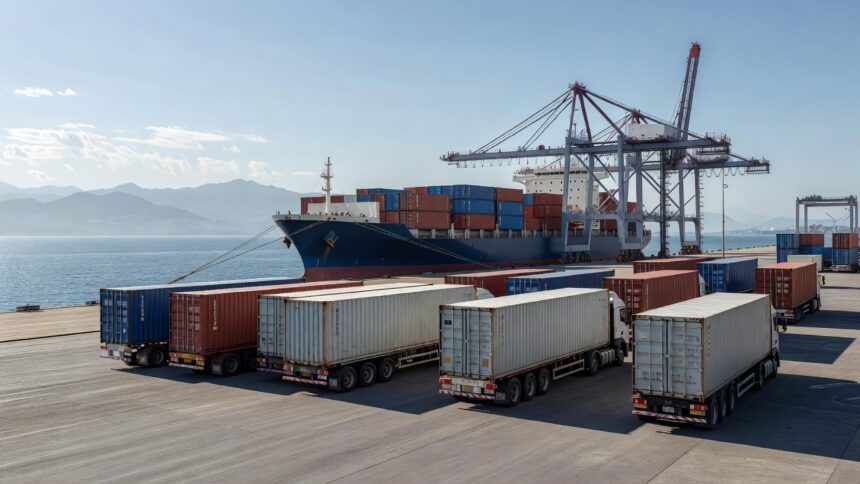
The Sharjah Ports, Customs and Free Zones Authority has recorded a 66.26 percent rise in the value of cargo moved through the Sharjah-Oman logistics corridor during the first three months of 2026, WAM reported. This growth underscores the corridor’s rapid adoption following its official launch, which aimed to strengthen supply chain links between the UAE and Oman. The authority attributed the increase to streamlined customs procedures and enhanced connectivity via key border points.
The corridor operates primarily through the Khatmat Malaha border crossing in Kalba and the Al Madam crossing, facilitating direct sea-land transport to Omani ports including Sohar, Duqm and Salalah. According to a Gulf News report, the route has reduced typical transit times from three months to 35 days while exempting approved trucks from toll fees in Sharjah. These measures have lowered overall transportation costs and boosted trade volumes in both directions.
Oman’s National Centre for Statistics and Information figures show that the UAE remained the sultanate’s top trading partner in non-oil exports during 2025, with exports reaching RO1.311 billion, a 25.3 percent increase from the prior year. The strong performance in bilateral trade provides a foundation for continued growth through dedicated logistics channels like the Sharjah corridor. Re-exports to the UAE also climbed 27.2 percent to RO724 million, the centre’s data indicated.
Mohammed Ibrahim Al Raisi, director of border crossings at the Sharjah Ports, Customs and Free Zones Authority, stated that the corridor has achieved promising results in import and export activity. He noted its role in diversifying supply chains and supporting the business environment in coordination with Omani customs. The initiative aligns with broader efforts to improve regional connectivity amid evolving global trade dynamics.
Additional data from the authority revealed increases in both the volume and value of goods crossing the border points of Kalba and Al Madam. The corridor enables flexible clearance options, including at inland terminals, further easing operations for traders. Industry observers expect further acceleration as the system matures and more businesses integrate it into their logistics planning.
In the first year of operation, the corridor has already seen hundreds of shipments moving between Port Khalid in Sharjah and Sohar Port in Oman. This activity comes as overall Oman-UAE trade demonstrated resilience, with imports from the UAE rising 5.4 percent to over RO4.1 billion in 2025, according to Omani statistics. The logistics improvements are poised to sustain this upward trajectory into the current year.