
 ع
ع



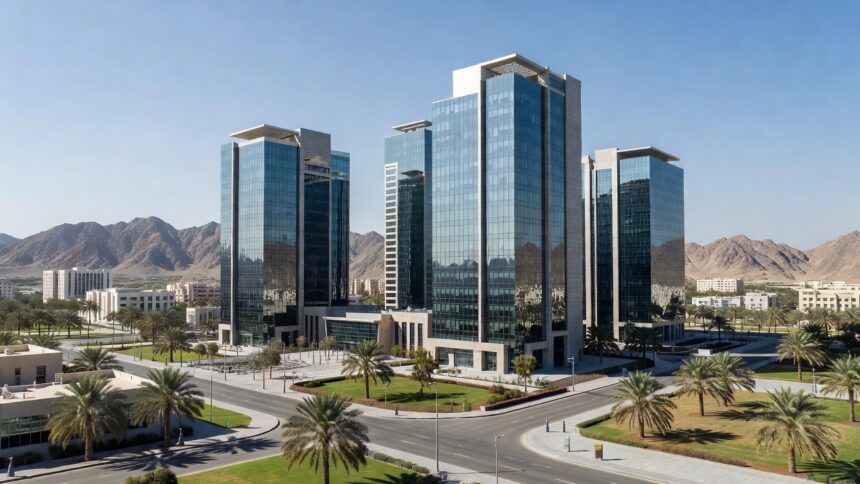
The Oman Global Financial Centre will enjoy legislative, administrative and regulatory autonomy to build an environment for commercial banks along with specialised institutions focused on Islamic banking, finance, insurance and associated services, the Oman News Agency reported. Planners intend the initiative to facilitate knowledge transfer and high-quality job creation through a fresh legal, judicial and regulatory structure that meets international benchmarks. Sultan bin Salim Al Habsi, the minister of finance and chairman of the Financial and Economic Committee, stated that the establishment of the center will contribute to enhancing the role of the financial sector in achieving the objectives of economic diversification, in integration with efforts to develop the financial and investment sector and the future directions aspired to by the Sultanate of Oman.
Al Habsi added that the centre will serve as an enabling environment with multiple privileges for managing investments, establishing companies, and forming business partnerships based on facilitating the movement of capital and financial services and supporting financial innovation. He explained that through this centre, Oman will benefit from its advantages in terms of political stability, investment attractiveness, and economic partnerships with various countries around the world. The move forms a central element of Oman Vision 2040, which a World Bank assessment described as a roadmap for building a diversified, knowledge-driven economy less dependent on hydrocarbons.
Oxford Business Group figures show that insurance and finance contributed 5.8 percent of gross domestic product in the first quarter of 2024, with the share expected to keep rising in subsequent years. An International Monetary Fund review published in January 2026 found the Omani financial sector resilient, with banks holding ample capital and liquidity buffers amid non-hydrocarbon growth that reached 4.1 percent in the first half of 2025. Central Statistical Bureau data placed non-oil activities at roughly 73 percent of the economy in 2024, underscoring the diversification momentum the new centre is designed to accelerate.
Comparable entities such as the Dubai International Financial Centre have attracted more than 8,000 registered firms and managed substantial banking assets by providing independent regulatory regimes, industry benchmarks indicate. The Omani project will be based in Madinat Al Irfan in Muscat and is set to offer income tax exemptions for qualifying entities for up to 50 years, according to a subsequent Ernst & Young analysis of Royal Decree No 8/2026 issued days after the initial approval. The framework also envisions a dedicated judicial system with primary and appeal courts to resolve disputes efficiently.
Al Habsi chairs the committee that recommended the centre to the full Council of Ministers as part of sustained efforts to broaden the non-oil revenue base. The IMF’s 2025 Article IV consultation projected overall economic growth at 2.9 percent for 2025 before accelerating further, supported by fiscal surpluses that reached 0.7 percent of GDP. Authorities plan to issue detailed licensing rules and operational guidelines in coming months to translate the approval into active recruitment of international participants.