
 ع
ع



The Central Bank of Bahrain reviewed monetary and banking indicators through April 2026 during the board of directors’ second meeting of the year. Money supply expanded by BD1.4 billion to BD18.1 billion compared with the same period a year earlier. Total private deposits at retail banks climbed 8.8 percent year on year to BD14.7 billion while outstanding loans and credit facilities to resident economic sectors rose 8.5 percent to BD13.4 billion with the personal sector accounting for 46.6 percent of the total and the business sector 40.8 percent.
Central Bank of Bahrain data placed the combined balance sheet of retail and wholesale banks at $254 billion at end-April 2026 marking a 3.8 percent increase from April 2025. The overall capital adequacy ratio for the banking sector advanced to 20.8 percent in the first quarter of 2026 from 20.6 percent a year earlier. Islamic retail banks posted a capital adequacy ratio of 25.7 percent conventional retail banks stood at 25.2 percent conventional wholesale banks recorded 17.4 percent and Islamic wholesale banks registered 17.3 percent according to the Central Bank of Bahrain figures.
The number of registered collective investment undertakings grew to 1,747 by March 2026 from 1,737 in March 2025 according to Central Bank of Bahrain statistics. Total net asset value of these funds reached $10.929 billion in the first quarter of 2026. Sharia-compliant collective investment undertakings saw their net asset value increase 24.6 percent to $2.498 billion from $2.004 billion in the first quarter of 2025.
Point-of-sale transactions from January to April 2026 totalled 82.3 million with a 1 percent increase from the prior year while their value fell 8.1 percent to BD1.5 billion the Central Bank of Bahrain data showed. Contactless payments accounted for 75.5 percent of transaction volume and 52.3 percent of total value during the period. Electronic transactions continued to dominate retail activity in the kingdom.
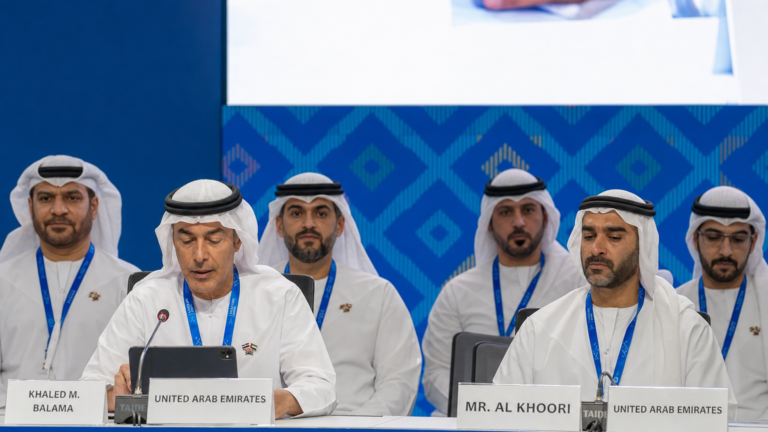
The Central Bank of Bahrain board meeting was chaired by Hassan Al Jalahma. Governor Khalid Humaidan briefed directors on key financial priorities including the performance of liquidity support and loan deferral programmes. The session also covered a newly signed currency swap agreement with the Central Bank of the United Arab Emirates and the central bank’s artificial intelligence strategy.
A Bahrain Economic Development Board factsheet identified the financial services industry as the largest non-oil contributor to real GDP. Banking sector assets stood at $217.5 billion in 2021 according to the development authority. The Central Bank of Bahrain stated in a March 2026 release that the sector continued to record strong financial soundness indicators with capital adequacy and liquidity ratios above regulatory requirements.
The Central Bank of Bahrain maintains a regulatory framework that requires forward-looking stress testing and multi-year capital planning for financial institutions according to a Chambers and Partners guide. Boards hold responsibility for overseeing solvency liquidity and risk appetite frameworks. Grant Thornton industry analysis from the prior year had already noted capital buffers with a sector capital adequacy ratio of 20.3 percent in June 2025.