
 ع
ع



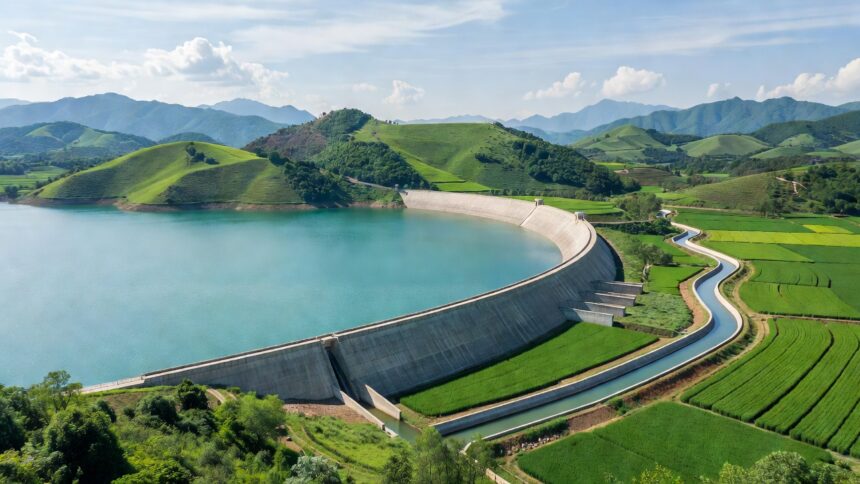
The Ministry of Water Resources reported that fixed-asset investment in water conservancy projects totalled more than 530 billion yuan, equivalent to over $75 billion, during the first six months of the year. This figure marks a year-on-year increase driven by accelerated construction of major reservoirs, river embankments and water diversion channels. According to the ministry, 2,148 large and medium-sized projects commenced in the period, with emphasis on reinforcing flood control infrastructure in vulnerable basins.
Central government budgetary allocations accounted for a substantial portion of the total, supplemented by local bonds and private capital participation, the ministry’s data shows. Investment prioritised the Haihe, Huaihe and Yellow River basins where heavy rainfall events have intensified in recent years. The ministry stated that completed projects have already expanded irrigated farmland by more than 1.5 million hectares while improving water supply reliability for rural communities.
A separate assessment by the World Bank places China’s annual water investment needs at roughly $100 billion to address both scarcity in northern regions and flood risks in the south through 2030. The first-half spending therefore represents three-quarters of that benchmark pace, the assessment found. Ministry officials noted that 85 percent of the funds were directed toward construction, with the remainder supporting planning, environmental assessments and maintenance of existing facilities.
The National Development and Reform Commission coordinated inter-agency approvals to expedite project starts, according to a joint statement released alongside the investment figures. This coordination reduced average approval times by nearly 30 percent compared with the previous year, the statement indicated. Provincial governments in Henan, Shandong and Sichuan led regional spending, each committing more than 40 billion yuan to local water schemes.
International benchmarks compiled by the Asian Development Bank show that China’s per-capita water infrastructure spending now exceeds the average for upper-middle-income countries by roughly 40 percent. The bank attributed the gap to Beijing’s long-term strategy of treating water security as a foundational element of food and energy production. Ministry data further places the number of people who gained access to safe drinking water through first-half projects at 12 million.
Looking ahead, the Ministry of Water Resources indicated that full-year investment is on track to surpass 1 trillion yuan for the first time, building on the momentum established in the opening semester. Planners have identified an additional 1,200 projects for launch in the second half, focusing on smart irrigation systems and groundwater recharge initiatives. The ministry emphasised that all projects undergo rigorous environmental impact reviews before ground is broken.