
 ع
ع




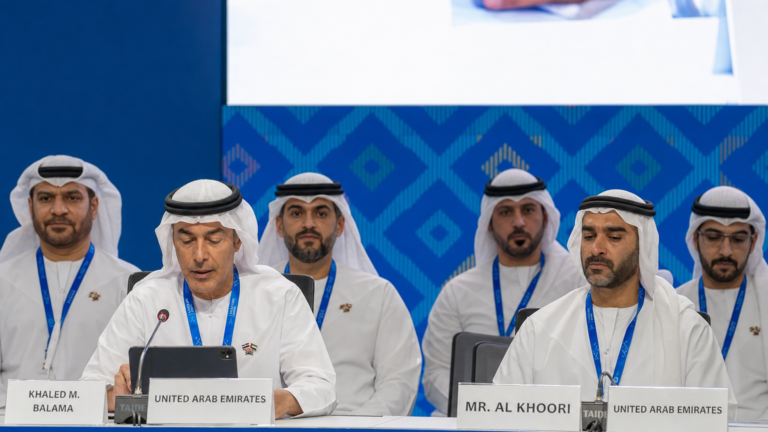
The International Monetary Fund staff team concluded that the UAE economy showed significant resilience amid geopolitical tensions in the Middle East, attributing the outcome to sound fundamentals, ample policy buffers and swift, targeted support measures. The visit, which ran from July 7 to 16, involved discussions on recent economic developments, the outlook and policy priorities in preparation for the 2026 Article IV Consultation. According to the Central Bank of the UAE, which coordinated the mission across 35 federal and local entities, the IMF team found that these elements helped contain the shock’s impact while preserving financial stability and market confidence. The assessment reported no material effect on the banking sector’s health or payment systems despite regional challenges.
Central Bank of the UAE data presented during the consultations indicated that the banking sector continued to hold robust capital and liquidity levels, enabling credit and deposit growth even under pressure. The IMF staff team highlighted how banks had established strong financial positions prior to recent regional developments, supporting ongoing lending activity. According to Central Bank of the UAE figures, the Proactive Financial Institution Resilience Package launched in mid-March contributed substantially to this stability by enhancing institutional preparedness. Banking assets expanded 2.1 percent, loans rose 3.2 percent and deposits increased 1.9 percent between early March and early May.
The Central Bank of the UAE introduced the five-pillar Resilience Package on March 17 to reinforce sector stability and provide liquidity support to the broader economy. Measures included greater access to reserve balances, term liquidity facilities in dirhams and dollars, temporary adjustments to liquidity and funding ratios, and the release of countercyclical and capital conservation buffers. A Central Bank of the UAE announcement at the time noted foreign exchange reserves exceeding AED 1 trillion along with a monetary base cover ratio of 119 percent as backing for the initiative. By early May, facilities extended under the package totalled AED 6.2 billion for more than 65,000 beneficiaries, the majority individuals along with thousands of small firms and corporates.
Central Bank of the UAE Governor Khaled Mohamed Balama said after chairing the concluding session, “These consultations provide an important platform for strengthening our existing cooperation with the IMF and exchanging views on the latest developments and future priorities. We also value the close cooperation among the relevant entities in the UAE and remain committed to reinforcing monetary and financial stability, while strengthening the financial system’s preparedness and capacity to keep pace with the regional and global changes and developments. The positive outcomes of the visit reaffirm the resilience of the UAE economy and the soundness of its financial sector.”
IMF staff team head Said Bakhache stated, “The UAE economy has demonstrated significant resilience amid the geopolitical conflict in the Middle East. Sound fundamentals, ample policy buffers, advanced preparedness, and a swift policy response have contained the overall impact of the shock. The authorities’ timely and well-targeted support measures have helped preserve financial stability, safeguard essential supply chains, support affected sectors and households, and sustain market confidence, underscoring the UAE’s institutional capacity to navigate a major external shock.” The team pointed to sustained strength in trade, aviation and logistics activities combined with domestic demand as additional factors that limited the regional developments’ economic effects.
The IMF staff team projected that the fiscal balance would stay in surplus, supported by elevated oil prices, disciplined budgeting practices and low public debt that affords considerable fiscal space, according to the Central Bank of the UAE summary of the visit. This fiscal position complements the banking sector’s performance by supplying further buffers against external risks. The mission also featured a review of the Central Bank of the UAE’s Cybersecurity Operations Centre, including its application of artificial intelligence to improve risk management and operational efficiency.