 ع
ع


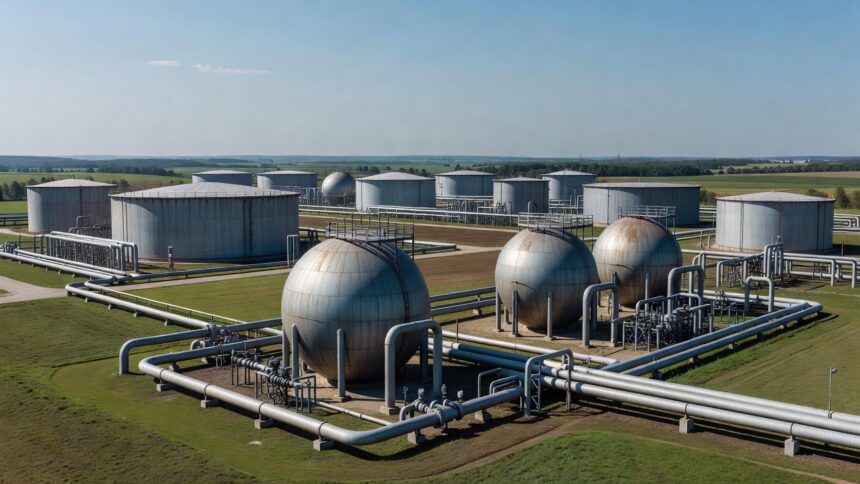
Germany’s gas storage facilities are currently less full than at any point at this time of year since records began in 2011 according to gas storage group INES. “The current gas storage level is by far the lowest ever recorded for this time of year in Germany” Sebastian Heinermann the group’s managing director told dpa. “It is therefore a historic low” he added. The facilities stand at 49 percent full compared with 67 percent at the same time last year.
The German Economy Ministry sought to ease concerns about possible shortages over the winter. It stated that based on current information a gas shortage was not expected. The ministry said it was taking seriously the fact that Germany’s gas storage facilities were significantly less full than in previous years. Yet it added that security of supply could not be judged on storage levels alone as the country draws on multiple import sources.
Germany receives gas via pipelines from Norway, liquefied natural gas import terminals and neighbouring European countries the ministry noted. Heinermann warned even if all currently booked storage capacity equivalent to 78 percent of Germany’s total capacity were completely filled by winter the amount would not be enough to fully safeguard supplies in the event of extremely low temperatures. Market conditions have reduced the incentive for additional injections the industry group indicated.
Gas procurement costs are currently often higher than the prices that can be obtained for it in winter leaving little economic incentive to put more gas into storage according to Heinermann. This dynamic has contributed to the slower than usual refilling pace observed across German facilities this summer. Comparable trends have emerged in neighbouring markets where storage levels also lag historical averages.
Data compiled by Gas Infrastructure Europe showed EU-wide gas storage at approximately 59 percent in mid-August. That level represents the lowest for the period in several years and falls more than 20 percentage points short of recent seasonal norms the figures indicate. Germany accounts for a significant share of the regional shortfall alongside the Netherlands.
The Economy Ministry underlined that private companies including gas suppliers and traders bore primary responsibility for preparing for winter. It cautioned that state intervention carried risks and could distort market signals. The situation marks a departure from the aggressive storage mandates employed during the 2022 energy crisis when Berlin pushed for higher reserves to counter the loss of Russian pipeline deliveries. Officials continue to track injection rates as summer draws to a close.