
 ع
ع



Energy and Natural Resources Minister Alparslan Bayraktar told delegates at the Istanbul Climate Finance Summit that Türkiye requires at least $80 billion in electricity infrastructure investment through 2035. The minister stressed that public finance alone will not suffice for the scale of upgrades needed as the world seeks to rethink and strengthen electricity systems. Bayraktar called for the mobilization of private capital along with support from international financial institutions, development banks and long-term institutional investors to reduce risk and lower the cost of capital.
The minister described access to affordable and long-term climate finance as essential for emerging economies such as Türkiye where energy demand and investment needs are expanding most rapidly. Financing mechanisms must make investments in clean energy and climate-resilient infrastructure commercially attractive according to Bayraktar. He warned that the energy transition cannot succeed globally if financing remains expensive or inaccessible in precisely those countries with the fastest growth in requirements.
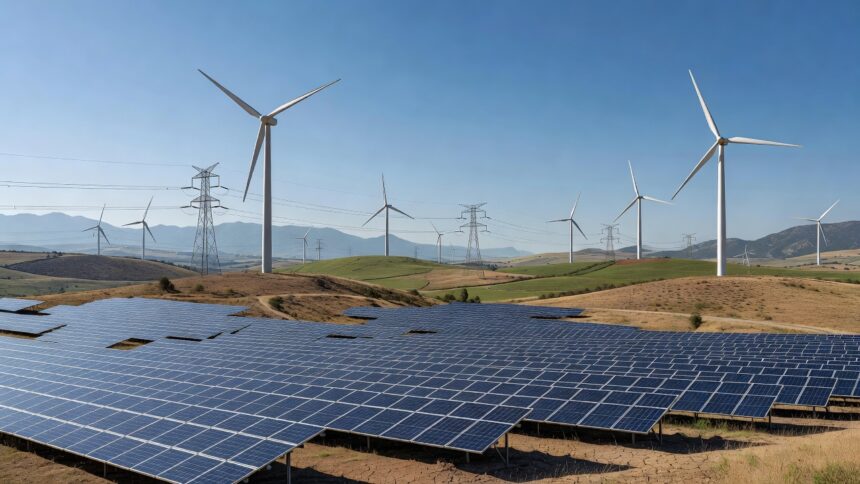
The International Energy Agency’s latest review shows that Türkiye’s electricity demand rose by almost 5 percent a year on average between 2005 and 2024 marking the fastest rate among IEA member countries. Demand is projected to keep climbing through 2035 while renewables supplied 43 percent of electricity generation in 2025 and the National Energy Plan targets a rise to 55 percent by 2035. The agency noted that solar capacity is expected to nearly quadruple and wind capacity to triple over the coming decade with nuclear power also entering the mix.
Türkiye aims to increase combined wind and solar installed capacity to 120 gigawatts by 2035 which will require annual additions of 8 to 9 gigawatts according to projections cited in the Energy Sector Report 2026 prepared by the Presidency’s Investment and Finance Office with APLUS Enerji Danışmanlık. The report places overall financing needs for the energy transition including nuclear investments at approximately $200 billion. Around $80 billion of that total is earmarked for enhancing system flexibility modernizing the grid and expanding transmission distribution and network infrastructure.
Electricity consumption has already climbed 50 percent over the past 12 years to reach 361 terawatt-hours and is forecast to hit 510 terawatt-hours by 2035 according to Barış Erdeniz chairman of the Electricity Distribution Services Association. Installed power capacity is expected to expand to 227 gigawatts necessitating an additional 104 gigawatts. Distribution companies plan to invest $22 billion between 2026 and 2030 focusing on grid modernization digitalization cybersecurity climate resilience and renewable integration.
The Presidential Investment and Finance Office report underscores opportunities for international investors in Türkiye’s energy sector as the country positions itself as a regional hub linking Europe the Middle East and the Caspian. Renewables already account for 62 percent of installed electricity capacity in 2025 with hydropower solar and wind leading the way. Bayraktar has previously indicated that the full investment envelope including renewables nuclear and infrastructure could reach $200 billion by 2035.