 ع
ع


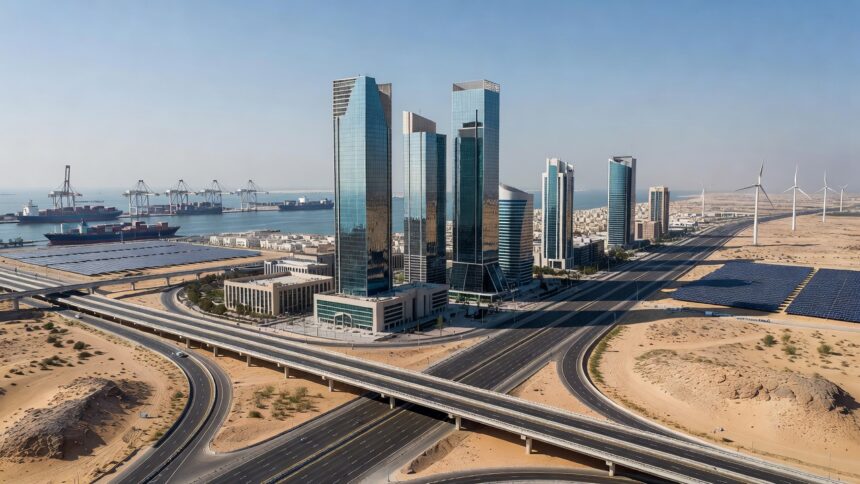
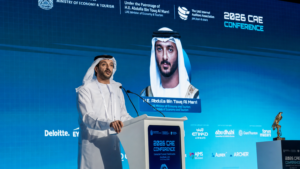
Jasem Mohamed Albudaiwi highlighted how Gulf integration has evolved into a major catalyst for attracting capital and bolstering the region’s position among the world’s leading economies, according to remarks distributed by the Emirates News Agency. The GCC Secretary-General pointed to coordinated policies since the Council’s founding in 1981 as the foundation for this progress, which includes the establishment of a free trade area, customs union and common market alongside joint infrastructure initiatives. Albudaiwi noted that these efforts have produced tangible results, with the bloc now ranking among the 10 largest global economies. National development strategies have further supported this momentum by broadening private sector involvement and regulatory improvements.
The collective GDP of GCC states reached approximately $2.4 trillion last year while sovereign wealth fund assets surpassed $5 trillion and commercial bank assets stood at around $3.9 trillion in 2025, Albudaiwi said. These financial buffers have enabled sustained investment in emerging fields even amid geopolitical uncertainties that have disrupted shipping routes and energy markets. A 2025 International Monetary Fund working paper found that cross-border investment produces roughly three times the non-hydrocarbon growth impact of equivalent domestic spending, underscoring the value of regional ties. Albudaiwi traced much of the current strength to closer economic policy alignment across member states.
Opportunities have expanded significantly in artificial intelligence, renewable energy, logistics, tourism and the knowledge economy as part of the national visions pursued by each country, according to the Secretary-General. Such diversification has helped the bloc move beyond traditional sectors while maintaining stability through joint coordination, he added. The BlackRock Investment Institute projected that GCC economies will direct some $2.1 trillion toward strategic capital spending by 2030, much of it focused on energy infrastructure, digital systems and supply chain redundancy to withstand external shocks. Albudaiwi emphasised that these investments reflect deepening cohesion rather than isolated national efforts.
Inward foreign direct investment stock across the GCC climbed to approximately $792.7 billion in 2025, with intra-GCC flows accounting for $171.4 billion or nearly 22 percent of the total, Albudaiwi reported. This internal investment share demonstrates how integration itself now functions as a magnet for capital from both within and outside the region. The United Arab Emirates alone drew $48.24 billion in FDI last year, placing it ninth worldwide and first in the Middle East per UN Conference on Trade and Development data. Such figures illustrate the shift toward viewing the GCC as a single interconnected economic system.
Albudaiwi described the bloc as remaining open to international partnerships that deliver mutual benefits through trust and innovation. He called on global investors to engage with the GCC as a unified platform that provides access to broader regional and worldwide markets. An Atlantic Council analysis released in July reinforced this view by noting that no single member could independently develop advanced sectors such as artificial intelligence or biotechnology at the required scale. The Secretary-General reaffirmed the importance of long-term collaboration to achieve sustainable prosperity.
Ongoing projects in transport, energy and digital connectivity continue to reinforce the integration process that Albudaiwi outlined, building resilience against global fragmentation. The GCC Railway network and new maritime links exemplify how physical infrastructure supports economic unity, according to separate assessments from the World Economic Forum. These developments align with the financial and regulatory reforms that have attracted record capital inflows despite recent regional tensions. Albudaiwi’s remarks underscore the strategic priority member states place on collective advancement.