ع




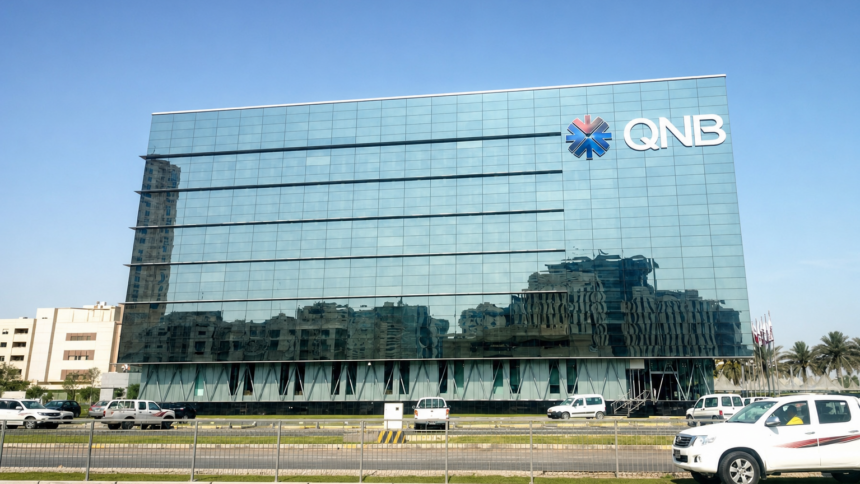
Qatar National Bank detailed the evolution of global trade across three phases in its weekly report released on October 3, 2026. Rapid expansion marked the first decade of the millennium under hyper-globalization, followed by a slowdown after the global financial crisis that the bank termed slowbalization through the 2010s. The current phase features rising protectionism and policy restrictions that are reshaping international commerce along strategic lines rather than dismantling supply chains, according to the QNB analysis distributed by Qatar News Agency.
This shift has prompted a reconfiguration of trade flows through new agreements and partnerships, with the environment now more heavily influenced by geopolitical considerations and resilience needs than by traditional efficiency metrics, the bank said. QNB noted that decisions on production, investment and sourcing increasingly reflect security concerns and proximity to reliable partners amid ongoing global tensions. The report emphasized that while integration based on clear multilateral rules is receding, overall trade volumes continue to adapt without collapsing.
The World Trade Organization’s World Trade Report 2026 warned that a geo-fragmented scenario organized around geopolitical blocs could lower global GDP by 5.1 percent and exports by 18.6 percent by 2050 relative to baseline projections. In comparison, a strengthened multilateral framework might increase GDP by 2.9 percent and exports by 17.9 percent over the same period, a WTO assessment found. These simulations highlight the potential economic costs if fragmentation deepens without renewed cooperation.
World Bank data shows global trade growth has slowed from an average of about 6 percent annually in the 1990s to roughly 3 percent in the 2020s, making the current decade the weakest in four decades. Following 3 percent expansion in merchandise trade volume for 2024, QNB forecast a sharp deceleration in the near term as redirection toward trusted partners raises costs and limits efficiency. The bank concluded that such dynamics would exert downward pressure on global productivity over time.
Group Chief Executive Officer Abdulla Mubarak Al-Khalifa said in a related QNB statement that global trade is not becoming less global but is becoming more selective, regional and resilient. The bank’s international network aims to facilitate cross-border activity by linking markets, capital and opportunities in this evolving landscape, he added. This view corresponds with UNCTAD findings that South-South trade linkages are expanding as developing economies build resilience against volatility in traditional routes.
International Monetary Fund analysis indicates that geopolitical strains and supply disruptions have reoriented trade while supporting resilience in technology and regional agreements, which now cover over 60 percent of global flows. IMF figures place 2025 trade volume growth at nearly 5 percent, driven partly by artificial intelligence-related demand, though forecasts point to moderation in 2026 amid persistent uncertainties. These trends align with QNB’s assessment that the trading system is undergoing a structural rewiring rather than outright retreat.