 ع
ع


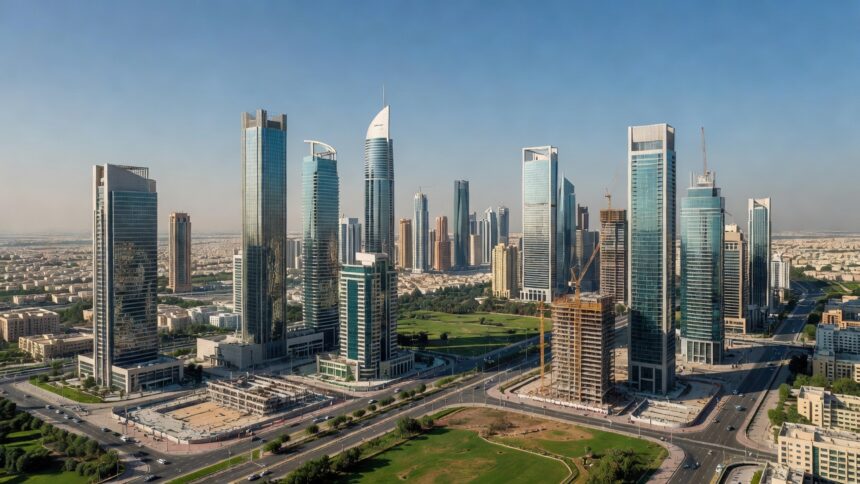
Kuwait Financial Centre Markaz released its Real Estate Outlook for the first half of 2026 in February, forecasting that property markets across the UAE, Saudi Arabia and Kuwait would remain in an accelerating phase. The assessment highlighted steady economic expansion, easing monetary policy and lower interest rates as primary drivers that gained traction in the second half of 2025 and were set to continue. These developments were expected to enhance liquidity and encourage borrowing for residential, commercial and industrial projects throughout the region. According to IMARC Group data, the GCC real estate sector stood at $141.2 billion in 2025 and is projected to grow at a compound annual rate of 7.03 percent through 2034.
Markaz figures detailed strong prior performance in the UAE, where Dubai real estate transactions climbed 28.3 percent year on year to AED554.1 billion in the first nine months of 2025. Abu Dhabi posted sales of AED58 billion, a 75.8 percent increase, alongside a 42.3 percent rise in transaction count to 15,800. Rental yields in Dubai reached 7.47 percent by June 2025, well above comparable rates in Singapore, New York and London. The report anticipated that the UAE market could peak during the first half of 2026 with measured price and rental growth in Dubai and Abu Dhabi before any medium-term moderation.
Saudi Arabia maintained an accelerating trend with residential transactions advancing 17.9 percent quarter on quarter in the third period of 2025, according to the Markaz analysis, as Riyadh and Jeddah led price increases. Office vacancy in Riyadh stood at 0.5 percent, which supported a 7.3 percent annual rise in prime rents. The kingdom’s population had grown to 35.3 million by mid-2024, including 44.4 percent non-Saudis, further bolstering demand. Markaz expected this momentum to carry through the first half of 2026, reinforced by Vision 2030 capital expenditure, in line with Alpen Capital projections of substantial residential supply additions in the kingdom.
Kuwait demonstrated stable expansion as total real estate sales increased 26.9 percent year on year to KD3.043 billion in the first nine months of 2025, the report showed. Investment segment sales jumped 60 percent while residential and commercial segments rose 8 percent and 17.4 percent respectively, with overall transaction volume up 27.8 percent to 4,247. Kuwait’s real GDP was forecast to expand 3.9 percent in 2026 on higher oil output and non-oil activity. Markaz assigned the market a macro index score of 3.45 out of 5.0, indicating prospects for further gains in land prices and rental rates.
Separate analysis from Alpen Capital forecast GCC residential supply climbing from 6.26 million units in 2025 to 7.28 million by 2030, with Saudi Arabia and the UAE accounting for most of the increase. Office stock was projected to expand from 33.3 million square metres to 42.4 million square metres over the same period, led by developments in Riyadh and Dubai. These supply pipelines align with the demand factors emphasised in the Markaz assessment, including infrastructure projects and economic diversification.
UAE real estate maintained strong momentum in the first half of 2026 amid robust demand, subsequent reports confirmed, consistent with the earlier Markaz expectations. Industry data pointed to continued interest in both residential and commercial segments across the three markets. The performance underscores real estate’s ongoing contribution to growth in the UAE, Saudi Arabia and Kuwait.