
 ع
ع



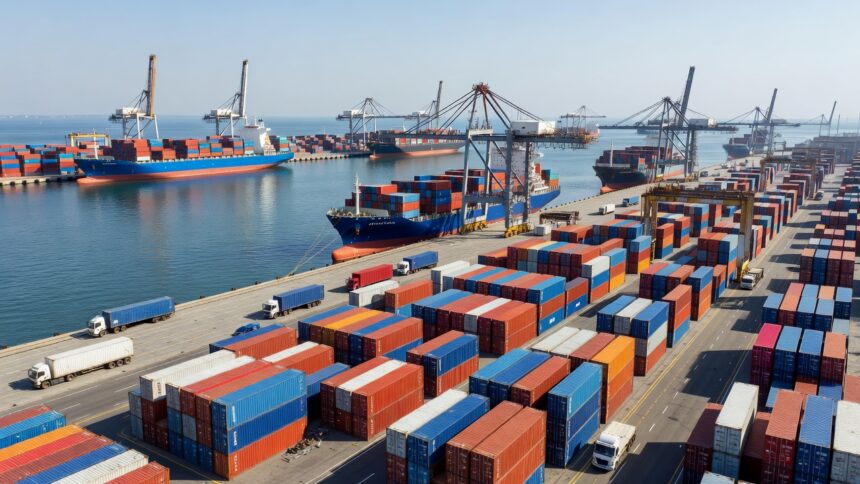
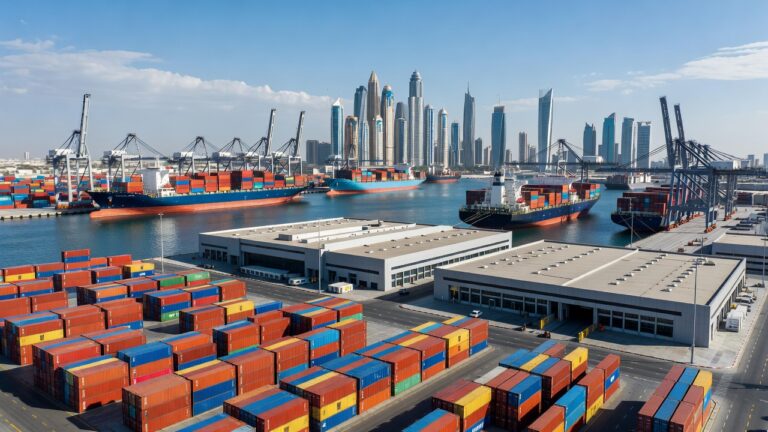
The Organisation for Economic Co-operation and Development reported that G20 merchandise imports expanded 6.7 percent in the second quarter of 2026 after rising 5.2 percent in the first three months of the year. Merchandise exports for the group advanced 5.9 percent compared with 5.7 percent previously, reflecting broad-based gains across several member economies. The pickup occurred even as geopolitical tensions and policy uncertainties continued to shape global commerce patterns.
Preliminary estimates from the Organisation for Economic Co-operation and Development also captured an acceleration in services trade during the period. Services exports climbed 3.4 percent after a 2.0 percent increase in the prior quarter while services imports rose 2.5 percent from 1.5 percent. These figures build on the first-quarter performance in which the Organisation for Economic Co-operation and Development had recorded 5.3 percent growth in both merchandise exports and imports alongside more modest services expansion.
North American results contributed noticeably to the overall momentum, according to the Organisation for Economic Co-operation and Development data. United States merchandise imports grew 7.8 percent from 6.0 percent in the first quarter, supported by demand for computers and information technology equipment, although export growth slowed to 3.9 percent from 9.2 percent despite energy price support for petroleum shipments. Canadian exports surged 13.5 percent from 2.7 percent on higher sales of energy products and motor vehicles while import growth eased to 3.0 percent, and Mexican exports and imports accelerated to 12.2 percent and 7.7 percent respectively.
Several Asian economies posted even stronger advances, the Organisation for Economic Co-operation and Development assessment found. Indian merchandise exports jumped 20.4 percent with gains spread across product categories while imports rose 8.7 percent partly on oil and electronics purchases. South Korean exports increased 19.3 percent, led by semiconductors, and imports expanded 11.6 percent on energy and production equipment, with Chinese services exports surging 16.6 percent on transport, travel and information technology demand.
An earlier Organisation for Economic Co-operation and Development release covering the first quarter of 2026 had already signalled resilience in G20 trade volumes despite disruptions linked to Middle East developments. That report highlighted semiconductor and high-technology flows in East Asia as a supporting factor for the 5.3 percent quarterly rise in merchandise trade. Services trade had shown only modest quarterly gains of 1.7 percent for exports and 1.5 percent for imports at the start of the year.
The International Monetary Fund separately noted in its August 2026 G20 report that economic growth across the group has remained resilient amid successive shocks although medium-term prospects face structural headwinds. A World Trade Organization review indicated that global trade grew faster than anticipated in 2025 but faces slower expansion in 2026 owing to conflict impacts and moderating investment trends. These assessments underscore the role of merchandise and services flows in sustaining broader G20 economic activity through the first half of the year.