

 ع
ع



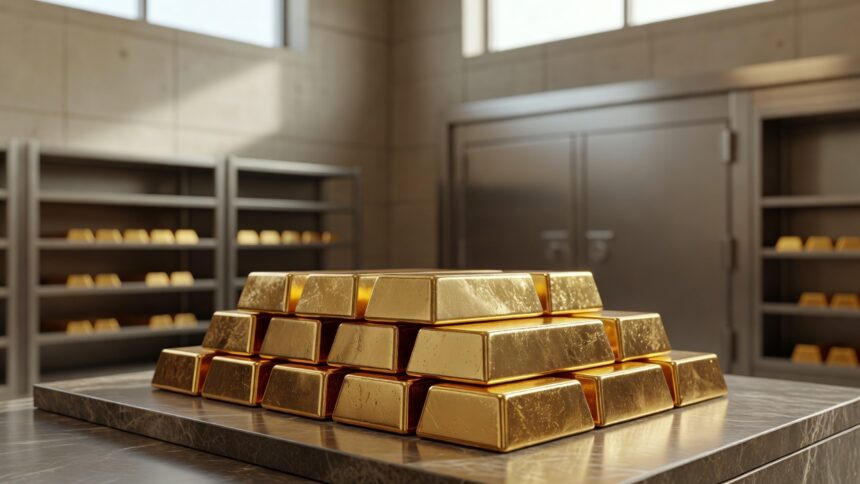
Spot gold dropped 1.52 percent to $4,058.39 per ounce on Monday, according to data compiled by Trading Economics. The decline extended to US gold futures, which also registered losses amid shifting investor sentiment. A stronger US dollar reached multi-month highs against major currencies, reducing the appeal of dollar-priced commodities such as gold. Renewed missile strikes between the US and Iran drove oil prices higher, a development that analysts linked to potential inflationary pressures.
The Emirates News Agency reported that the slide reflected profit-booking after gold achieved record highs earlier in the year, including peaks above $5,300 per ounce. Market participants cited the dollar’s resurgence as a primary factor eroding gold’s safe-haven status on the day. US Treasury yields rose in tandem, further weighing on non-yielding assets. The combination of these elements contributed to the metal’s retreat from recent elevated levels.
Trading Economics figures show gold has experienced heightened volatility throughout 2026, with year-to-date gains still exceeding 20 percent despite the latest pullback. The metal’s performance remains tied to Federal Reserve policy expectations, where signs of persistent inflation could delay rate cuts. Industry assessments from sources such as the World Gold Council have previously noted that geopolitical risks typically support gold demand, yet currency movements often override those dynamics in the short term. Monday’s trading volume indicated broad participation in the sell-off across major exchanges.
Silver prices mirrored the downward move, declining nearly 3 percent to around $58 per ounce, according to the same Trading Economics dataset. The broader precious metals complex faced pressure as investors rotated toward higher-yielding opportunities. Central bank gold purchases, which reached multi-year highs in prior quarters per World Gold Council reports, have provided some underlying support to the market. However, that buying interest proved insufficient to counter the immediate headwinds on Monday.
Analysts monitoring the commodity markets noted that gold’s longer-term outlook depends on the trajectory of US monetary policy and global growth indicators. The International Monetary Fund has projected steady expansion in major economies, a scenario that could influence rate decisions in coming months. Monday’s price action follows a period in which gold served as a hedge against currency weakness and geopolitical uncertainty. Market data places current levels below recent two-week highs, signaling a corrective phase after sustained rallies.