
 ع
ع



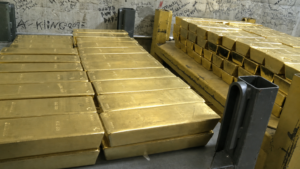
The Central Bank of the UAE reported that its gold reserves rose 13.6 percent during January 2026 to reach AED43.051 billion, equivalent to $11.72 billion. This reflected an addition of AED5.149 billion from AED37.902 billion at the end of December 2025, according to the bank’s monthly statistical bulletin released on March 26. The increase established a fresh peak for the UAE’s official gold holdings as the institution continued adjusting its asset composition.
The central bank’s bulletin placed the annual expansion at more than 75 percent, with reserves climbing by approximately AED18.48 billion from AED24.571 billion at the end of January 2025. Such growth over the 12-month period outpaced the monthly advance and underscored a sustained accumulation strategy. The Central Bank of the UAE has expanded its gold position notably since early 2025, aligning with patterns observed across several emerging-market peers.
World Gold Council figures show that central banks accumulated an average of 1,000 tonnes of gold per year over the past four years, significantly above the 500-tonne annual average of the preceding decade. A June 2026 survey by the council found that 89 percent of respondents anticipated global central bank gold reserves would rise over the following 12 months. The UAE’s latest data release occurred against this backdrop of accelerated official-sector purchases.
Central banks bought a net 244 tonnes of gold in the first quarter of 2026, a World Gold Council report stated, continuing a multi-year trend even as prices traded near record levels. The council’s analysis attributed much of the demand to portfolio diversification, inflation hedging and geopolitical risk management. These motivations have prompted a structural shift in reserve management for many institutions, including those in the Gulf region.
Gold prices reached all-time highs in January 2026, with spot values exceeding $4,600 per ounce at points during the month, according to market data compiled by the World Gold Council. The metal’s performance contributed to the valuation gains in official holdings, though the Central Bank of the UAE bulletin did not specify the split between new purchases and price effects. The UAE’s reserves form part of broader foreign-exchange buffers that support monetary stability in an oil-exporting economy.
The Central Bank of the UAE has integrated gold into its reserves framework as a non-yielding asset that historically performs during periods of financial stress or currency volatility. Its March statistical bulletin provided no forward guidance on future buying intentions. Global central-bank demand is projected to remain elevated through 2026, though possibly moderating from the peaks recorded in 2022 through 2024, World Gold Council assessments indicated.