 ع
ع


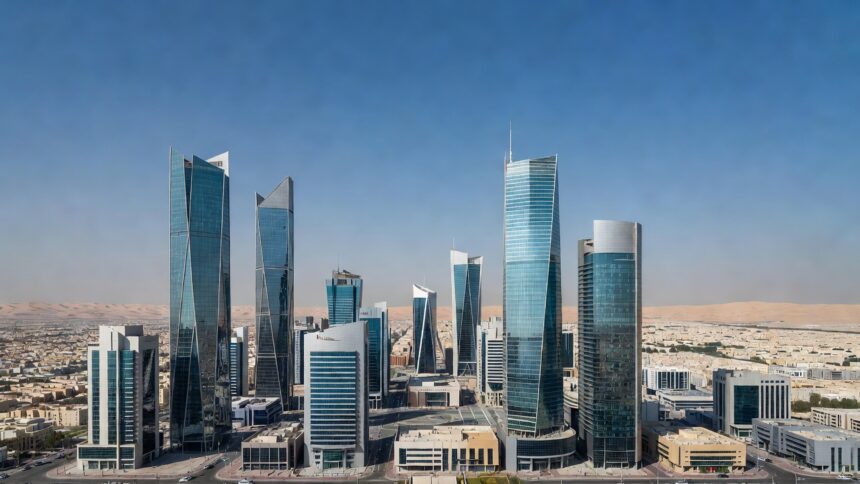
The International Monetary Fund upgraded its growth forecast for Saudi Arabia in 2026 to 4.5 percent according to its World Economic Outlook Update issued in January 2026. The revision represents a 0.5 percentage point increase from the outlook published in October 2025 as the fund cited higher oil production along with robust domestic demand and economic reforms. Saudi Arabia is expected to record 4.3 percent growth in 2025 before the pace moderates to 3.6 percent in 2027 the report added. This positive adjustment comes as the kingdom continues its ambitious diversification program.
The World Bank’s January 2026 assessment projected Saudi Arabia’s growth at 3.8 percent for 2025 rising to 4.3 percent in 2026 and 4.4 percent in 2027. World Bank data shows non-hydrocarbon sectors accounting for over 60 percent of GDP in Gulf Cooperation Council countries with investments in Kuwait and Saudi Arabia bolstering the expansion. These figures align with the IMF’s view demonstrating consensus among major international financial institutions on the kingdom’s prospects at the beginning of the year. The shared optimism reflects the impact of large scale projects and policy measures aimed at reducing oil dependence.
Growth across the Middle East and North Africa is projected to advance from 3.4 percent in 2025 to 3.9 percent in 2026 and 4.0 percent in 2027 according to the IMF. The Middle East and Central Asia region as a whole is expected to see acceleration from 3.7 percent to 3.9 percent over the same timeframe with a further increase to 4.0 percent the following year. The IMF report attributed this regional momentum to increased oil output, resilient local demand and the continuation of reform efforts across multiple economies. GCC growth is anticipated to strengthen on similar factors the update indicated.
Global economic growth is forecast to remain at 3.3 percent in 2026 and edge down to 3.2 percent in 2027 the IMF stated in the January 2026 document. The stability depends on investments in technology such as artificial intelligence as well as fiscal and monetary support in key regions. However the report warned that the narrow base of these drivers leaves the outlook susceptible to various shocks. Offsetting headwinds from trade policy changes are tailwinds from surging technology investment particularly in North America and Asia according to the assessment.
Among the primary risks outlined by the IMF are a possible downward reassessment of artificial intelligence productivity benefits, rising trade tensions and geopolitical conflicts that could affect energy markets. The fund noted that Saudi Arabia and other Gulf producers could still benefit from adjustments in oil production quotas. Saudi non-oil private sector activity has demonstrated resilience with expansion continuing into early 2026 according to related IMF commentary. This broad based growth supports the higher forecast by reducing vulnerability to oil price fluctuations.
The January update marked the third upward revision to Saudi Arabia’s growth forecast in six months the IMF indicated. Such repeated adjustments signal confidence in the implementation of Vision 2030 initiatives that have spurred private sector involvement and foreign investment. Economists monitoring the region expect these structural changes to deliver lasting benefits even if short term volatility arises from external factors. The IMF continues to engage with Saudi authorities through regular Article IV consultations to refine these projections.