 ع
ع


S&P Global Ratings anticipates continued strong capitalisation and adequate liquidity for Qatari banks throughout 2026 along with modest declines in profit margins due to interest rate cuts and taxes. The agency expects somewhat muted lending growth despite a rapid expansion of liquefied natural gas production that will benefit the country’s headline growth together with its budget and current account surpluses. Qatar’s North Field Expansion project will increase LNG production by about 32 percent by 2027 and contribute to stronger real GDP growth averaging 5 percent in 2026-2028 up from 2.7 percent in 2024-2025 according to the ratings agency’s assessment.
S&P Global Ratings noted that the rapid lending growth in recent years has concentrated in high-risk cyclical sectors including real estate, hotels, contracting, commercial agencies and investment companies that account for just under 50 percent of total domestic credit. The agency identified commercial real estate as a potential source of new non-performing loans within these categories. Qatar’s real estate market experienced a moderate recovery with the total number of properties sold in 2025 rising 51 percent year on year mainly from strong residential demand in key areas in and around Doha according to Real Estate Regulatory Authority data.
Regulatory reforms such as the Qatar Residency by Investment scheme have supported the ongoing real estate recovery by offering long-term residency to expatriates who invest in property or businesses S&P Global Ratings said. The hotel industry recorded a gradual recovery in the first three quarters of 2025 with tourist arrivals increasing 2 percent year on year primarily from GCC countries. These sector improvements should contribute to modest new non-performing loan generation for the banking system the report indicated.
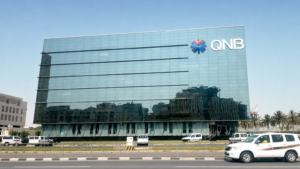
The S&P Global Ratings assessment projects that the systemwide average non-performing loan ratio will decline to about 3.4 percent in 2026-2027 down from an estimated 3.7 percent in 2024-2025 supported by stable asset quality at Qatar National Bank and Qatar Islamic Bank. New non-performing loan formation is expected to remain modest amid steady real estate performance while legacy exposures will sustain significant Stage 2 loan levels at some mid-sized banks. Interest rate cuts precautionary provisions booked in prior years and a mix of recoveries with write-offs should help stabilise asset quality overall.
Qatar Central Bank figures placed the systemwide coverage ratio at 128 percent as of September 30, 2025 and S&P Global Ratings expects it to remain above 100 percent in 2026-2027. CEIC Data confirmed the non-performing loans ratio stood at 3.4 percent in December 2025 in line with the downward trajectory outlined earlier in the year. A separate S&P Global Ratings mid-year update released on June 30, 2026 found that GCC banks including those in Qatar have maintained solid asset quality indicators with no significant capital outflows despite regional tensions.
World Bank projections issued prior to March 2026 events had anticipated a sharp economic contraction that year following a temporary LNG production halt but the banking sector has exhibited the resilience foreseen in the original S&P Global Ratings assessment. Qatar National Bank and other major lenders continue to operate well above Basel standards with robust profitability and capital levels according to supplementary analysis from PwC and supervisory data. The combination of sovereign support, high-quality assets and precautionary measures has enabled the system to absorb external shocks while sustaining core performance metrics.