
 ع
ع



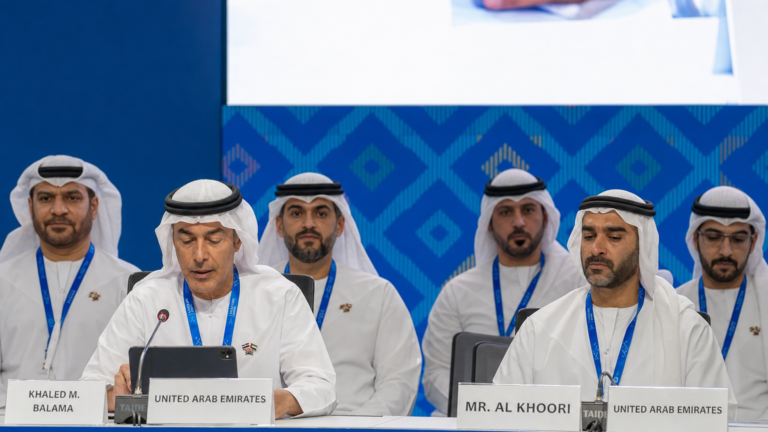
A session at the UAE-Kuwait Economic Forum, staged on the sidelines of the World Governments Summit 2026 during the UAE and Kuwait Brothers Forever week, brought together senior bankers to examine cross-border collaboration. The discussion titled National Bank of Kuwait and Emirates NBD Models of a UAE-Kuwait Banking Journey underscored how such partnerships support monetary development and regional resilience. According to the forum proceedings, speakers positioned financial institutions as essential to Gulf economic integration, reflecting long-standing leadership visions for collaborative stability and growth.
Hisham Al Qassim, vice chairman and managing director of Emirates NBD Group, traced the bank’s origins to the 1960s when it was established to back early economic activity across the UAE. Al Qassim highlighted the institution’s contributions to the region’s monetary framework while noting that sustained cooperation with the National Bank of Kuwait had enhanced banking practices, managerial standards and financial capacity amid accelerating expansion. The decades of joint work have scaled into comprehensive institutional ties, resulting in one of the Gulf’s largest banking groups with significant assets that demonstrate sector competitiveness at regional and international levels, Al Qassim added.
Zaid Issam Al Sager, deputy head of the international banking group at the National Bank of Kuwait, described the UAE as a foundational element of NBK’s overseas growth strategy since the Kuwaiti lender’s establishment in the 1950s. Al Sager explained that the UAE market helped shape NBK’s global model as the bank evolved from domestic services to comprehensive offerings across multiple countries for both retail and corporate clients. Banks play a decisive role in channeling capital, financing projects and extending corporate support in key sectors, thereby lubricating trade and investment movements between the two countries, according to Al Sager.
The forum heard that UAE-Kuwait banking relationships now encompass joint financing initiatives that reach beyond home territories into wider regional and global arenas, built on foundations of mutual confidence. Participants characterised the collaboration as a durable model that bolsters financial steadiness while propelling economic expansion and reinforcing the Gulf’s collective economic outlook. These ties align with broader diplomatic engagement, including a meeting on the summit’s preparatory day in which Sheikh Mohammed bin Rashid Al Maktoum received prominent Kuwaiti business figures.
Sheikh Mohammed, accompanied by Sheikh Hamdan bin Mohammed bin Rashid Al Maktoum, engaged with representatives from families including Al Osaimi, Al Roudhan, Al Razouqi, Al Bahar, Al Kharafi, Al Rifai, Al Hasawi, AlSayer, Bukhamseen and Alshaya. The UAE Vice President and Prime Minister affirmed the deep historical roots of bilateral relations, describing them as a distinctive example of fraternal partnership between states. Sheikh Mohammed praised the early involvement of Kuwaiti entrepreneurs in the UAE’s development both before and after the Union’s formation, noting their ongoing contributions through expertise and investment that exemplify Gulf cooperation based on trust.
Official figures from the UAE Ministry of Foreign Trade show non-oil trade between the countries climbed 9.1 percent in 2025 to reach $14.8 billion, building on a decade of cumulative bilateral exchanges that have exceeded $86.3 billion. The National Bank of Kuwait and Emirates NBD have supported this expansion through capital mobilisation and project finance that align with rising commercial activity. Such data from the ministry underscores how banking linkages translate leadership-level commitments into measurable trade and investment gains across the region.