 ع
ع



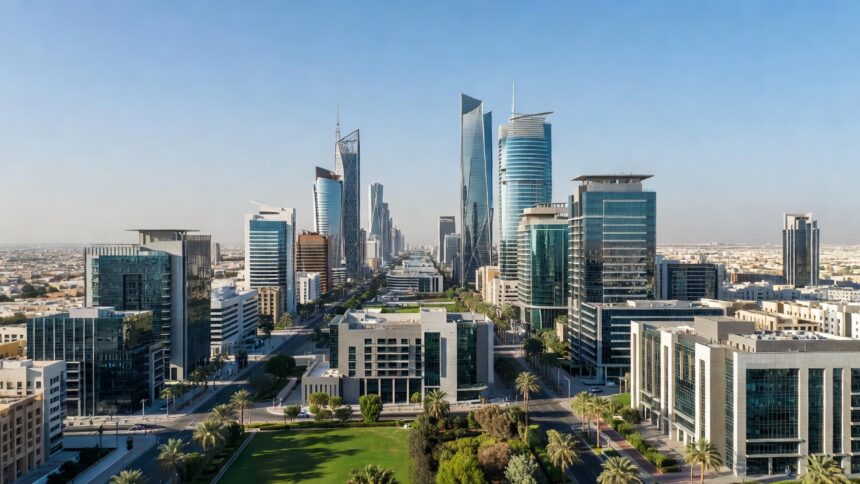
Knight Frank’s Destination Saudi 2026 report detailed that Saudi Arabia’s real estate market continues to benefit from robust structural drivers even amid recent Middle East conflict. Faisal Durrani, partner and head of research for MENA at the consultancy, noted that GCC governments have demonstrated resilience and security capabilities to underpin long-term regional stability. Durrani added that consumer confidence rests on factors including population growth, capital inflows, business expansion and inward migration, while decades of investment in public welfare have built expatriate loyalty. He stated that long-term demand from non-resident investors is not expected to weaken but instead to experience a temporary hiatus while the conflict resolves itself.
A property ownership law approved in January 2026 permits non-Saudis to buy in 170 designated areas for the first time, according to the Knight Frank assessment. The change, which supports the Vision 2030 program, has already generated interest in high-demand locations including Riyadh, Jeddah, Makkah and Medina. Knight Frank surveyed 1,550 individuals globally before the latest conflict and found Riyadh attracting 55 percent of potential investors, followed by Jeddah at 46 percent, Medina at 43 percent and Makkah at 41 percent. Among Muslim respondents the Holy Cities drew even stronger preference, with 59 percent naming Makkah and 63 percent naming Medina as key targets.
Susan Amawi, general manager for KSA at Knight Frank, reported that affordability pressures from a rapidly rising housing market contributed to a 55 percent drop in Riyadh transaction volumes and a 48 percent decline in sales value over the 12 months to early 2026. The analysis indicated Riyadh will need more than 305,000 additional homes by 2034 to house its expanding population. According to Vision 2030 program data, national homeownership among Saudis has advanced from 47 percent in 2016 to over 65 percent, placing the kingdom on track toward its 70 percent target by 2030, while the housing program aims to deliver 355,000 new real estate financing contracts by 2025.
Retail and food and beverage ranked as the second most popular investment sector with 37 percent of surveyed global investors expressing interest, the Knight Frank report showed. Consumer spending rose 10.7 percent year-on-year to SAR 1.57 trillion in 2025, with more than 3.4 million square meters of additional retail space scheduled for delivery by 2028. Jonathan Pagett, partner and head of retail advisory for MENA at Knight Frank, described a structural shift toward experience-led destinations, omnichannel retail and local brands, driven by a young demographic in which 63 percent of the population is under 30. Occupancy rates stood at 93 percent in Riyadh, 88 percent in Jeddah and 94 percent in the Dammam metropolitan area.
Branded residences and hospitality tied for third place among preferred sectors, with $3.4 billion of identified private capital directed at branded residential projects, according to the consultancy’s findings. The hospitality market supports an ambition to welcome 150 million visitors annually by 2030 after the kingdom surpassed 100 million in 2023, with plans to add approximately 358,000 hotel rooms nationwide over the next five to 10 years. Harmen De Jong, regional partner and head of consulting for MENA at Knight Frank, said demand from pilgrims to Makkah and Madinah remains structurally inelastic despite short-term travel disruptions, making the 250,000-room pipeline planned for the Holy Cities particularly urgent. Saudi-based expatriates and international buyers showed varying budget expectations, with 77 percent of high-net-worth individuals interested in branded homes.
Grade-A office occupancy in Riyadh reached a record 98 percent, matching levels in Dubai and Abu Dhabi and signaling limited prime supply that appeals to international investors, Durrani stated in the report. This tightness opens possibilities for sale-and-leaseback transactions that could release capital for further development or refurbishment. The overall $6.3 billion in private global capital identified by Knight Frank spans residential, retail, branded residences, hotels and offices, with the new ownership framework expected to broaden participation once geopolitical risks subside.