
 ع
ع



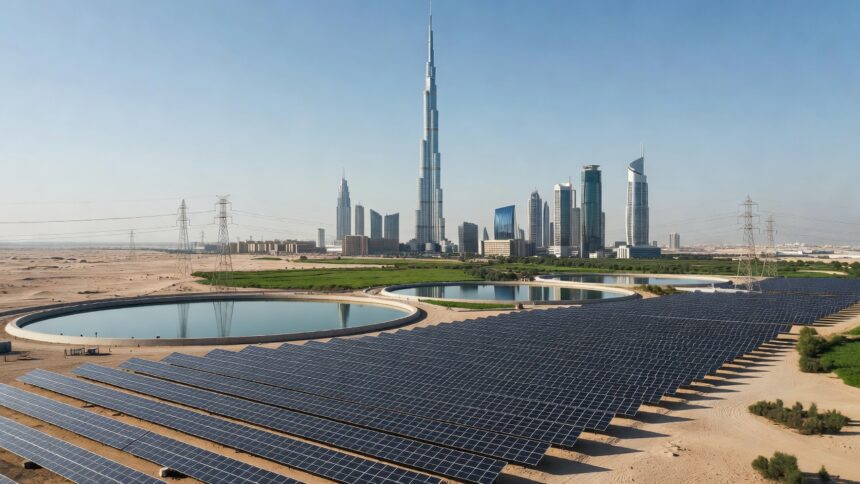
Saeed Mohammed Al Tayer reviewed Dubai Electricity and Water Authority’s strategic roadmap to become the world’s first AI-powered utility in a piece published by the authority. The initiative has produced measurable results such as cutting the processing time for security deposit refunds of up to Dhs4,000 from four days down to eight minutes. Rammas, the utility’s virtual smart employee, has managed more than 13 million customer enquiries on its own since launching in 2017 with further improvements from integrating generative AI including the GPT-4o model. According to the DEWA chief, these outcomes demonstrate the practical value of embedding AI throughout operations.
Artificial intelligence has evolved beyond an add-on feature to become a core component in the architecture of smart and sustainable cities, Al Tayer stated. This technology enables more efficient, resilient and proactive service systems that enhance residents’ quality of life while promoting resource conservation and economic advancement. The comments formed part of a broader discussion on how the UAE’s visionary leadership has embedded innovation and digital transformation at the heart of national development plans.
Dubai Electricity and Water Authority is rolling out Agentic AI throughout its website, mobile applications and internal systems to elevate customer interactions, service standards, operational productivity and staff support. These deployments also bolster the robustness of electricity and water networks through predictive maintenance, optimised demand management and seamless incorporation of renewable energy sources. Such measures align with the emirate’s fast-paced expansion and contribute to greater energy and water security as well as overall efficiency gains, according to the utility’s assessment. The systems further support integration across power, water and clean energy domains.
The Dubai Electricity and Water Authority chief delivered a speech titled ‘AI-Driven Energy Transformation’ during the final day of the World Governments Summit in February where he addressed the profound changes occurring in the global energy landscape. He described the integration of artificial intelligence across energy production, transmission and distribution as essential for lowering environmental footprints, strengthening infrastructure resilience and raising resource productivity to foster industrial growth and community well-being. Al Tayer positioned the energy transition itself as a catalyst for sustainable economic expansion that depends on Fourth Industrial Revolution tools with AI experiencing explosive worldwide development.
A UN Trade and Development report projects the global artificial intelligence market to surge from around 189 billion dollars in 2023 to 4.8 trillion dollars by 2033 while Grand View Research estimated a compound annual growth rate of 30.6 percent between 2026 and 2033. Figures cited in the discussions indicate that 40 percent of utility control rooms globally will incorporate AI-powered automation and predictive capabilities by 2027. Global electricity usage by data centres is expected to climb to more than 2,000 terawatt hours per year by 2035, representing almost five times the consumption levels seen in 2024, as advanced computing demands escalate.
Guided by the directives of the UAE’s top leadership, the country is solidifying its status as an international centre for sustainability and artificial intelligence, Al Tayer noted in the address. He singled out Sheikh Hamdan Bin Mohammed bin Rashid Al Maktoum as the key proponent of Dubai’s comprehensive AI approach. The executive concluded that shaping tomorrow’s smart and sustainable cities requires not just technological tools but sound vision, adept organisational implementation and a consistent focus on human needs at the core of all progress. This perspective draws on DEWA’s practical experience in deploying AI to support Dubai’s rapid urban development.