ع




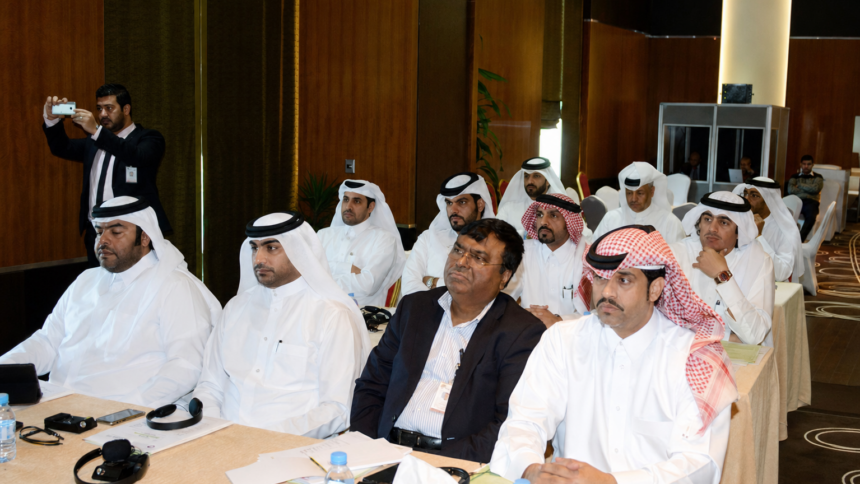
The Qatar Chamber organized the online program in coordination with the Federation of Saudi Chambers to build practical expertise in the electronic temporary admission document that streamlines cross-border movement of goods without payment of duties or taxes. More than 70 participants from Saudi Arabia’s Zakat, Tax and Customs Authority joined the sessions conducted by Dr. Jihad Aytani and Tania Radwan from the Qatar Chamber, who outlined issuance procedures, usage mechanics and compliance requirements. The initiative reflects growing collaboration on digital tools that support GCC trade flows, according to a statement from the chamber.
Sheikha Tamader Al Thani, director of international relations and chambers affairs at the Qatar Chamber and secretary-general of ICC Qatar, said the program forms part of the chamber’s focus on strengthening ties with Saudi and GCC counterparts while advancing digital transformation and expertise exchange. Al Thani added that the training seeks to boost operational knowledge of the e-ATA Carnet among customs personnel, thereby raising efficiency in temporary admission processes and simplifying related customs formalities. The chamber’s statement noted that such measures ultimately facilitate the movement of merchandise and equipment across borders.
Topics addressed during the two-day course included the core concept of the e-ATA Carnet, mechanisms for its issuance and application, procedures for temporary admission and re-export, and the respective roles of customs bodies and chambers of commerce. Practical scenarios simulated real-world transactions from issuance through to final closure of carnet records, allowing participants to follow the full lifecycle of electronic documentation. The Qatar Chamber reported that these interactive elements helped trainees understand monitoring requirements and transaction completion steps.
An internationally recognized customs document, the ATA Carnet functions as a passport for goods, enabling duty-free temporary import and export for items such as exhibition materials, professional equipment and commercial samples, according to information published by ICC Qatar. The electronic version, known as e-ATA, represents a global shift toward digital processing that began in June 2026 across the European Union, Norway, Switzerland and the United Kingdom, with full worldwide adoption targeted by the end of 2027. Qatar Chamber serves as the authorized issuer of ATA Carnets within the country and has integrated the system to reduce administrative burdens on businesses.
Saudi Arabia’s ZATCA began accepting ATA Carnets at all land, sea and air ports in June 2024 under the Kingdom’s commitments to the Istanbul Convention on Temporary Admission, with the Federation of Saudi Chambers acting as the approved guaranteeing and issuing association. This development has supported Saudi efforts to position the kingdom as a hub for exhibitions and international events by lowering costs for temporary imports without requiring separate financial guarantees. The training for ZATCA staff therefore aligns with Saudi regulatory updates that parallel Qatar’s long-standing use of the carnet system.
Bilateral trade between Qatar and Saudi Arabia reached $1.98 billion in 2025, marking a 36 percent increase from the previous year, with further growth of 18 percent recorded in the first quarter of 2026. Saudi exports to Qatar totaled $2.09 billion during 2025, led by sectors including vehicles, machinery and food products, while the two countries have expanded land transit routes to maintain supply chain continuity. The Qatar Chamber has previously highlighted these trade gains in meetings with Saudi counterparts, underscoring the value of harmonized digital customs tools like the e-ATA Carnet in sustaining momentum.