ع




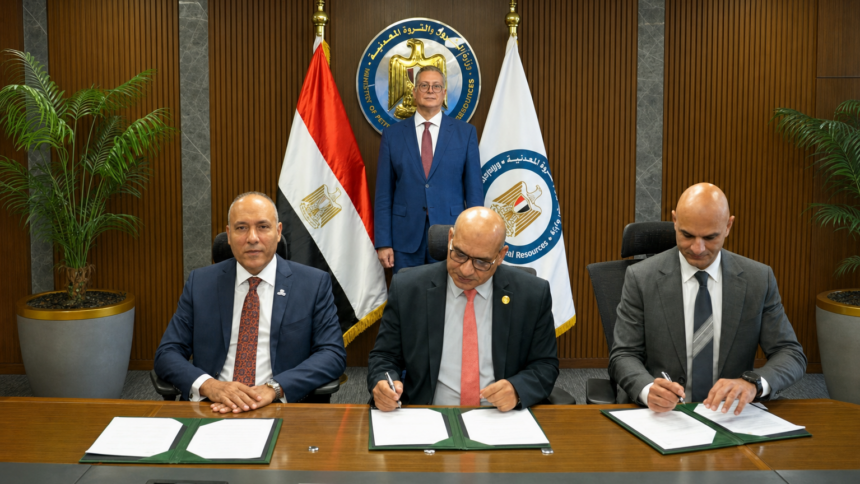
The Emirates News Agency reported that Dragon Oil, fully owned by ENOC, will support the survey across GUPCO’s operating areas in the central and southern Gulf of Suez as the company seeks to expand its use of modern exploration tools. GUPCO functions as the operational entity for the joint venture between Dragon Oil and the Egyptian General Petroleum Corporation. The contract with SLB was signed in the presence of Petroleum Minister Karim Badawi, marking a significant step in efforts to improve subsurface understanding in one of Egypt’s oldest producing basins.
Project execution is set to start in November 2026 and continue for roughly two years, with the work expected to encompass about 80 percent of the development acreage held by GUPCO. Objectives include enhancing the precision of geological models, pinpointing fresh drilling targets and sustaining output growth from mature fields. The initiative forms part of preparations for possible extensions and consolidation of the concession areas.
This latest effort builds directly on a pioneering OBN survey completed in 2020 that spanned more than 350 square kilometres in the central Gulf of Suez, also backed by Dragon Oil. Data from that campaign enabled the drilling of five exploratory wells between 2022 and 2026 that achieved an 80 percent success rate, according to figures cited by the Egyptian Ministry of Petroleum. Those wells added approximately 40 million barrels of stock tank oil initially in place and helped drive GUPCO’s daily production to its highest mark since 2019.
Minister Badawi emphasised the value of integrating updated seismic information with increased investment to maximise returns from existing assets, the ministry’s statement indicated. He pointed to the Gulf of Suez’s enduring potential despite decades of output, noting that technology can unlock further resources while lowering risks for future exploration. The current project will deliver even more comprehensive coverage to refine structural interpretations across a wider zone.
Egypt is simultaneously advancing seismic acquisition programmes in other parts of the country to broaden its exploration portfolio. Work in the southern Western Desert covers more than 100,000 square kilometres west of Assiut and in the Dakhla area, while preparations are under way for an additional 110,000-square-kilometre survey near the Libyan border, the ministry reported. Similar projects are planned for the Mediterranean Sea and southern Egypt as authorities aim to attract fresh capital into the upstream sector.
The Ocean Bottom Node method has proven particularly effective in the Gulf of Suez’s challenging shallow-water setting, where earlier legacy seismic suffered from poor data quality due to seabed conditions. Dragon Oil previously employed integrated geophysical and geological studies in its East Zeit Bay exploration block to overcome such obstacles and define viable prospects. The scaled-up survey now under way is expected to generate datasets that will guide drilling decisions for years to come.