 ع
ع


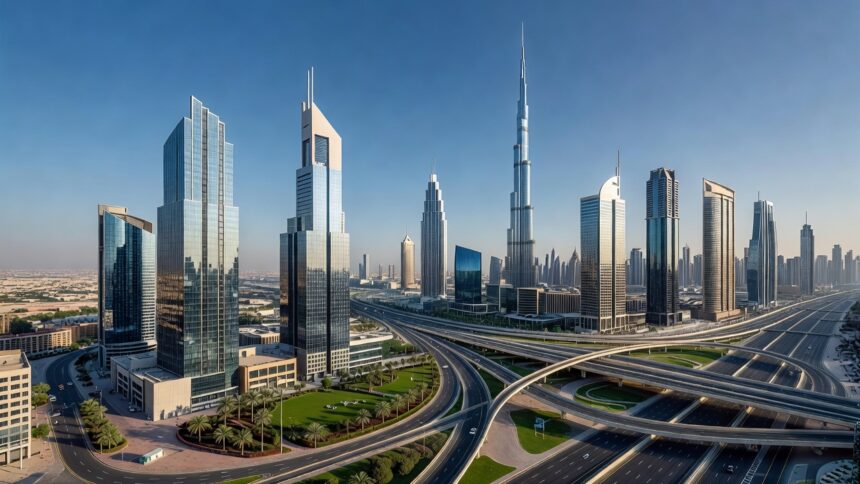
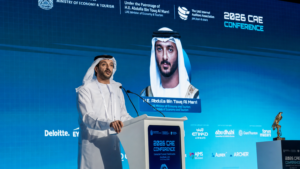
The International Monetary Fund projected Arab economies would expand by 3.7 percent in 2026 with the UAE forecast to grow at 5 percent after 4.8 percent expansion the previous year. IMF Managing Director Kristalina Georgieva described the UAE’s shift as impressive noting its non-oil economy now accounts for 80 percent of output. The assessment came during a February gathering of finance ministers in Dubai where officials reviewed diversification progress across the region.
The six-nation Gulf Cooperation Council ranked as the ninth-largest global economy in 2024 with combined GDP of $2.3 trillion according to GCC-Stat. That output placed the bloc ahead of several developed nations as its merchandise trade surplus reached $109.7 billion for the year. Government revenues totaled $659.3 billion against expenditures of $670.2 billion resulting in a modest deficit that illustrated fiscal caution amid oil price swings.
Saudi Arabia the region’s largest economy posted 4 percent growth in 2025 and holds a similar projection for 2026 driven by both higher oil production and gains in tourism plus financial services. Qatar’s expansion ran between 2.7 and 2.9 percent last year and is set to accelerate with the North Field liquefied natural gas project. Kuwait Oman and Bahrain each recorded growth from 2.6 to 2.9 percent in 2025 according to the IMF data.
Non-oil sectors accounted for 73 percent of the GCC’s real GDP in the first quarter of 2024 up from 32 percent in early 2022 an IMF assessment found. The fund expects UAE non-oil growth to more than double that of the oil sector through 2030. Regional sovereign wealth funds manage an estimated $4.8 trillion in assets equal to more than 32 percent of the world’s 100 largest such vehicles.
Financial services tourism and artificial intelligence investments have gained prominence in shaping economic paths across the Gulf. Georgieva highlighted the UAE’s advances in AI adoption with heavy commitments to data centers and computing power. The UAE current account surplus climbed to 14.5 percent of GDP in 2024 led by a services balance of 11.7 percent in contrast to a deficit a decade earlier.
An April 2026 IMF World Economic Outlook later revised some GCC forecasts downward citing regional disruptions and energy market constraints while underscoring resilient non-oil activity. The update anticipated fiscal deficits for Saudi Arabia at 3.7 percent of GDP and for Bahrain at 9.9 percent assuming oil averaged $66 per barrel. The UAE Qatar and Oman were expected to sustain surpluses under those assumptions.
The GCC population reached 61.5 million in 2024 expanding at an annual 3.3 percent rate between 2020 and 2024 according to regional statistics. Healthcare capacity improved with per capita ratios for hospitals physicians and beds surpassing global averages. Tourism arrivals rose regionwide reflecting post-pandemic recovery and enhanced global positioning.