ع




ICAIGE and S4IoT will bring energy forecasting, intelligent power routing and connected infrastructure research to KCST on 13–15 October.
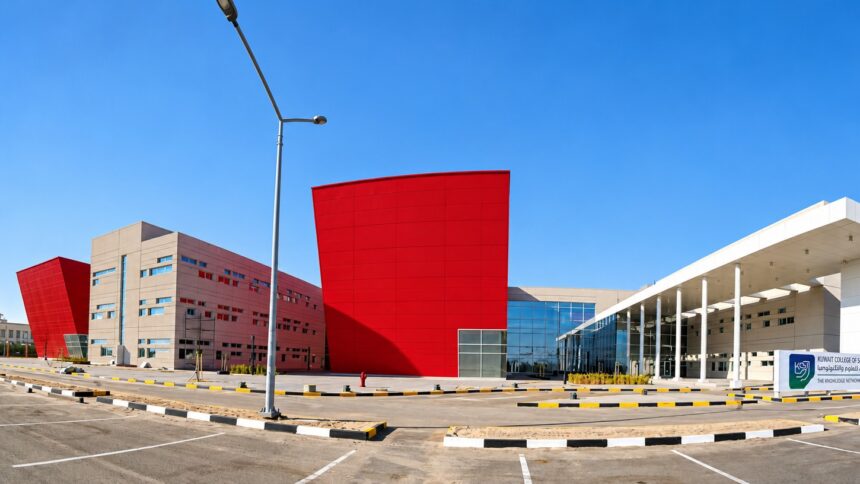
Kuwait will host a conference next week that places artificial intelligence alongside an increasingly consequential engineering question: how to run energy systems as electricity demand and digital infrastructure expand. The third IEEE International Conference on Artificial Intelligence and Green Energy, ICAIGE 2026, is scheduled for 13–15 October at the Kuwait College of Science and Technology.
The meeting will run alongside the third Symposium on Smart, Sustainable, and Secure IoT, or S4IoT. According to the organisers’ programme overview, KCST and Tunisia’s Association of Renewable Energy, ATER, are organising the conference, with technical co-sponsorship from several IEEE sections and specialist groups.
Its strongest practical thread is the connection between computation and physical infrastructure. Forecasting renewable output, diagnosing equipment faults and managing distributed power all involve decisions whose consequences extend beyond the accuracy of a model on a computer screen. The conference’s published topics put those operational questions alongside AI research.
Forecasting becomes an engineering task
One of the announced tutorials, led by Lotfi Snoussi and Olfa Fakhfakh, addresses explainable AI for predicting sustainable-energy output. Its outline takes participants through data preparation, different modelling approaches, validation and interpretation using a real-world dataset.
That combination matters because a prediction and an explanation serve different purposes. A forecast estimates what may happen. An explanation helps an operator understand which inputs influenced that estimate and whether the relationship is plausible. In power systems, a seemingly accurate prediction can still be difficult to use if its behaviour changes when conditions depart from the data on which it was developed.
The distinction also changes how research results should be read. A model’s reported performance is evidence about a particular test, not proof that it will deliver the same result across every installation. The tutorial’s emphasis on validation and generalisation places that limitation inside the technical discussion, where it can be examined rather than left to a later deployment stage.
Power networks enter the AI discussion
A second tutorial, presented by Hadi Y. Kanaan and Amani Fawaz, examines the Energy Internet and intelligent routing in packetised energy networks. The published outline includes reinforcement learning, distributed decision-making and simulations of power routing under constraints such as congestion and transmission losses.
These are research methods and proposed architectures. Their inclusion does not mean Kuwait has deployed an Energy Internet. What it does establish is a programme concerned with the interaction of multiple producers, consumers and network limits, rather than treating electricity management as a single prediction problem.
The broader relevance is described in the International Energy Agency’s analysis of AI applications in energy. It identifies uses ranging from maintenance and operational monitoring to optimisation and research into new energy technologies. Different applications require different evidence: detecting an equipment fault is not the same task as deciding how a network should respond to it.
Putting those tasks in one conference creates a useful point of comparison. Researchers can discuss not only whether an algorithm performs well, but also the measurements, communications and engineering assumptions it requires before it can influence a real system.
Computing has its own electricity requirement
The energy discussion runs in both directions. AI may assist power-system operations, while the infrastructure supporting AI consumes electricity itself. In its 2025 Energy and AI report, the IEA estimated that data centres used approximately 415 terawatt-hours of electricity in 2024, around 1.5 per cent of the global total.
Its base-case projection put demand at about 945 terawatt-hours in 2030. These are global figures and a modelled scenario, not measurements or forecasts specifically for Kuwait. They nevertheless explain why energy researchers and computing specialists increasingly have overlapping questions about infrastructure planning.
A useful comparison therefore includes both sides of an application. How much computing does it require, and what measurable operational improvement does it produce? A reduction in a model’s error rate is one result; lower energy consumption, fewer interruptions or better equipment utilisation would be separate outcomes requiring their own evidence.
For a research conference, this is a substantive agenda rather than a promise of immediate savings. It gives technical presentations a common frame: the relationship between a digital method, the physical system it represents and the resources needed to run it.
Connected systems complete the picture
The co-located S4IoT symposium adds the connected-device layer to that discussion. Forecasting and control depend on observations from equipment, while distributed systems require information to move between devices and decision-makers. The symposium’s stated combination of smart, sustainable and secure IoT reflects those interdependencies.
The IEEE event listing independently confirms the joint meeting’s dates and KCST location. The organisers say accepted, registered and presented papers will be submitted for inclusion in IEEE Xplore, subject to IEEE’s scope and quality requirements. Submission for inclusion should not be confused with automatic publication.
The range of methods also allows comparison between different levels of maturity. A simulation can test a control strategy under specified conditions, while a field study exposes it to the variability of actual equipment and operations. Reporting which type of evidence supports a claim is part of understanding its practical significance.
For Kuwait’s engineering and technology community, the immediate development is a local opportunity to examine this work through papers, tutorials and technical discussion. The next evidence will come from what researchers actually present: the datasets they use, the conditions they test and the limitations they identify. Those details will determine which ideas are ready for further trials and which remain questions for the laboratory.