ع




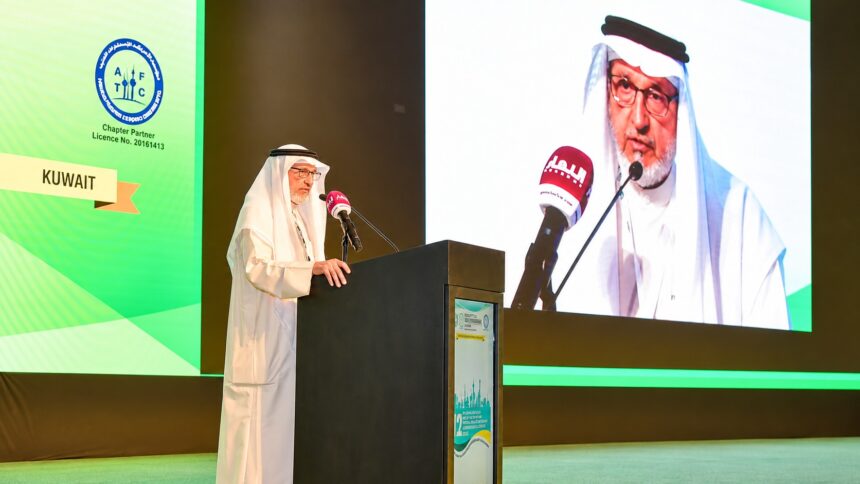
The 13th International HSSE & Loss Prevention Conference & Exhibition returns on 4–5 October, with a programme connecting artificial intelligence to the practical demands of oilfield safety, emergency response and workforce protection.
Artificial intelligence’s role in industrial safety will take centre stage in Kuwait next week, as engineers, health specialists and industry leaders gather for the 13th International HSSE & Loss Prevention Professional Development Conference & Exhibition.
Organised by the American Society of Safety Professionals’ Kuwait Chapter, the two-day conference at The Regency Hotel will examine how digital systems are being brought into health, safety, security and environmental management. Its theme, “Intelligent HSSE”, connects AI with process safety, sustainability and operational performance.
The published programme gives that discussion a practical focus. Contributions involving Kuwait’s petroleum companies address digital safety tools, flare management and remote monitoring, placing the emphasis on how technology interacts with industrial operations and the people responsible for running them.
From AI discussion to operational examples
The conference programme includes a Kuwait Petroleum Corporation presentation on a digital HSSE tool and a Kuwait National Petroleum Company case study examining AI-enabled flare minimisation through digital management and recovery systems.
Kuwait Oil Company contributors are scheduled to discuss the practical integration of AI into HSE, including a live demonstration, alongside remote monitoring of high-risk behaviour on drilling rigs. Another presentation considers drone-based hazard detection in construction.
Together, these subjects suggest a discussion extending beyond the collection of more workplace data. They concern where information enters an operating decision: identifying a hazard, directing an inspection or drawing attention to behaviour that requires intervention.
These are scheduled presentations, rather than independently established findings about their effectiveness. The case studies will therefore be important for understanding the scope of each application, the operating conditions involved and what evidence supports the results presented.
A wider debate about technology and responsibility
The Kuwait meeting follows a broader international examination of digital technology’s implications for workplace safety.
In an April 2025 report announcement, the International Labour Organization described how robotics, automation and monitoring technologies can reduce exposure to hazardous work. Examples included environmental sensors, wearable devices and systems that detect risks in real time.
The same assessment identified responsibilities accompanying those capabilities. Workers maintaining or interacting with automated equipment may encounter different hazards, while system failures and cyber threats can affect safety. The ILO also highlighted the danger of excessive reliance on automation weakening human oversight.
That provides a useful framework for reading the Kuwait agenda. A monitoring system’s ability to recognise a condition is one part of the picture; the organisational response, worker training and supervision remain relevant to its use. This is an editorial implication of the ILO’s findings, rather than a claim about any particular system appearing at the conference.
The ILO’s emphasis on involving workers throughout technology adoption also brings the discussion back to those who operate alongside these systems every day.
Process safety remains central
The organisers’ technical topic framework places digital applications alongside established disciplines including hazard assessment, management of change, barrier reliability and learning from industrial incidents.
Its AI categories cover predictive analytics, computer vision, wearable sensors and digital simulations. They also explicitly include data governance, ethics and trust in AI-supported safety decisions. That combination makes the programme relevant to engineers evaluating both the information a system produces and the basis on which it produces it.
Other categories address fire protection, explosion engineering, emergency planning and business continuity. Occupational health subjects include heat stress, exposure to chemicals and dust, noise, fatigue and health surveillance.
The breadth matters because the conference’s subject is larger than individual workplace incidents. Its published categories connect the protection of workers with the reliability of industrial safeguards, the management of emergencies and the continuity of operations.
International participation adds another perspective. The American Institute of Chemical Engineers’ event listing identifies Shakeel Kadri, executive director and chief executive of the Center for Chemical Process Safety, as a keynote speaker. The listing situates the gathering across energy, chemicals, petrochemicals, manufacturing and related industries, reflecting the shared technical questions behind many of the sessions.
Training and evidence beyond the presentations
The conference is accompanied by a published selection of professional workshops. These include incident response and crisis management, hazard and operability studies, quantitative risk assessment, drilling competency and respiratory protection. The organisers also list an API 754 implementation workshop associated with the Center for Chemical Process Safety.
Other training options cover occupational noise, safety integrity levels and fire-and-gas mapping. The selection illustrates the range of skills being addressed around the event, from assessing industrial hazards to preparing emergency teams and managing occupational exposure.
The workshop page operates as an expression-of-interest form, so the listed options should be distinguished from a confirmed individual booking or timetable. Participants can request details for the training relevant to their responsibilities.
The second day will also host the ASSP GCC HSE Excellence Awards. The published assessment guidance calls for three years of safety statistics, covering 2023–2025, with supporting evidence from 2025. It states that clarification may be requested and that the evaluation committee can require a site visit.
This introduces a separate evidence-based component to a gathering otherwise focused heavily on exchanging technical knowledge. Presentations explore methods and applications; award submissions are assessed against documented organisational practices and performance.
When the conference opens on 4 October, the practical interest will lie in the detail behind its case studies: what has been deployed, how it is supervised and what the operating evidence shows. Those accounts will give readers a more concrete view of how the AI discussion is developing inside Kuwait’s industrial workplaces.