ع




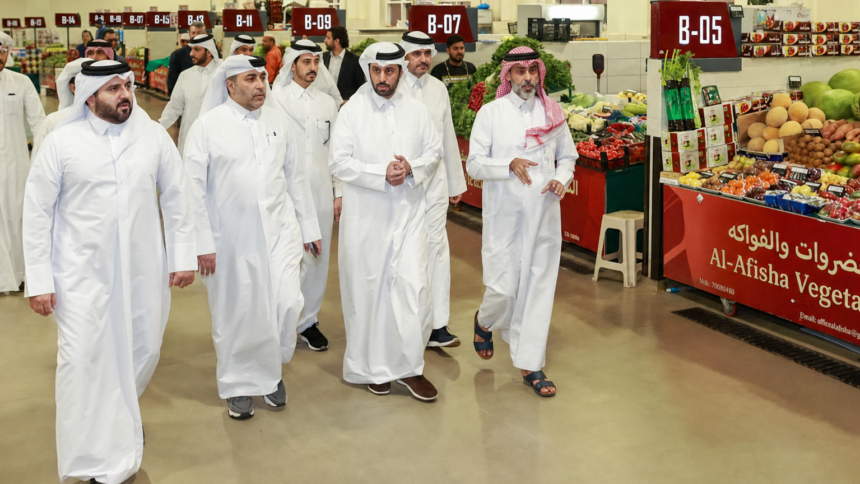
The ministry said in a statement that the Permanent Committee for the Supervision of Central Markets conducted a field visit focused on the market’s facilities and supporting services for marketing and supply operations. Committee members reviewed the availability and diversity of vegetables and fruits from multiple sources while gathering input from farmers and market workers on their requirements. Discussions also explored enhanced ways to promote local agricultural products and increase the benefits that farmers gain from the central markets system, which contributes to sector sustainability.
According to the ministry, inspectors evaluated standards of cleanliness, maintenance and organization to provide a suitable setting for vendors and shoppers alike. The visit identified main operational challenges and considered practical solutions to address them effectively. Such regular field monitoring allows for ongoing development of the central markets system, improved efficiency and the consistent supply of agricultural and food products at appropriate quality levels.
The assessment follows a contract the ministry signed in February with Hassad Food for managing, operating and servicing the central markets, including Al Sailiya, a Qatar News Agency dispatch reported at the time. That agreement seeks to raise service standards for traders and consumers while reinforcing the national food security framework. Under the deal, Hassad Food handles organization and service delivery across the network of markets.
The Ministry of Municipality’s annual achievements report for 2024 showed that vegetable markets and Mahaseel sold more than 37,000 tonnes of local vegetables that year with participation from 150 farms, marking a substantial rise from earlier seasons. Agricultural output climbed to 76,000 tonnes of vegetables in 2025, the ministry indicated in later updates. During peak production months, local farms can meet up to 98 percent of demand for cucumbers and similarly high shares for tomatoes, eggplants and zucchinis.
Qatar maintains around 460 active farms out of an estimated 1,300, achieving an annual average self-sufficiency rate near 50 percent in vegetables while targeting 55 percent by 2030, according to statements from the Ministry of Municipality. The main agricultural production window runs from October to April, which aligns directly with the current market preparations. Support programs supply farmers with seeds, fertilizers, pesticides and technical training, benefiting thousands of participants in recent years.
In March, the Minister of Municipality toured the same market and observed abundant local production capable of satisfying consumer needs, a separate Qatar News Agency report detailed. These repeated oversight activities demonstrate sustained coordination among authorities to strengthen the agricultural sector and ensure stable supplies of both domestic and imported goods. The central markets, including those in Al Wakrah and Umm Salal, function as integrated platforms that aid price stability and food availability nationwide.