

 ع
ع



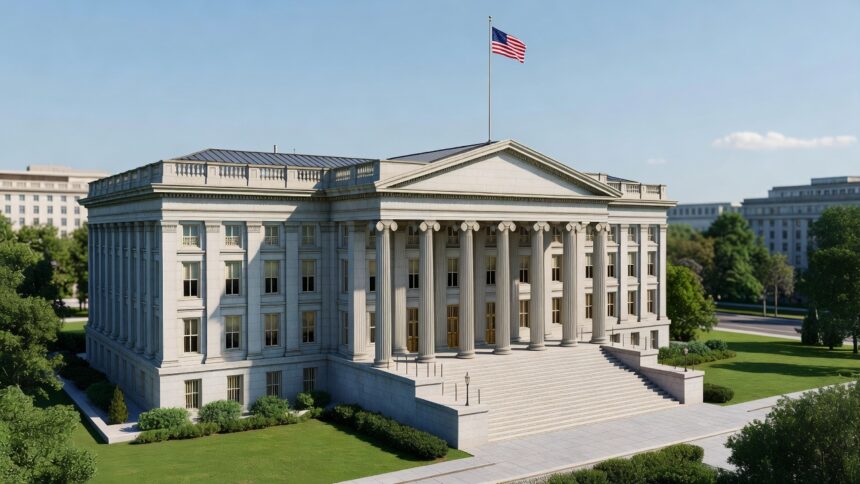
The Treasury Department reported that total public debt outstanding stood at $40.047 trillion at the close of business Tuesday, marking the first time the figure has topped $40 trillion. This total includes roughly $32.3 trillion in debt held by the public and $7.8 trillion in intragovernmental holdings, a breakdown several major outlets cited from the department’s daily statement. The milestone comes as annual federal deficits have persisted near $2 trillion even outside of recessionary periods, pushing borrowing higher at a pace that has outstripped earlier projections.
Data compiled by the Associated Press shows the debt crossed $39 trillion in March 2026, only five months after hitting $38 trillion in October 2025, illustrating an accelerated climb over recent quarters. A Bloomberg analysis placed the increase at more than a third in under five years, reflecting cumulative pressures from entitlement programs, defense outlays and rising interest expenses. The Wall Street Journal reported earlier in 2026 that publicly held debt had already exceeded 100 percent of gross domestic product, a threshold once viewed as largely symbolic but now part of an ongoing fiscal trajectory.
Interest payments have grown alongside higher yields on long-term Treasury bonds, which reached levels last seen in 2007 before easing slightly after the latest data release, according to market reports. The Congressional Budget Office had forecasted debt would reach $39.4 trillion by the end of fiscal 2026, a level the latest Treasury figures have already surpassed. Multiple outlets noted that the federal government continues to borrow to cover obligations ranging from social safety-net programs to military spending tied to international commitments.
Jessica Riedl, a budget and tax fellow at the Brookings Institution, described the current path as unsustainable, pointing to persistent $2 trillion deficits during periods of relative peace and economic expansion. She observed that deficits now equate to six or seven percent of GDP, levels that have heightened concerns in financial markets as inflation has kept borrowing costs elevated. Riedl added that although no specific debt-to-GDP ratio automatically precipitates a crisis, these numerical thresholds often prompt investors to reassess risks associated with long-term fiscal trends.
Caleb Quakenbush, director of fiscal policy at the Bipartisan Policy Center, linked the latest surge to patterns seen after the 2007-2009 Great Recession and the fiscal response to the Covid-19 pandemic. He noted that such borrowing episodes have become more frequent as the government addresses both cyclical shocks and structural spending demands. The Bipartisan Policy Center’s assessments have consistently highlighted the interplay between revenue constraints from tax policy and rising mandatory expenditures on health care and retirement programs for an aging population.
Yields on Treasury securities fluctuated in the wake of the announcement, with the department taking measures to support market stability as refinancing needs mount. Economists continue to monitor how sustained deficits may influence future growth, particularly as interest costs consume a larger share of the federal budget. The latest Treasury release underscores a fiscal trajectory that has doubled the national debt over the past decade, according to comparative figures published by Reuters and other wire services.