 ع
ع


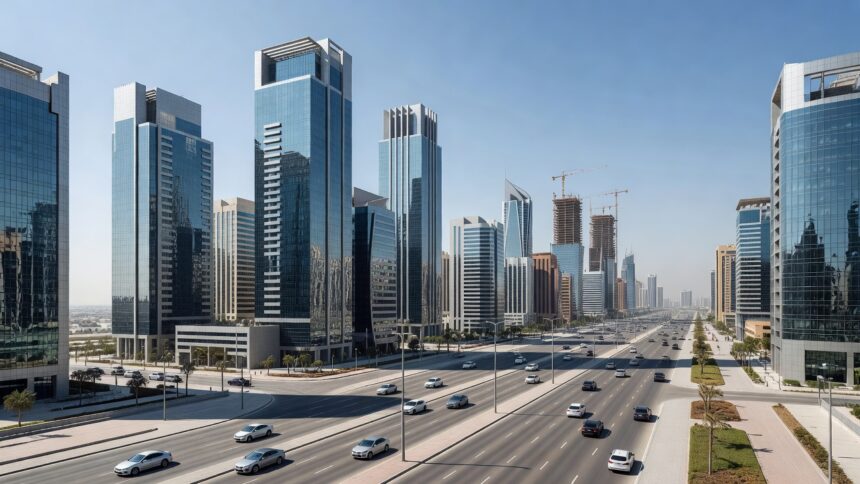
The World Bank anticipates growth in the Gulf Cooperation Council to reach 4.4 percent in 2026 before climbing to 4.6 percent the following year as non-hydrocarbon output gathers pace. “Growth in GCC countries is forecast to increase to 4.4 percent in 2026 and 4.6 percent in 2027, mainly reflecting a steady expansion of non-hydrocarbon activity, in addition to a further rise in hydrocarbon production,” the institution said in its Global Economic Prospects report. The strengthening of non-hydrocarbon activity, which accounts for more than 60 percent of total GDP in the bloc, will draw support from major investments planned in Saudi Arabia and Kuwait, a World Bank assessment found.
Specific projections for individual members show the United Arab Emirates achieving 5 percent growth in 2026 and 5.1 percent in 2027 while Qatar posts 5.3 percent and 6.8 percent over the period. Oman receives an outlook of 3.6 percent expansion in 2026 rising to 4 percent the next year, the report detailed. Kuwait and Bahrain, meanwhile, are seen growing 2.6 percent and 3.5 percent respectively in 2026 according to the multilateral lender’s January update.
Saudi Arabia, the region’s largest economy, should see its GDP advance 4.3 percent in 2026 and 4.4 percent in 2027, building from 3.8 percent expected in 2025, World Bank data places the figure at that level. The Kingdom’s non-oil sector displayed resilience with a purchasing managers’ index of 57.4 in December, the strongest in the GCC according to S&P Global. This reading, driven by new orders and job creation, supports the diversification aims of Vision 2030 that Saudi authorities have pursued since its launch.
Across the wider Middle East, North Africa, Afghanistan and Pakistan area, growth is projected to firm to 3.6 percent in 2026 and 3.9 percent in 2027 after an estimated 3.1 percent the year before, the World Bank reported. Global growth, for its part, is expected to register 2.6 percent in 2026 following 2.7 percent in 2025 as the post-pandemic rebound that proved the strongest in more than six decades gives way to more moderate expansion amid lingering inflation and debt, according to the same document. The United States is forecast for 1.6 percent in both years while China and India are seen at 4.4 percent and 6.5 percent respectively in 2026, the institution noted.
The outlook carries several risks that could slow progress across the oil-producing region. “A re-escalation of armed conflicts in the region could cause a significant deterioration in consumer and business sentiment, not only in the economies directly affected but also in neighboring economies,” the World Bank warned. It could lead to higher policy uncertainty, tighter financial conditions and reduced investment while lower oil prices or increased trade barriers would compound the challenges for GCC members, the report added.
Forecasts from the International Monetary Fund and Standard Chartered closely track the World Bank’s projections for Saudi Arabia and the wider bloc. The IMF in its October assessment had seen Saudi growth near 4 percent annually through 2026 while Standard Chartered pointed to 4.5 percent for the Kingdom in 2026, both institutions indicated at the time. These convergent views highlight the critical role of non-oil investments in sustaining regional momentum even as global conditions evolve.