ع




The Abu Dhabi Fund for Development has issued a knowledge paper that details a roadmap for scaling climate finance through innovative models, blended capital and partnerships aimed at closing the global investment gap in clean energy. Titled Investing in a Sustainable Future: ADFD’s Climate Initiatives, the document positions development finance institutions as key catalysts that can de-risk projects and attract larger private sector flows to support the shift away from fossil fuels. It stresses the need for coordinated action to deliver measurable economic, social and environmental gains in partner countries, according to the paper released by the fund. The publication aligns with ADFD’s broader 2030 Strategy that prioritises sustainable infrastructure, renewable energy and alignment with the UN Sustainable Development Goals.
Global estimates indicate the transition to a net-zero economy will require 7.6 trillion dollars in annual investment through 2030, a figure the ADFD knowledge paper cites as it examines barriers to deployment in emerging markets. A separate assessment by the Climate Policy Initiative placed mitigation finance needs even higher at 7.8 trillion dollars per year on average to limit warming to 1.5 degrees Celsius, underscoring the urgency of mobilising additional resources. The ADFD paper advocates for greater use of concessional loans, guarantees and technical assistance to make renewable projects more attractive to commercial investors. Such approaches build on international frameworks including the Baku to Belém roadmap that targets at least 1.3 trillion dollars in annual climate finance by 2035, according to United Nations documentation.
ADFD has backed its strategic vision with a 1.5 billion dollar cooperation framework with the International Finance Corporation that advances climate and food security objectives while catalysing private investment. Masdar has assumed a central implementation role in associated projects located in Togo, Uzbekistan and Azerbaijan as well as multi-country programmes across the Pacific and Caribbean, the fund’s knowledge paper stated. These initiatives complement ADFD’s longstanding portfolio of renewable energy developments that have expanded electricity access and cut carbon emissions in multiple regions. The paper highlights how such collaborations can amplify impact beyond what public funds could achieve alone.
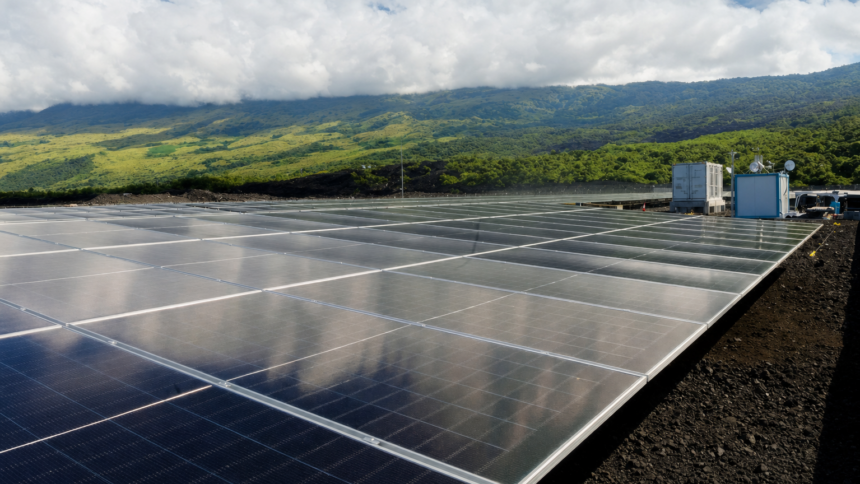
In April 2026 the fund spotlighted several renewable schemes including a solar power plant in the Union of Comoros financed with 25.7 million dirhams that delivers 6.3 megawatts of capacity and helps stabilise local electricity supply. ADFD also provided 551 million dirhams for the Sheikh Zayed Solar Power Complex in Jordan, which generates 103 megawatts and serves more than 50,000 homes while displacing fossil fuel use. A further 103 million dirhams supported the Seychelles Wind Power Farm consisting of four turbines that harness natural resources to reduce reliance on imported diesel and fuel oil. These examples illustrate the practical application of the financing models outlined in the new knowledge paper.
Mohammed Saif Al Suwaidi, director general of ADFD, has repeatedly emphasised that accelerating the global energy transition demands sustained international investment and coordinated efforts across institutions. The fund’s 2030 Strategy integrates climate action with support for infrastructure, agriculture, water security and health services in developing nations, according to ADFD’s official strategy document. By focusing on blended finance and risk-reduction tools the paper seeks to address structural barriers that have limited capital flows to climate projects in the global south. ADFD’s approach reflects its evolution from traditional grant and loan provider to a more sophisticated development partner capable of leveraging private resources.
The knowledge paper calls for deeper engagement with multilateral development banks, private investors and technology providers to expand the pipeline of bankable renewable projects worldwide. It notes that strategic partnerships can help overcome data gaps, regulatory hurdles and currency risks that often deter commercial participation in emerging markets. ADFD has contributed to such cooperation through its membership in the Arab Coordination Group and joint initiatives with entities such as IRENA that have channelled hundreds of millions of dollars into clean power across Africa, Asia and the Caribbean. These cumulative efforts position the fund as an active contributor to global climate objectives ahead of forthcoming international summits.