ع




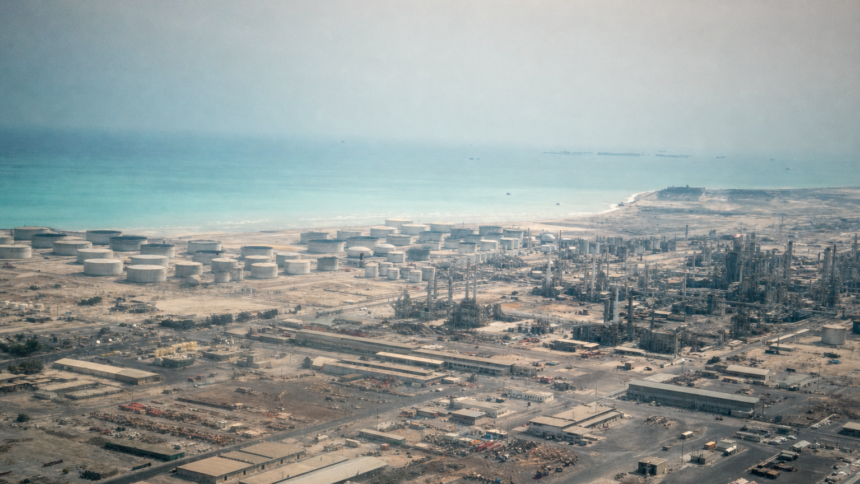
Reuters reported that Brent crude futures declined 1.1 percent to $96.92 a barrel on October 1, 2026 while West Texas Intermediate crude also eased as shipments from the Gulf recovered. The drop reflected reduced fears over potential supply shortfalls amid heightened tensions that had curtailed flows earlier. Investors additionally weighed signs of renewed diplomatic contacts between the US and Iran that could further stabilise the region.
Goldman Sachs estimated that Gulf oil exports, including those with transponders turned off, recovered to 23.3 million barrels per day over the past week, matching the 2025 average after doubling during September. The bank’s note on Tuesday pointed to crude shipments accounting for nearly all of the rebound. JPMorgan separately placed the recent 10-day average of total exports at 20.5 million barrels per day, or about 89 percent of 2025 levels.
Saudi Arabia resumed tanker loadings from the Yanbu port on the Red Sea after reactivating its East-West Pipeline, Reuters reported earlier in the week. The pipeline offers an alternative route that avoids the Strait of Hormuz and has allowed Saudi exports to exceed the prior year’s September volumes. This resumption has helped normalise overall regional flows despite ongoing risks.
The US Energy Information Administration data showed that crude inventories rose by 922,000 barrels to 427.3 million barrels in the week ended September 25. That compared with a Reuters poll forecast for a 264,000-barrel decline and contributed to the market’s softer tone. The inventory build followed several weeks of draws that had tightened physical balances.
The International Energy Agency projected in its September 2026 Oil Market Report that world oil supply will average 100.7 million barrels per day this year, a decline of 5.7 million barrels per day from 2025 levels due to Gulf disruptions. Gulf crude exports in August stood at an estimated 13 million barrels per day, roughly half pre-war volumes, although flows have since improved. The agency expects production to rebound sharply by 8 million barrels per day in 2027.
Sugandha Sachdeva, founder of SS WealthStreet in New Delhi, said, “Oil’s near-term bias remains negative as recovering shipments from the Gulf region, resumed Saudi exports through Yanbu and a buildup in US inventories ease supply concerns.” Sachdeva noted that the immediate price direction remains tilted lower even as Brent crude posted a 14 percent gain for September overall. The analyst added that product markets, particularly diesel, remain tighter than the crude segment.