
 ع
ع



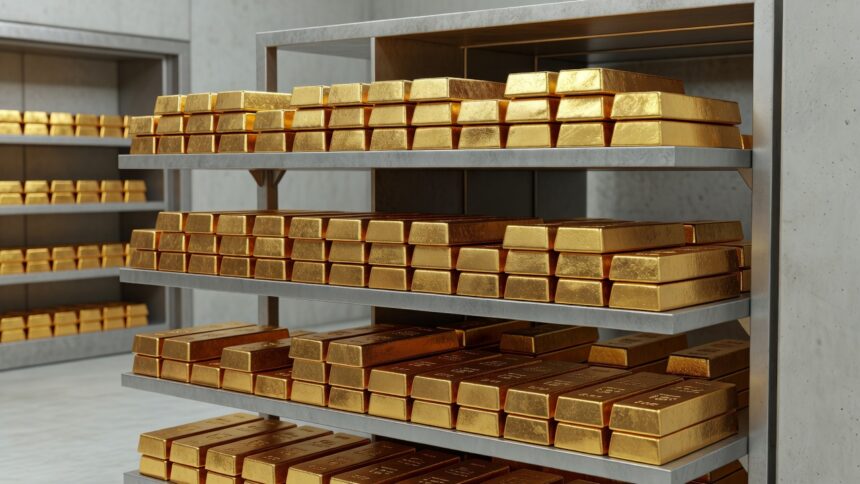
The World Gold Council’s latest survey of central bank reserve managers found that nearly three-quarters expect the dollar’s share of global reserves to decline moderately or significantly over the next five years. Institutions indicated that gold rather than the euro or yuan would absorb most of that shift, with a record number planning further increases in gold holdings during 2026. Countries including China, India, Turkey and Poland have led recent accumulation, according to the survey, which represented the largest in its nine-year history.
International Monetary Fund COFER data placed the dollar’s share of allocated foreign exchange reserves at 56.77 percent in 2025Q4, down from 56.93 percent three months earlier. Total reserves expanded to 13.14 trillion dollars by the end of the period, the IMF figures show, while the euro’s share also eased and the Chinese renminbi edged higher to 1.95 percent. The dollar’s proportion has fallen from roughly 72 percent in 2001 to around 57 percent in recent quarters, an Atlantic Council assessment noted.
Reserve managers cited gold’s resilience during crises, its record as a long-term store of value and its value as a diversifier as the top reasons for holding the metal, a World Gold Council evaluation reported. Emerging-market participants ranked hedging geopolitical risks particularly highly, reflecting concerns over potential restrictions on currency holdings during periods of tension. Central banks have maintained steady purchases regardless of prices fluctuating near 4,000 dollars or above 5,500 dollars an ounce, demonstrating a strategic rather than tactical approach.
The United Arab Emirates functions as a leading gold trading and refining hub in the Middle East, where the Dubai Gold and Commodities Exchange provides a key platform for regional flows. Heightened global demand for the metal has supported the UAE’s commodity infrastructure and trade volumes, industry data indicate. The country’s authorities have aligned reserve practices with broader patterns observed among Gulf central banks in recent years.
UAE investors operate within a framework where the dirham remains pegged to the US dollar, creating direct sensitivity to American monetary conditions. Sovereign moves toward higher gold allocations have prompted some private portfolios to incorporate greater exposure to hard assets for balance, market participants have observed. This mirrors the long-horizon risk management applied by official institutions.
Analysts at the Atlantic Council described dollar dominance in reserves, trade invoicing and transactions as likely to persist in the near and medium term despite the gradual erosion of its reserve share. Ground lost by the dollar has been absorbed by a range of currencies rather than any single challenger, their Dollar Dominance Monitor concluded. The rebalancing process is projected to unfold incrementally through the end of the decade without precipitating a sudden overhaul of the global system.