
 ع




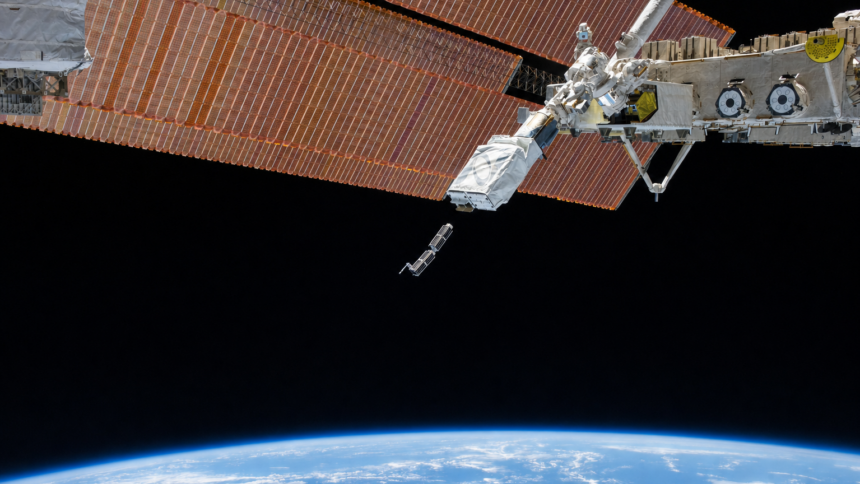
Google said in a blog post that the company will conduct its first test of AI chips in space next week, sending a prototype satellite equipped with four Tensor Processing Units into low Earth orbit to evaluate their resilience to launch forces, radiation and extreme temperatures. The mission forms part of Project Suncatcher, a research effort exploring whether solar-powered satellite constellations could one day support large-scale machine learning infrastructure. According to the company, the satellite will run brief AI computations while gathering critical in-orbit data to guide future development.
The project, which Google first detailed in a November 2025 announcement and accompanying research paper, envisions leveraging near-constant sunlight in space that can generate up to eight times more solar power than equivalent panels on Earth. A Google Research assessment found that low Earth orbit satellites could reduce reliance on batteries and address growing energy demands from AI training and inference. The company’s blog post explained that initial ground tests of its Trillium TPUs demonstrated they could survive radiation doses exceeding those anticipated during a five-year mission.
Google’s latest update, distributed via its official innovation blog, outlined how the upcoming experiment will operate the chips for about 15 minutes at a time before requiring cooldown periods due to thermal constraints in the vacuum of space. The prototype, developed with satellite imagery firm Planet Labs and roughly the size of a refrigerator, relies on roughly one kilowatt of solar power, according to details shared with multiple outlets including The New York Times. This initial hardware will answer simple AI queries while transmitting performance metrics back to Earth.
The test rideshare aboard SpaceX’s Transporter-18 mission from Vandenberg Space Force Base marks an acceleration of earlier timelines that had targeted two custom satellites for launch in 2027. Google stated in the announcement that the partnership with Planet Labs enabled this earlier flight to collect real-world data on thermal management using malleable interface materials and heat pipes connected to radiators. Reuters reporting on the Google disclosure noted that space radiation risks such as bit flips in electronics remain a key focus of the evaluation.
Project Suncatcher builds on more than a year of preparatory work, including proton beam simulations at 67 MeV to mimic low Earth orbit conditions, an evaluation that Google Research said showed the high bandwidth memory subsystems as the most sensitive but still within acceptable tolerances. The company has indicated that future designs could feature dozens of TPUs per satellite operating in coordinated clusters linked by free-space optical communications. Such infrastructure would require precise positioning knowledge among neighboring units to maintain the bandwidth essential for distributed AI workloads.
Longer-term ambitions described in Google’s research include arrays of satellites that could scale compute capacity dramatically while sidestepping terrestrial power grid limitations. The blog post stated that putting the first TPUs in orbit next week will deliver learnings to inform subsequent missions and refinements. Google has not set a firm timeline for operational deployment but continues to monitor declining launch costs projected for the 2030s that could improve economic viability.