ع





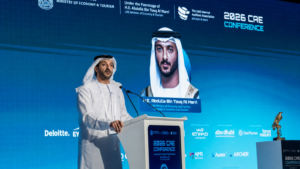
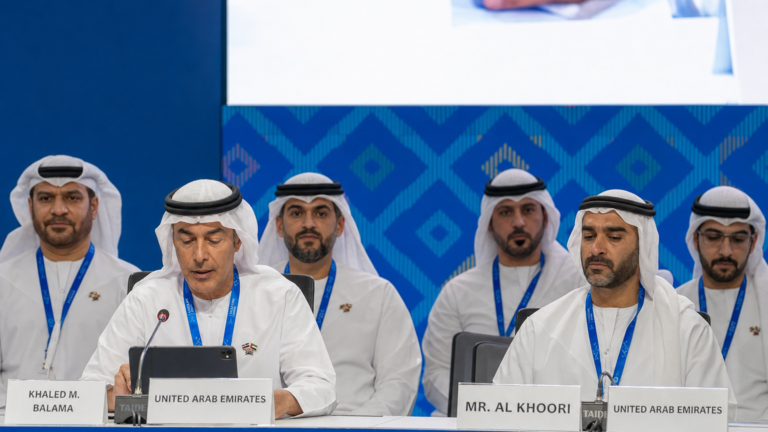
The inaugural conference, organised by Al Masraf (Arab Bank for Investment and Foreign Trade) in collaboration with the UAE Banks Federation, convened regulators, financial institutions, Sharia scholars, finance experts and private-sector representatives to identify actionable measures supporting the national strategy. According to the Emirates News Agency, participants examined ways to strengthen competitiveness in Islamic finance, promote innovation and sustainability, and foster expanded public-private partnerships across both domains. The event, held on the same day the gathering took place, transitioned discussions from broad opportunities toward concrete solutions, partnerships and deliverables that financial institutions could adopt locally and internationally.
The UAE Cabinet approved the Islamic Finance and Halal Industry Strategy 2025-2031 in May 2025, with Central Bank of the UAE data placing Islamic banking assets at approximately AED 1.4 trillion as of June 2026. A Central Bank assessment found that the strategy targets AED 2.56 trillion in domestic Islamic finance assets by 2031, alongside efforts to increase the country’s share of the global halal market through enhanced local production and re-exports. The framework also emphasises building enabling infrastructure, nurturing innovation in high-value halal products and catalysing integration between Islamic finance instruments and halal industry needs.
Four dedicated sessions structured the day’s deliberations, beginning with the strategic and legislative framework for Islamic finance and the halal industry before moving to the specific role of financial institutions in executing the plan. Subsequent discussions addressed sukuk issuance together with innovation and technology applications, concluding with governance, risk management, building trust and ensuring sustainable growth. A report from the Emirates News Agency noted that these sessions incorporated exchanges on financial technology, digital platforms, Sharia supervision standards, targeted financing for halal-related sectors and enhanced coordination among financial institutions, national entities and private operators.
Participants reviewed mechanisms to develop financing and investment instruments suited to halal industry projects while exploring expanded use of sukuk and financial technology to support sector growth. The Central Bank of the UAE has previously highlighted the need for greater legal and Sharia certainty to underpin these efforts, as detailed in its publications on implementing the broader strategy. Industry data referenced during the conference pointed to the global halal economy’s consumer spending surpassing USD 2.6 trillion, with projections from Dinar Standard indicating potential expansion toward USD 3.56 trillion by 2029 at a compound annual growth rate near 7 percent.
Recommendations emerging from the gathering are expected to focus on clear financing and investment priorities for halal-linked projects, measures to develop sukuk markets and their role in funding expansion, as well as steps to bolster support for halal industry sectors. The Emirates News Agency reported that the conference would also produce guidance on strengthening coordination among stakeholders to accelerate implementation across regulatory, financial and commercial channels. Organisers positioned the event as a platform to translate the national strategy’s objectives into operational practices that financial institutions could integrate into their planning and service offerings.
Al Masraf and the UAE Banks Federation framed the conference as a direct response to the strategy’s call for deeper collaboration, with sessions designed to yield practical outputs rather than general debate. Central Bank of the UAE figures show 43 licensed Islamic financial institutions currently operating in the country, placing the UAE third globally on certain Islamic finance development indices. The conference outcomes are anticipated to feed into ongoing work by the national committee overseeing the strategy, which includes subcommittees on Islamic finance, the halal industry and sustainable Islamic philanthropy.