ع




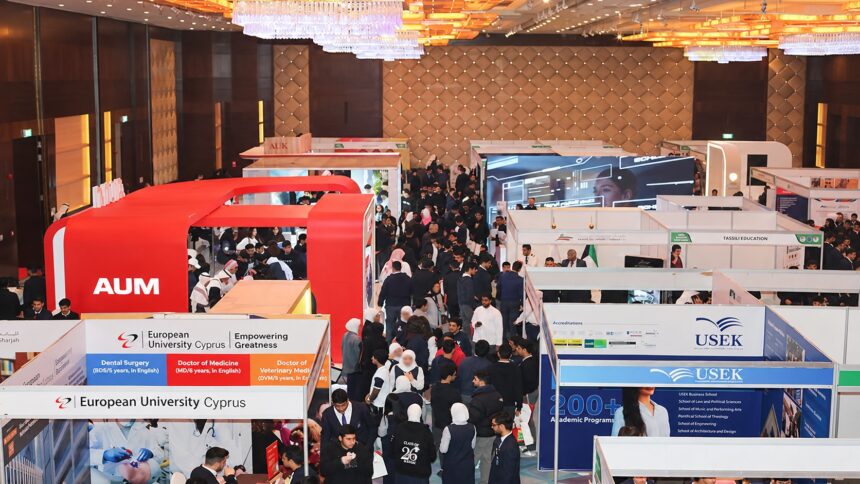
The autumn exhibition at Jumeirah Messilah will put university admissions, overseas study and professional education on the agenda for students, families and employers.
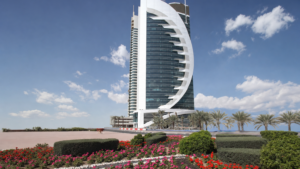
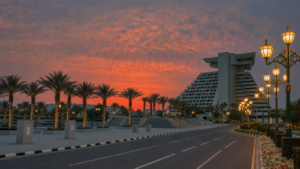
HigherEd Kuwait returns on 12–13 October 2026 at the Badriah Ballroom, Jumeirah Messilah Beach Hotel, bringing local and international education providers together ahead of students’ next round of university decisions.
The autumn exhibition’s announced participants span Kuwait, Saudi Arabia, the UAE, Lebanon and the United States. Alongside university representatives, education advisers will be available to discuss study destinations and application routes.
For an industry audience, the relevance extends beyond admissions. Decisions about engineering, business, healthcare and further training help determine the qualifications that future recruits bring into the workplace. The exhibition provides a point of contact between those longer-term career choices and the institutions delivering the education behind them.
Who is taking part
The organiser’s published line-up includes the American University of Kuwait, Virginia Commonwealth University, King Abdulaziz University, Riyadh Elm University, AlMaarefa University and Gulf Medical University.
Lebanese institutions listed include the Lebanese American University, University of Balamand, American University of Beirut, Holy Spirit University of Kaslik, Notre Dame University-Louaize, Saint Joseph University of Beirut and Beirut Arab University. Education advisers include IDP, AHZ and GESCO.
The mix brings different academic models into the same exhibition. At the American University of Kuwait, a liberal arts approach sits alongside colleges covering arts and sciences, business and economics, and engineering and applied sciences. Its published academic structure also includes an intensive English programme and international student programmes.
That gives prospective applicants several distinct questions to explore: the subject they want to study, the broader curriculum around it and the preparation required before beginning degree-level work. The presence of a Kuwait-based institution also puts domestic study into the same conversation as overseas options, without requiring families to treat the two as separate searches.
Gulf Medical University, meanwhile, lists colleges in medicine, dentistry, pharmacy, health sciences and nursing, alongside management and AI in healthcare. Its admissions information distinguishes undergraduate, postgraduate, foundation, diploma and doctoral routes.
For students considering healthcare, that range illustrates why the name of a university is only the starting point. Entry requirements, the level of qualification and the particular professional field all shape the route an applicant needs to investigate. A discussion about nursing or pharmacy involves different preparation from one about healthcare management, even within the same institution.
The link between university choices and workforce skills
The exhibition arrives while employers internationally are reassessing the skills they expect from graduates and existing staff. The World Economic Forum’s Future of Jobs Report 2025, drawing on more than 1,000 employers across 55 economies, found that respondents expected 39% of workers’ existing skills to change or become outdated between 2025 and 2030.
AI and big data, networks and cybersecurity, and technological literacy were the three fastest-growing skill areas in its findings. Analytical thinking remained the most sought-after core skill, with seven in ten surveyed employers considering it essential.
The report also found that 85% of surveyed employers planned to prioritise upskilling their workforce, underlining the place of continued education alongside graduate recruitment.
Those are global employer expectations, rather than a forecast for Kuwait alone. They nevertheless offer a useful frame for conversations about course content: how technical knowledge is taught, how students apply it and how a programme develops the ability to analyse unfamiliar problems.
For visitors comparing institutions, the distinction matters. A degree title describes a field of study; the modules, projects and learning methods explain what a student will actually spend several years doing. The latter are the details that connect an admissions conversation to a future role in a company, hospital or technical organisation.
Planning beyond the application form
For students considering the United States, EducationUSA’s official guidance recommends beginning research 12 to 18 months before the intended academic year. It advises applicants to consider academic, financial and personal requirements, rather than treating an institution’s name as the deciding factor.
The guidance also draws attention to application and financial-aid deadlines, which affect when standardised tests need to be taken. That makes an October exhibition relevant to students still developing a shortlist, as well as those ready to discuss a particular application.
For families, the useful comparison is therefore wider than tuition alone. The intended start date, preparation requirements, financing and preferred location need to fit together. Gathering those details early makes it easier to identify which options deserve a follow-up meeting and which require more preparation before an application can proceed.
When and how to visit
Morning sessions are scheduled for 9am to noon for school and college trips. Afternoon sessions run from 4.30pm to 8pm for parents, students and professionals.
The organiser says the exhibition operates under the supervision of Kuwait’s Ministry of Higher Education, with student visits approved by the Ministry of Education.
Visitor registration is free. The registration form allows visitors to select 12 or 13 October and indicate interests including undergraduate and postgraduate study, management, training and languages. It also includes a category for HR professionals, reflecting an audience that extends beyond school-leavers.
For those attending, the next step is to use the announced participant list to identify the institutions and study routes they want to discuss before arriving at Jumeirah Messilah.