ع




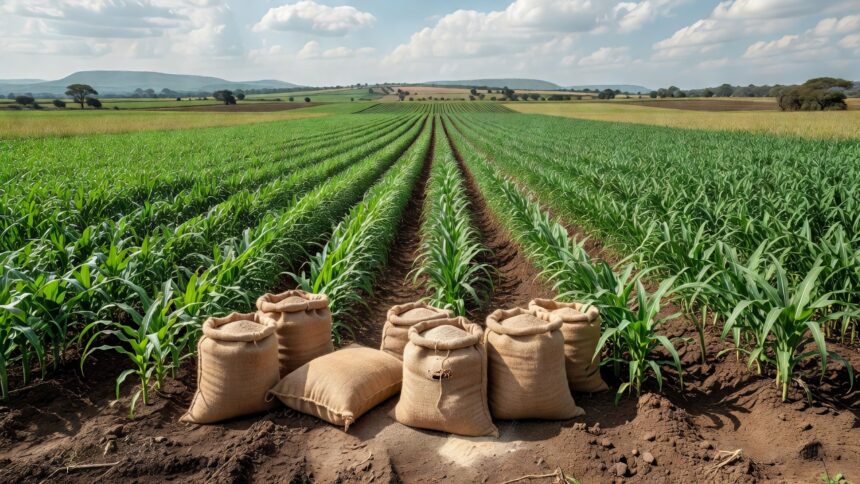
French Economy Minister Roland Lescure announced on October 15, 2026, that G7 countries had collectively committed $2.5 billion to address food security challenges in vulnerable nations. The allocation focuses on facilitating fertilizer access for 44 countries that the World Bank identified as facing risks from elevated global energy prices. Lescure, whose nation holds the rotating G7 presidency, delivered the update in Bangkok on the sidelines of the joint annual meetings of the International Monetary Fund and the World Bank. The G7 pledges $2.5 billion to fight food insecurity in 44 countries forms a central element of the ministers’ response to agricultural supply threats.
Lescure highlighted the group’s focus on supporting the most affected populations amid ongoing global pressures. “The G7 has also been very sensitive to the weakest links of the current global situation, the poor countries,” he told reporters. “So all together, we’ve pledged $2.5 billion in order to help on food security, especially on a very important subject, which is fertilisers.” The minister tied the initiative directly to recent spikes in energy costs that have raised input prices for farmers worldwide.
A World Bank assessment listed the 44 countries as particularly exposed to potential food shortages stemming from higher fertilizer and fuel expenses. The surge in energy prices followed the U.S. attack on Iran, which has roiled Middle East stability and global commodity markets, according to Lescure’s briefing with reporters. This dynamic threatens to reduce crop yields and drive food prices higher across multiple regions at a time when supply chains remain fragile.
The Food and Agriculture Organization along with partner UN agencies reported in its 2026 State of Food Security and Nutrition in the World assessment that 645 million people faced hunger in 2025. That figure marked a modest decline from 2024 yet remained substantially above pre-pandemic benchmarks, the agencies’ data showed. Roughly 2.1 billion people, or more than a quarter of the global population, experienced moderate or severe food insecurity during the same period, with Africa registering the highest prevalence at 56.6 percent of its residents.
Conflict has emerged as the dominant driver of acute hunger, accounting for more than half of all cases, according to the 2026 Global Report on Food Crises compiled by the FAO, World Food Programme and partners. The report placed the total number of people facing high levels of acute food insecurity at 266 million across 47 countries in 2025, nearly double the share observed a decade earlier. Ten specific nations concentrated two-thirds of that burden while 35.5 million children suffered acute malnutrition, including nearly 10 million in life-threatening severe condition.
G7 discussions in Bangkok also addressed continued backing for Ukraine following Russia’s invasion, Lescure stated. The group has raised or is mobilizing 260 million euros to reinforce the protective sarcophagus at the Chernobyl nuclear site after drone damage in 2025, he added. A follow-up pledging conference set for Paris in November will seek to close any remaining funding gaps for these priorities.