ع




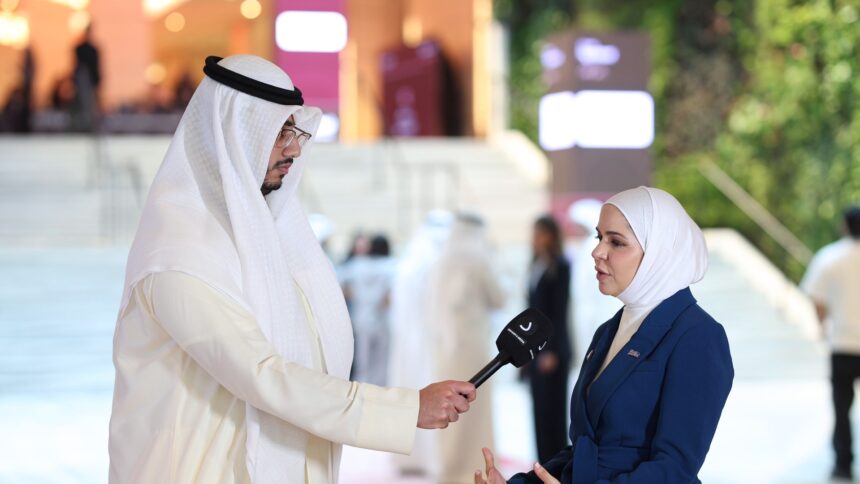
Weyay’s head discusses the working culture behind digital banking as international research highlights the skills and oversight needed to turn new technology into useful financial services.
“Weyay is all about innovation,” Amal Al-Duwaisan told Diwaniya Media at Lei Wa Lakom’s Women & the Economy conference in Kuwait. The bank’s head described how that approach runs through its working culture and the way its teams develop products.
The discussion comes as financial institutions face increasingly consequential decisions about technology. Artificial intelligence is becoming part of their operations, while the people responsible for selecting, managing and supervising those systems must keep pace.
A joint Bank of England and Financial Conduct Authority survey illustrates the challenge. In 2024, 75% of responding financial firms were already using AI, but 46% reported only a partial understanding of the technologies they used. Reliance on models supplied by outside providers was a significant factor.
The findings concern UK financial services, rather than Kuwait. They nevertheless raise a question relevant to banks elsewhere: what needs to happen inside an institution for its investment in technology to produce a dependable service?
Understanding the tools
The Bank of England and FCA research, based on responses from 118 firms, identified insufficient talent and access to skills among the leading non-regulatory constraints on AI adoption.
Respondents saw benefits in areas including data analysis, fraud prevention and cybersecurity. They also identified risks involving the privacy, quality and security of the information used by these systems.
Those responsibilities extend across a bank. A development team may build a service, but other employees must understand how it affects customers, where its limitations lie and who can intervene when something goes wrong.
Al-Duwaisan’s description of innovation as part of Weyay’s working culture places attention on those relationships. It concerns the organisation behind the app: how ideas are developed, how decisions are made and how employees contribute to changes in the service.
For customers, these internal arrangements become visible only through their experience. An application that is easy to complete, a transaction that works as expected or a problem that is resolved promptly all depend on decisions made before and after a product reaches the market.
Skills are part of the investment
The workforce challenge is evident well beyond banking. In the World Economic Forum’s Future of Jobs Report 2025, 63% of surveyed employers identified skills gaps as a major barrier to business transformation between 2025 and 2030.
Some 85% planned to prioritise developing their existing employees’ skills. Respondents expected 39% of workers’ core skills to change by 2030, with AI and big data, cybersecurity and technological literacy among the fastest-growing areas.
The report draws on more than 1,000 employers across 55 economies. Its figures reflect expectations across industries, rather than a forecast for Kuwait’s banking workforce.
For a financial institution considering a new system, this adds another dimension to the investment decision. The purchase price is only one consideration. Employees need time to learn, managers need to understand the implications for their departments, and existing procedures may need to change.
Technical knowledge also has to connect with banking experience. Understanding how a system operates and recognising whether its output makes sense for a customer are different responsibilities. Bringing them together is part of the organisational work that accompanies digital development.
Starting with the customer
Weyay’s early development provides a specific example of customer research informing a banking service.
In a February 2022 update, National Bank of Kuwait said Weyay had been developed through months of research and collaboration with young people. NBK had announced the digital bank in November 2021.
The update reported that thousands of customers opened accounts within weeks of the app becoming available. More than half of those early customers completed the process in the evening or at night, outside traditional branch hours.
That observation belongs to the launch period, but it offers a concrete example of changing customer behaviour. People were using the flexibility to open an account around their own schedules.
Weyay subsequently brought students into product development through a challenge organised with the American University of the Middle East and Plug and Play. According to the programme’s February 2026 account, more than 60 students worked in multidisciplinary teams on five digital banking challenges.
Over three days, participants developed ideas, built prototypes and tested solutions. They then presented their proposals to judges, who assessed clarity, feasibility and relevance to the problems they had been given.
The exercise created a structured way to hear from younger people while asking them to consider the practical demands of building a service. Its published account describes the proposals and judging process, although it does not establish how many ideas subsequently became features available to customers.
What happens after an idea
The distance between a proposal and a functioning financial service is also reflected in Kuwait’s regulatory framework.
The Central Bank of Kuwait’s Wolooj regulatory sandbox provides a supervised environment for testing financial technologies and business models. Applicants progress through stages covering guidance, testing and a soft launch before graduation.
Participants must agree measurable targets and address technical, security and operational requirements. Testing includes customer confidentiality, privacy and operational efficiency, while progress reports record results, feedback and problems encountered.
This is the wider regulatory setting for financial innovation in Kuwait, rather than evidence of Weyay’s participation in the programme. It shows how an idea is examined before it can move beyond a controlled trial.
Al-Duwaisan’s focus on working culture sits within that practical reality. Developing a service involves people who understand customers, people who build the technology and people responsible for its operation and oversight.
The process also needs room for revision. Under Wolooj, a soft launch can lead to graduation, a return to an earlier stage or rejection. A completed prototype is therefore one milestone in development; the evidence gathered through testing determines what happens next.